
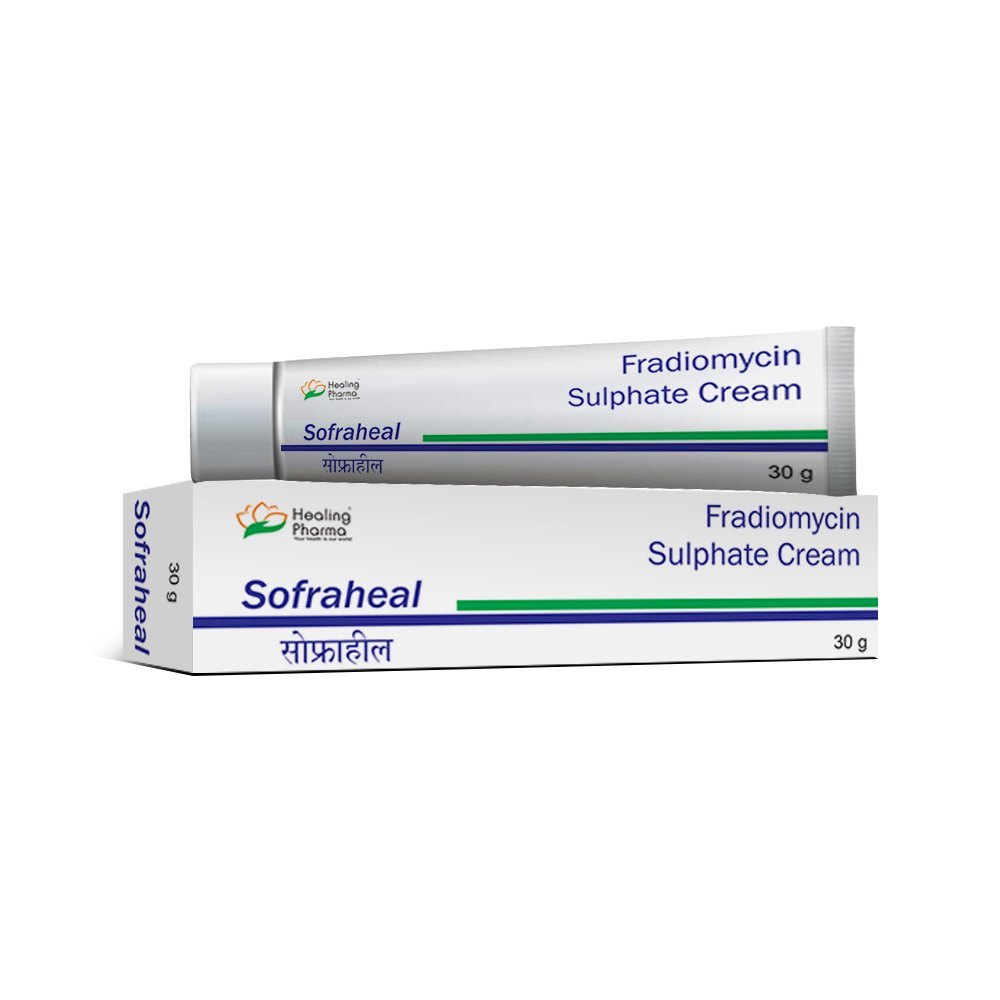
Sofraheal Cream (Fradiomycin)
Previous product
Slimgal CT 120mg (Cetilistat)
A$76.92 A$346.99Price range: A$76.92 through A$346.99
Next product
Solonex 300mg (Isoniazid)
A$20.22 A$83.95Price range: A$20.22 through A$83.95
A$8.66 A$28.88Price range: A$8.66 through A$28.88
In Stock
In Stock
Sofraheal Cream (Fradiomycin)
| Pack Size | Price | Quantity | Add To Cart | |
|---|---|---|---|---|
| 1 Cream | A$8.66 | |||
| 3 Cream/s | A$17.33 | |||
| 6 Cream/s | A$28.88 | |||
| Want to order in bulk / B2B price? Send Inquiry | ||||
×
Sorry!! Out of Stock
Sorry! Sofraheal Cream (Fradiomycin) is out of stock
Please click below to view other similar medications.
View All Fradiomycin Products
Offer You Can't Resist
Free Shipping
Enjoy Free Shipping on Orders above AUD304 (USD199)
Estimate Shipping :
27 August - 03 September
46
Last Updated on May 29, 2026

Description
Sofraheal Cream (Fradiomycin)
Product Overview:
Sofraheal Cream is a topical medicine that contains Fradiomycin, which is an antibiotic that is used primarily to treat skin irritations caused by bacteria. The cream is extremely effective in fighting off infections and helping to speed up the healing of various skin issues. The cream is frequently prescribed to treat burns, injuries, wounds, and other skin irritations.
Key Ingredient:
- Fradiomycin: An effective antibiotic that belongs to the aminoglycoside family, Fradiomycin works by inhibiting the synthesis of protein by bacteria. The result is the destruction of bacteria, preventing the spread of skin infections.
Formulation:
- Cream: Sofraheal has been developed as oil for use on the external side. Its creamy consistency permits it to be put on the area and absorbed into the skin.
Indications:
- Wound infections: Sofraheal is a drug used for the treatment of wounds that are infected, such as cuts, grazes, and surgical wounds.
- Burns: It may also be applied to minor burns to help reduce the risk of infection and encourage healing.
- Skin ulcers: Sofraheal is a healing of wounds on the skin by stopping the growth of bacteria and promoting cell regeneration.
- Other bacterial skin infections: Sofraheal can be effective against various skin diseases caused by resistant bacteria. This includes impetigo, abscesses, and various other superficial skin disorders that are superficial.
Mechanism of Action:
Fradiomycin, the active ingredient in Sofraheal Cream, targets bacterial ribosomes, disrupting protein synthesis. This prevents the growth of bacteria and causes the death of the bacterial cells. Fradiomycin has a wide spectrum of action, particularly against Gram-negative as well as Gram-positive bacteria. This makes it efficient against a variety of known skin diseases.
Instructions for Use:
- Application: Spread a thin layer of Sofraheal cream to the affected area 3 times every day, based on the extent of the inflammation.
- Cleaning: Before applying the cream, wash the affected surface with detergent and water. It is important to dry the area thoroughly.
- Duration: Keep using the cream until the time period prescribed or until the infection is fully recovered. The typical time span is several days to a few weeks.
- Avoid: Don’t apply Sofraheal Creme to the mucous membranes (such as inside the mouth, nose, or the eyes) or apply the cream on areas with damaged skin, unless directed by a medical professional.
Precautions:
- Allergy: If you’re allergic to Fradiomycin or any of the components in Sofraheal, avoid using this product.
- Pregnancy and Breastfeeding: Always seek advice from a medical professional prior to making use of Sofraheal Cream when pregnant or breastfeeding.
- Kidney Issues: Patients with kidney problems are advised to use Sofraheal cautiously, as aminoglycosides can alter kidney function.
- Not for Eye Use: Beware of contact with your eyelids. If cream gets into the eye, rinse immediately with water.
Side Effects:
Although Sofraheal Cream is usually well-tolerated, certain individuals may suffer from mild adverse effects, such as:
- Skin irritation: The itching, redness, or rash could appear at the location of the application.
- Burning sensation: A mild burning or tingling feeling may be experienced, but generally goes away quickly.
- Allergic reactions: Sometimes, people have severe allergic reactions such as breathing difficulties, swelling, and the appearance of skin rashes. In these instances, get urgent medical attention.
If you suffer from one of these symptoms or you notice any symptoms of an infection getting worse, stop taking the medicine and speak with your physician.
Storage:
- Keep Sofraheal Cream in a cool, dry place at ambient temperatures (15°C to 25°C).
- Make sure it is out of the access of young children.
- Beware of freezing the cream because extreme temperatures could alter its efficacy.
Frequently Asked Questions (FAQs)
What is Sofraheal Cream used for?
Sofraheal Cream is used primarily for treating skin infections caused by bacteria that result from cuts, burns, wounds, as well as cuts and skin ulcers. It prevents the growth of bacteria and speeds up healing.
How often should I apply Sofraheal Cream?
Sofraheal can be applied up to three times every day, based on the severity and duration of the disease and the healthcare professional’s guidelines.
Can I use Sofraheal Cream on my face?
Sofraheal may be applied to the face if it is recommended by your physician. Be sure to avoid applying it to mucous membranes, for example, around the eyes, nose, or mouth.
Is Sofraheal safe for children?
The security of Sofraheal for infants should be checked by a healthcare professional. It is generally accepted that Sofraheal is a good option for children who have acne-related skin infections caused by bacteria; proper dosage guidelines and doses must be adhered to.
Can I use Sofraheal Cream with other skin medications?
It’s essential to speak with your physician or pharmacist prior to mixing Sofraheal with any other treatments for skin in order to prevent interactions.
What should I do if I miss an application?
If you don’t remember an application, apply the cream immediately after you can, or until you are nearing the time for the next dosage. It is not recommended to double the dosage in order to compensate for an absence.
Is it necessary to cover the area with a bandage after applying Sofraheal?
There isn’t always a need to wrap the wound; however, if your physician advises this or the wound has been exposed to humidity or dirt, then covering it with a clean, sterile bandage may be recommended.
Can Sofraheal be used for infections caused by fungi or viruses?
No, the Sofraheal drug is efficient only in fighting an infection caused by bacteria. It is not effective against viral or fungal infections.
Summary
Sofraheal Cream can be described as an antibiotic that contains Fradiomycin, which was developed to treat an array of skin infections caused by bacteria. It’s effective on burns, injuries, as well as cuts and ulcers, by preventing the growth of bacteria and assisting in speedier healing. It is usually appropriate for use, even though it can cause minor irritation to the skin in certain cases. Similar to any other medication, you should comply with the directions for use, and seek advice from a medical professional should you be concerned about the effects of side effects, pregnancy, or other medical conditions.
Additional Information
| Active Ingredient: | Fradiomycin |
|---|---|
| Indication: | Bacterial Infections of the Skin, Eyes, and Ears |
| Manufacturer: | Healing Pharma, India |
| Packaging: | 30g in 1 tube |
| Strength: | 30g |
| Delivery Time: | 7 To 15 days |
Related products


Recently Viewed

Reviews
There are no reviews yet.