
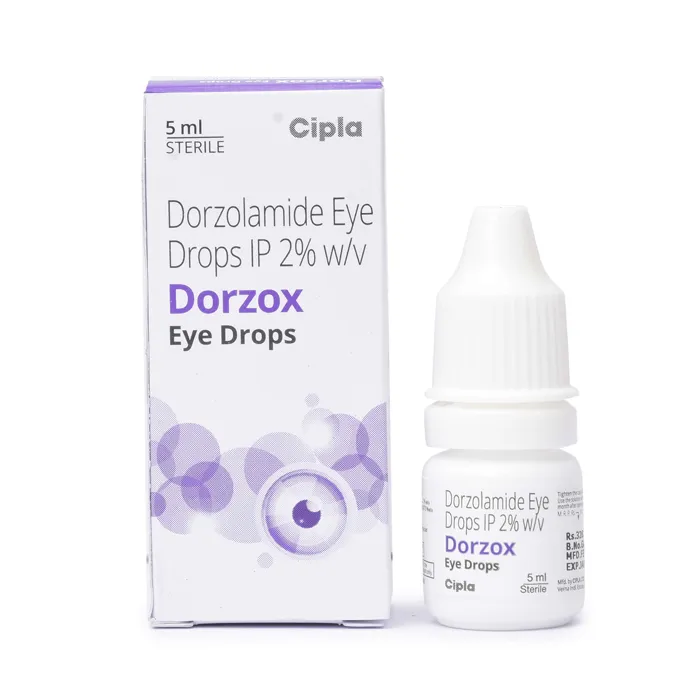
Dorzox Eye Drop 5ml (Dorzolamide)
Previous product


Tropicacyl Eye Drop 1% (Tropicamide)
A$10.50 A$24.69Price range: A$10.50 through A$24.69
Next product
Cyclomune 0.05% (Cyclosporine)
A$9.74 A$48.02Price range: A$9.74 through A$48.02
A$8.90 A$47.75Price range: A$8.90 through A$47.75
In Stock
In Stock
Dorzox Eye Drop 5ml (Dorzolamide)
| Pack Size | Price | Quantity | Add To Cart | |
|---|---|---|---|---|
| 1 Eye Drop | A$8.90 | |||
| 3 Eye Drop/s | A$24.49 | |||
| 6 Eye Drop/s | A$47.75 | |||
| Want to order in bulk / B2B price? Send Inquiry | ||||
×
Sorry!! Out of Stock
Sorry! Dorzox Eye Drop 5ml (Dorzolamide) is out of stock
Please click below to view other similar medications.
View All Dorzolamide Products

Offer You Can't Resist
Free Shipping
Enjoy Free Shipping on Orders above AUD304 (USD199)
Estimate Delivery :
11 October - 18 October
37
Excellent service overall
Smooth checkout, quick dispatch, and secure delivery. Excellent service overall
 Australia
October 1, 2026
Last Updated on November 30, 2025

Description
The health of your eyes is vital to keeping your eyes healthy. Certain conditions may cause vision loss if not treated. One of these conditions the condition is defined by the increased pressure in the eyes (intraocular pressure) that can cause damage to the optic nerve, leading to loss of vision. The ability to control eye pressure is vital for preventing vision loss. One common medicine prescribed is Dorzox Eye Drop 5ml. It is also a source of the active ingredient Dorzolamide.
In this post this blog post, we’ll discuss what Dorzox eye drops can do and how they function and when they should be used and how to administer them, potential adverse effects, and security measures.
What is Dorzox Eye Drop?
Dorzox Eye Drop contains Dorzolamide hydrochloride, a carbonic Anhydrase inhibitor that aids in reducing the intraocular pressure (IOP) through the reduction in production of aqueous humor, the fluid in the eye. Lowering IOP can prevent damage to the optic nerves while preserving vision.
The medication is usually used for patients who suffer from:
- Open-angle glaucoma
- Ocular hypertension (high eye pressure without glaucoma)
Dorzox comes in a 5ml bottle. This makes it ideal to take on the go.
How Does Dorzox (Dorzolamide) Work?
The eye continually produces Aqueous humor in order to keep the eye from pressure. When glaucoma is present, the fluid is either too high or is not drained properly, causing an increase in pressure in the eye.
Dorzolamide works deficiency of the enzyme carbonic Anhydrase. within the ciliary body within the eye’s ciliary body. The enzyme plays an essential function in the production of aqueous humor. By blocking it, Dorzolamider reduces fluid production, result is that it lower intraocular pressure. This, in turn, lowers intraocular.
This decrease helps safeguard the optic nerve from injury and slows the development of glaucoma. It also reduces the possibility of loss of vision.
Uses of Dorzox Eye Drop
- Primary Open-Angle Glaucoma: The most well-known kind of glaucoma is characterised by a gradual loss of vision in the peripheral vision.
- Ocular Hypertension: Eye pressure is elevated, not causing damage to the optic nerve, but it is at risk of becoming glaucoma-like.
- Adjunctive Therapy: Sometimes, they are used in conjunction with other glaucoma medications like beta-blockers or prostaglandin analogs to help with controlling pressure.
How to Use Dorzox Eye Drops Properly
For the most effective results and to minimize the negative adverse effects, you must utilize Dorzox properly:
- Hands are cleaned carefully before using the drops.
- The bottle should be shaken lightly before use.
- Turn your head to the side and draw down the lower part of your eyelid, creating an eyelid pocket.
- Keep the dropper over your head, but do not press it.
- Apply the equivalent of 1 drop in the eye(s) affected.
- Then, close your eyes and then press on the inside part of your eye (near the nostrils) for about 1-2 minutes in order to stop the medicine from evaporating off.
- Be careful not to blink or rub your eyes immediately.
- If you apply any other drops for your eyes, you should make sure you wait for at least five minutes between applying them.
- Recap the cap when you’ve used it.
Dosage
The usual dose is dropped into the afflicted eye(s) 2 to 3 times per day. Or according to the instructions of your doctor. Don’t exceed the recommended dose or as directed by your ophthalmologist.
Possible Side Effects of Dorzox Eye Drops
Although Dorzox is usually non-toxic, some people might experience adverse reactions:
Common Side Effects:
- A bitter or unpleasant taste is experienced after application (due to the drainage of the tear ducts)
- A mild burning or stinging sensation within the eye
- Eye redness or irritation
- The vision may be blurred temporarily following application
- Dry eyes or tearing
Rare but Serious Side Effects:
- Allergic reactions (rash, itching, swelling, difficulty breathing)
- Eye pain or swelling
- Vision changes or worsening redness
- Signs of infection like discharge or swelling
If any serious side effects develop, you should stop taking the medication and immediately consult with your physician.
Precautions and Warnings
- Allergy: Avoid using if you are allergic to Dorzolamide sulfonamides, or to any of the components in the drops.
- Pregnancy and Breastfeeding: Check with your physician before taking it because safety information is not available.
- Contact lenses: Discard lenses before applying drops. It is recommended to wait 15 minutes prior to reinserting lenses because the additive in the drops could irritate.
- Kidney or liver problems: Contact your doctor for dosage adjustments, or other therapies may be needed.
- Avoid contamination: Don’t touch the edge of the dropper with your eyes or any other surfaces.
Interactions with Other Medications
Dorzolamide can interact with:
- Other glaucoma medications
- Oral carbonic anhydrase inhibitors (e.g., acetazolamide)
- Sulfonamide-based drugs (increased risk of allergic reaction)
Be sure to inform your doctor regarding any medication you’re taking.
Storage Instructions
- Storage Dorzox drops for eyes at ambient temperatures (15-30°C).
- Be sure to shield yourself from moisture and light.
- Make sure that the area is safe for youngsters.
- Don’t use the product until the date of expiration, or for more than four weeks following the time of opening.
When to See a Doctor
- If you are suffering from intense eye pain or loss of vision
- Persistent redness, irritation, or discharge
- Signs of an allergic reaction
- If the symptoms don’t get better or become worse, it could be a matter of a few days
Every month, regular visits to the eye doctor are essential for monitoring eye pressure and adjusting treatments as needed.
Conclusion
Dorzox Eye Drop 5ml (Dorzolamide) is an efficient medication that is widely used in controlling glaucoma as well as ocular hypertension. In lowering the pressure inside the eye and preserving vision, it can help protect the optic nerve.
Related products




Reviews
There are no reviews yet.