
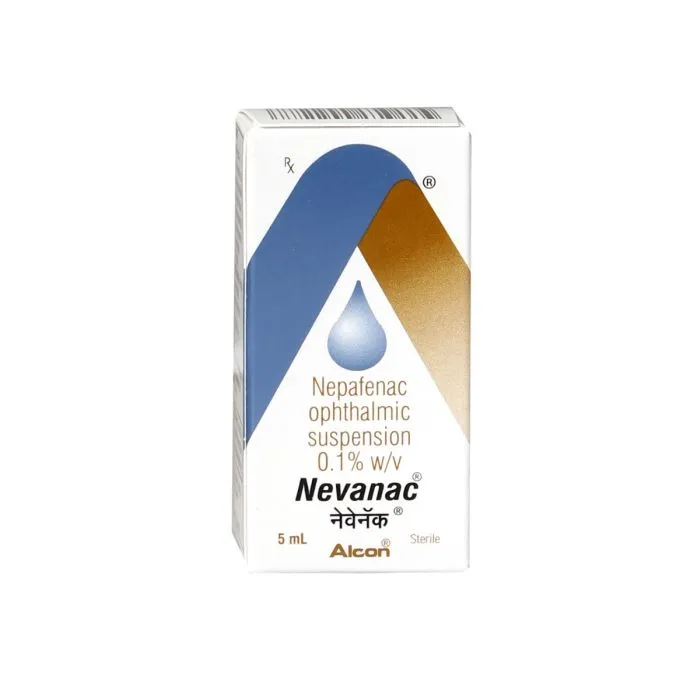
Nevanac Eye Drop (Nepafenac)
Previous product


Iopar SR (Acetazolamide)
$11.00 $19.00Price range: $11.00 through $19.00
Next product
Tropicacyl Plus Eye Drop 5ml
$2.90 $15.21Price range: $2.90 through $15.21
$25.00 $70.00Price range: $25.00 through $70.00
In Stock
In Stock
Nevanac Eye Drop (Nepafenac)
| Pack Size | Price | Quantity | Add To Cart | |
|---|---|---|---|---|
| 3 Eye Drop/s | $25.00 | |||
| 6 Eye Drop/s | $48.00 | |||
| 9 Eye Drop/s | $70.00 | |||
| Want to order in bulk / B2B price? Send Inquiry | ||||
×
Sorry!! Out of Stock
Sorry! Nevanac Eye Drop (Nepafenac) is out of stock
Please click below to view other similar medications.
View All Nepafenac Products

Offer You Can't Resist
Free Shipping
Enjoy Free Shipping on Orders above AUD304 (USD199)
Estimate Delivery :
12 October - 19 October
28
Excellent service overall
Smooth checkout, quick dispatch, and secure delivery. Excellent service overall
 Australia
October 1, 2026
Last Updated on April 30, 2026

Description
Nevanac Eye Drop (Nepafenac)
Nevanac is a prescribed medication that comes in the form of drops for the eyes that contain Nepafenac an nonsteroidal anti-inflammatory medication (NSAID). The primary use of it is treating and preventing inflammation of the eyes, specifically following cataract surgery. Nepafenac reduces inflammation, swelling, and discomfort that are associated with various Ocular disorders. It is a key medicine in ophthalmology. It’s usually prescribed for postoperative eye inflammation.
Mechanism of Action
Nepafenac is the active ingredient found in Nevanac, is a protodrug. That means, once it is injected into the eye, it’s changed into its active version, amfenac. Amfenac inhibits the cyclooxygenase (COX) enzymes–specifically COX-1 and COX-2–which are responsible for producing prostaglandins. Prostaglandins are chemical substances that induce discomfort, inflammation, and fever. Through inhibiting COX enzymes, Nepafenac decreases the production of these mediators that cause inflammation, which helps in reducing swelling and discomfort within the eye.
Indications and Uses
Nevanac is used primarily for two clinical scenarios:
- Postoperative Inflammation Following Cataract Surgery:
Nevanac is usually prescribed to reduce the pain and inflammation that can result from cataract surgery. Surgery for cataracts involves the elimination of the natural lens. This procedure may cause inflammation within the eye. Nepafenac aids in reducing inflammation as well as preventing other complications, including discomfort, swelling, and itchiness. - Ocular Inflammation:
Nepafenac can also be used to treat different inflammatory disorders in the eye. These include the ones caused by injuries and/or surgery. It is utilized to treat general inflammation, which includes that related to uveitis. It is which is a condition characterized by inflammation of the uveal tract.
Dosage and Administration
The usual dosage for Nevanac drops for the eye can be:
- Postoperative Inflammation: The typical dosing regimen includes one drop into the affected eye(s) 3 times per every day beginning one day before cataract surgery, and lasting for a maximum of two weeks following surgery.
- General Inflammatory Conditions: The dosage of the exact dose may differ according to the particular disease being treated, but it is recommended to inject 1 drop to your affected eye(s) every once or every each day in accordance with the medical professional.
Important Notes on Application:
- Cleanse your hands before applying the drops.
- Turn your head to the side and then gently lift the lower part of your eyelid, creating an eyelid pocket.
- Place the dropper over the eye and squeeze it in order to give one drop.
- Keep your eyes closed and gently press the edge of your eyes (near your nose) for a period of about 1-2 minutes. This stops the medicine from leaking into your throat and decreases the chance of absorption into your system.
- If you’re taking multiple eye drops, allow at the very least five minutes between each kind of drop to your eyes.
Side Effects
Even though Nevanac is usually well tolerated, just like all medicines, it may cause negative reactions. They are typically mild and can be:
- Ocular Side Effects:
- Burning or stinging sensation: A short, slight irritation to the eye after application.
- Redness of the eye: Certain users might experience brief discomfort or redness in the eye.
- Dry eyes: Some users complain that their eyes feel dry in comparison to normal.
- Itching or discomfort: Itching can be mild in the course of adjusting to the drug.
- More Serious Side Effects:
- Corneal Damage: In rare instances, it has been reported that the treatment with Nepafenac is associated with cornea problems, such as cornea thinning, ulceration, or a delay in healing after an eye operation. Patients with cornea conditions that are preexisting or people who are using the drops over a long period are advised to be watched closely.
- Vision Changes: Reduced vision or blurred vision can occur either during or following the administration of Nepafenac. If you experience persistent vision issues, you should consult an eye doctor.
- Eye Infections: While rare, long-term usage of NSAIDs for eye infections can raise the likelihood of getting eye infections.
- Hypersensitivity reactions: An allergic reaction can be a sign of a problem, including itching, swelling, or trouble breathing, which is not common, but they could be. They should be treated quickly by stopping the medication and seeking medical treatment.
Contraindications
Nevanac is not recommended for those with:
- Allergy to Nepafenac or Other NSAIDs: Patients who are allergic to Nepafenac or other NSAIDs shouldn’t use this drug.
- Active Ocular Infections: If the patient suffers from an active eye inflammation (e.g., an infection that is bacterial, viral, or fungal), using Nevanac could aggravate the condition. It’s crucial to first treat the issue before taking Nevanac.
- Severe Corneal Damage: For patients who have known cornea complications (e.g., corneal tear and corneal thinner), it is recommended that Nepafenac should not be used unless it is prescribed by an eye doctor.
- Bleeding Disorders: These NSAIDs, like Nepafenac, may cause bleeding to increase. Patients suffering from bleeding disorders like hemophilia, for instance, need to take this medicine with care.
Precautions
- Use During Pregnancy: The security of Nevanac during pregnancy hasn’t been confirmed. It is recommended to stay clear of NSAID drops for the eyes during pregnancy, particularly during the third trimester, until the benefits exceed the risks. Women who are pregnant should speak with their doctor before taking this drug.
- Breastfeeding: There is no way to determine whether Nepafenac can be excreted in breast milk. Therefore, it is recommended to exercise caution when administering Nevanac during nursing. Talk about the risk with your medical professional.
- Elderly Patients: There aren’t any specific dosage adjustments that are appropriate for patients who are elderly; however, it is advised to be cautious when dealing with vision problems or eye conditions.
- Extended Use: Utilizing Nevanac for long periods beyond the suggested treatment duration may raise the possibility of adverse consequences, including cornea damage, slow healing, and even infection. It is crucial to adhere to the dosage and timeframe as advised by your doctor.
Drug Interactions
Nepafenac is a topical NSAID and, as such, it is absorbed in a limited way. This means that the chance of interaction with drugs is low in comparison to other systemic NSAIDs. But there are a few things to consider:
- Other Ocular Medications: If any other drops for the eyes are in use, it is recommended to administer them at the very least 5 minutes away from Nevanac to avoid interaction.
- Systemic NSAIDs: Though the danger is low, if one takes the systemic NSAIDs (e.g., ibuprofen or aspirin), it could result in a higher risk of adverse effects such as stomach irritation or bleeding.
- Corticosteroids: Utilizing corticosteroid eye drops in conjunction with NSAID eye drops such as Nepafenac could increase the chance of developing eye infections or delay recovery. This is why it’s important to apply them with the supervision of your healthcare physician.
Conclusion
Nevanac (Nepafenac) can be described as an extremely effective NSAID as eye drops that are used to reduce inflammation and treat it, especially post-cataract surgery. The ability of this drug to decrease inflammation through the inhibition of COX enzymes is a powerful aid in the management of swelling and postoperative pain. While generally considered harmless, it’s important to adhere to the dosage prescribed and remain aware of possible adverse effects, especially with prolonged usage. Similar to any other medication patient should speak with their physician about any issues or existing health conditions that might impact the safety of Nevanac.
Additional Information
| Manufacturer | Alcon Laboratories |
|---|---|
| Pharmaceutical | Eye Drop/s |
| Strength | 0.001 |
| Pack Size | 3 Bottle/s, 6 Bottle/s, 9 Bottle/s |
Related products





Reviews
There are no reviews yet.