
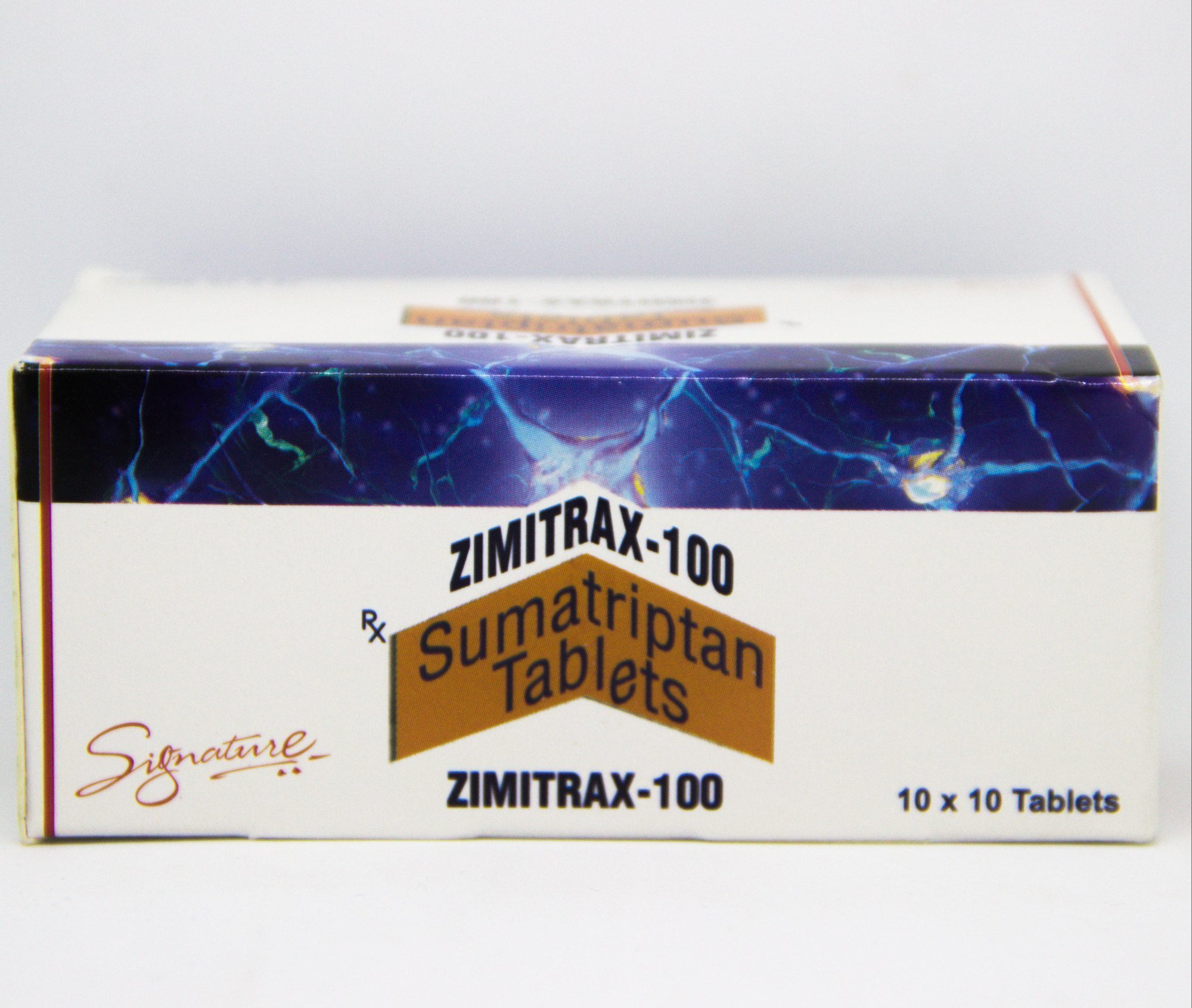
Zimitrax 100mg (Sumatriptan)
Previous product

Xeuric 80mg (Febuxostat)
A$20.00 A$47.00Price range: A$20.00 through A$47.00
Next product

Zipsydon 20mg (Ziprasidone)
A$36.00 A$115.00Price range: A$36.00 through A$115.00
A$120.00 A$262.50Price range: A$120.00 through A$262.50
In Stock
In Stock
Zimitrax 100mg (Sumatriptan)
| Pack Size | Price | Quantity | Add To Cart | |
|---|---|---|---|---|
| 100 Tablet/s | A$120.00 | |||
| 200 Tablet/s | A$187.50 | |||
| 300 Tablet/s | A$262.50 | |||
| Want to order in bulk / B2B price? Send Inquiry | ||||
×
Sorry!! Out of Stock
Sorry! Zimitrax 100mg (Sumatriptan) is out of stock
Please click below to view other similar medications.
View All Sumatriptan Products

Offer You Can't Resist
Free Shipping
Enjoy Free Shipping on Orders above AUD304 (USD199)
Estimate Delivery :
23 October - 30 October
40
Excellent service overall
Smooth checkout, quick dispatch, and secure delivery. Excellent service overall
 Australia
October 1, 2026
Last Updated on June 30, 2026

Description
Product Overview
Zimitrax 100mg contains Sumatriptan, an agonist of the serotonin receptor that is selective (5-HT1B/1D receptor antagonist), utilized mainly for immediate treatment of migraines, whether or not with aura. Sumatriptan is part of the triptan medication class and targets certain serotonin receptors within the brain to ease headache pain and other symptoms.
Zimitrax can be a powerful alternative to quickly reduce the severity of migraine headaches and their associated nausea, as well as photophobia (light sensitivities) and Phonophobia (sound sensitization), which improves the quality of life for those suffering from migraines.
Active Ingredient
- Sumatriptan succinate equivalent to Sumatriptan 100 mg per tablet.
Indications
Zimitrax 100mg is indicated for:
- The treatment for migraine attacks that are without or with aura for adults.
- Treatment must begin when symptoms of migraine begin to manifest for maximum effectiveness.
- It is not intended to be used for prophylactic (preventive) treatment of migraine.
Mechanism of Action
Sumatriptan is a selective agonist for serotonin (5-hydroxytryptamine, 5-HT) subtype 1B and 1D receptors located on cranial blood vessels and sensory nerves of the trigeminal system.
- The activation of the 5-HT1B receptors results in vasoconstriction of the cerebral blood vessels that are dilated, which is believed to cause migraine-related headache.
- The activation of 5-HT1D receptors blocks the release of pro-inflammatory neuropeptides such as calcitonin gene-related peptide (CGRP) and substance P. These substances help to reduce inflammation in the brain and transmission of pain.
The dual mechanism results in a reduction of headache and related symptoms like nausea, photophobia, and phonophobia.
Dosage and Administration
- Recommended dose: A dose of 50 mg or 100 mg taken orally when migraine symptoms begin.
- If migraines recur or the symptoms are not resolved and continue, a new dose can be taken no less than two hours after the dose that was taken.
- The dosage for a day cannot be more than 300 mg over the course of 24 hours.
- If there is no improvement following the initial dose, limit your dose to 200 mg in the span of 24 hours.
- It is not recommended to be used for more than 4 migraines per month, unless recommended by a doctor.
- Tablets are best swallowed by mouth with water. They may be consumed either along with or without food.
Pharmacokinetics
- Absorption: The drug is rapidly absorbed following oral administration, with the highest plasma concentrations being reached in 1 – 2 hours.
- Bioavailability: Around 15% is due to First-pass metabolism.
- Distribution: Volume of distribution around 2.4 L/kg.
- Metabolism: The liver is a major source of metabolism principally by monoamine oxidase-A (MAO-A).
- Elimination: Most of the time, they are excreted in inactive metabolites through urine.
- Half-life: Approximately 2 hours.
Efficacy
Studies have shown that sumatriptan can significantly ease migraine-related pain and symptoms within two hours after administration. It offers rapid and long-lasting relief while reducing the effects of migraines on everyday activities.
Sumatriptan is a great treatment for migraines without or with aura and is usually preferable to nonspecific medications due to its target mechanism.
Safety and Side Effects
Common side effects:
- Tingling or numbness sensation
- Warm or cold sensations
- Flushing
- Dizziness or vertigo
- Fatigue
- Dry mouth
- Muscle cramps or tightness (especially chest or throat)
- Nausea
Serious side effects (rare):
- Coronary artery vasospasm leading to chest pain or myocardial ischemia
- Transient ischemic attacks or stroke
- Severe allergic reactions (rash, swelling, difficulty breathing)
- Serotonin syndrome when combined with serotonergic drugs
Contraindications
- Hypersensitivity is known to sumatriptan, or other components of the composition.
- The history of heart disease ischemic such as angina pectoris or Prinzmetal’s Angina.
- The history of strokes or Ischemic strokes that is transient.
- Uncontrolled peripheral vascular disease or hypertension.
- Use within 24 hours of ergotamine-containing medications or other 5-HT1 agonists.
- Use in conjunction with monoamine oxidase inhibitors (MAOIs) or 2 weeks following the cessation of MAOIs.
- Severe hepatic impairment.
Warnings and Precautions
- Assess the cardiovascular risk before recommending sumatriptan due to the possibility of coronary vasospasm.
- Patients are advised to seek immediate medical care for chest pains and signs of myocardial ischemia develop.
- Take care when using this method in people who have potential risk factors for developing cardiovascular diseases, such as smoking, hypertension, diabetes, or hyperlipidemia.
- A risk of headache caused by medication when used in excess. Limit use to a couple of times each week.
- Serotonin syndrome risks when used with SSRIs, SNRIs, and other serotonergic medications; be sure to monitor patients with care.
- It is not recommended to use this method for children younger than 18 years old.
Drug Interactions
- The use of ergot-containing medications or other triptans is not advised because of the potential for additive vasospastic reactions.
- Interaction with monoamine oxidase inhibitors (MAOIs) raises the chance of toxicity. Avoid mixing or adjusting the dosing interval.
- Risk of developing serotonin syndrome increases in combination with SSRIs or SNRIs. Antidepressants or other serotonergic medications.
- Could cause interaction with CYP3A4 inhibitors and affect metabolism. Clinical significance is nil.
Use During Pregnancy and Lactation
- Sumatriptan can be classified under a pregnancy category C. It is recommended to use it only when the possible positive effects outweigh the potential risk.
- There is no data available on the use of nursing. It is excreted from the milk of the breasts.
- Women who breastfeed should speak with medical professionals before taking sumatriptan.
Storage
- Store Zimitrax tablets in a controlled area with temperatures of 20-25°C (68-77°F).
- Be sure to shield yourself from light and moisture.
- Be sure to keep away from children.
Patient Counseling Information
- It is recommended to take Zimitrax when you notice the first signs of migraine headaches to see the most effective outcomes.
- Don’t exceed the recommended dosage or frequency to avoid adverse effects.
- Tell your physician if you have any previous history of heart disease, stroke, or other risk factors.
- If the symptoms get worse or chest pain develops, you should seek immediate medical care.
- Beware of driving or operating equipment if fatigue or dizziness is observed.
- Tell your doctor about the medications you use, including migraine or antidepressant medicines.
- Create a migraine journal to monitor frequency and reaction to treatments.
Summary Table
| Parameter | Details |
| Generic Name | Sumatriptan succinate |
| Brand Name | Zimitrax |
| Drug Class | Selective Serotonin 5-HT1 Receptor Agonist |
| Strength | 100 mg per tablet |
| Indications | Acute treatment of migraine with or without aura |
| Dosage | 50-100 mg orally at migraine onset; max 300 mg/day |
| Mechanism of Action | Vasoconstriction of cranial blood vessels; inhibition of neurogenic inflammation |
| Common Side Effects | Tingling, flushing, dizziness, fatigue |
| Serious Side Effects | Coronary vasospasm, stroke, serotonin syndrome |
| Contraindications | Ischemic heart disease, stroke, MAOI use |
| Storage | Room temperature, dry place |
Conclusion
Zimitrax 100mg (Sumatriptan) is an efficient and quick-acting medication for headaches that are acute. The targeted mechanism of serotonin receptors provides quick treatment of headache pain and related symptoms, enhancing the patient’s health and quality of life.
Patients must take Zimitrax with caution and under medical supervision, paying particular attention to the risk of cardiovascular disease and possible interactions with other drugs. Adherence to treatment and timely beginning are crucial to maximizing the therapeutic benefits.
Additional Information
| Active Ingredient: | Sumatriptan |
|---|---|
| Indication: | Migraine |
| Manufacturer: | HAB Pharmaceuticals & Research Ltd. |
| Packaging: | 10 Tablets in a Strip |
| Strength: | 100mg |
| Delivery Time: | 7 To 15 days |
Related products






Reviews
There are no reviews yet.