
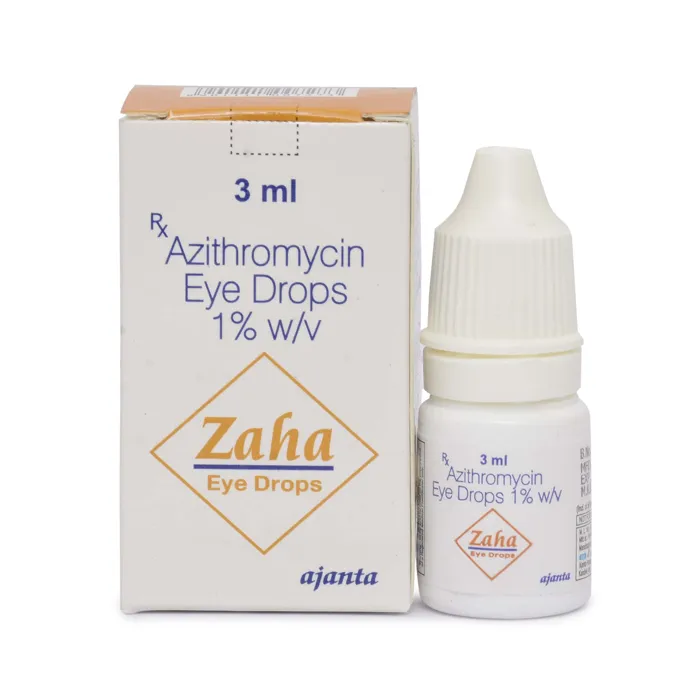
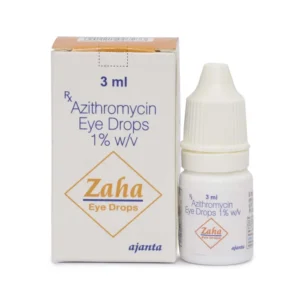
Zaha Eye Drop (Azithromycin)
Previous product
Travacom (Travoprost/Timolol)
A$36.10 A$181.94Price range: A$36.10 through A$181.94
Next product

Careprost (Bimatoprost)
A$26.58 A$152.73Price range: A$26.58 through A$152.73
A$5.72 A$29.40Price range: A$5.72 through A$29.40
In Stock
In Stock
Zaha Eye Drop (Azithromycin)
| Pack Size | Price | Quantity | Add To Cart | |
|---|---|---|---|---|
| 1 Eye Drop | A$5.72 | |||
| 3 Eye Drop/s | A$16.04 | |||
| 6 Eye Drop/s | A$29.40 | |||
| Want to order in bulk / B2B price? Send Inquiry | ||||
×
Sorry!! Out of Stock
Sorry! Zaha Eye Drop (Azithromycin) is out of stock
Please click below to view other similar medications.
View All Azithromycin Products
Offer You Can't Resist
Free Shipping
Enjoy Free Shipping on Orders above AUD304 (USD199)
Estimate Shipping :
07 September - 14 September
41
Last Updated on June 30, 2026

Description
Zaha Eye Drop (Azithromycin) – Detailed Product Information
Brand Name: Zaha Eye Drop
Generic Name: Azithromycin
Dosage Form: Ophthalmic Solution (Eye Drops)
Strength: Typically 1% w/v Azithromycin
Therapeutic Class: Antibiotic (Macrolide Antibiotic)
What is Zaha Eye Drop (Azithromycin)?
Zaha Eye Drop is a prescription solution that is formulated with Azithromycin, which is an antibiotic that works as a macrolide to treat various eye infections caused by bacteria. It was specifically developed to treat conjunctivitis caused by bacteria and other eye infections that are superficial in nature by stifling the production of protein from bacterial cells as well as halting bacterial growth.
How Does Zaha Eye Drop Work?
Azithromycin acts by binding to the 50S ribosomal subunit of susceptible bacteria, thereby preventing the process of translocation in protein production. The action blocks bacteria from producing the essential proteins that are required for expansion and reproduction, thus ending the infection.
Indications and Uses
Zaha Eye Drop is primarily used for:
- Treatment of bacterial conjunctivitis (pink eye)
- Eye infections that are not bacterial in nature, that are caused by susceptible bacteria, like blepharitis or Keratitis (as recommended by a physician)
- Use of a prophylactic medication prior to or following Ocular surgery to avoid infections (in certain cases)
Dosage and Administration
- Typical dosage: Drop one drop of the Zaha Eye Drop in the affected eye(s) two times a day (morning and at night) for three days. Then repeat the treatment every day for a period of 4 days or in accordance with the advice of your eye doctor.
- Make sure you wash your hands well prior to using the drops for your eyes.
- Be careful not to touch the tip of your dropper towards your eye or any other surfaces, in order to avoid contamination.
- Turn your head to the side, and then gently lift your lower eyelids to form a tiny pocket. Put the required quantity of drops in the.
- Keep your eyes closed for at least approximately 1-2 minutes. Gently press the outer corner of your eye to keep the drops from draining out.
- Wearing contact lenses is not recommended when taking this medicine unless you are advised by your physician.
- Follow the entire duration of the treatment the symptoms get better earlier.
Precautions
- Do not touch the end of the dropper directly to your eyes or any other surface.
- If you notice inflammation, redness, or swelling that gets worse or remains, you should stop taking drops and consult a physician.
- Avoid using it if you have an allergy to azithromycin or other macrolide antibiotics.
- Tell your doctor when you’re pregnant or nursing or taking any other eye-related medications.
- Wearing contact lenses is not recommended in the course of treatment, unless directed otherwise.
Side Effects
Zaha Eye Drop is generally accepted; certain users might experience minor adverse effects. These include:
- Temporary burning or stinging sensation in the eye
- Eye redness or irritation
- Blurred vision immediately after application
- Mild itching or swelling of the eyelid
If you feel pain, swelling or swelling, a rash, or worsening symptoms in your eyes, consult your physician immediately.
Storage Instructions
- Keep Zaha Eye Drop at room temperature in a safe place out of direct sunlight and moisture.
- Close the bottle whenever not in use.
- Don’t freeze.
- Remove the eye drops from your eyes within 28 days of opening, or according to the manufacturer’s directions.
- Be sure to keep away from children.
Drug Interactions
Zaha Eye Drop has minimal absorption into the system; important drug interactions are not common. Be sure to inform your doctor of any use you have:
- Other eye medications (antibiotics, steroids, or anti-inflammatory drops)
- Contact lenses or lens care solutions
Use During Pregnancy and Lactation
- Azithromycin eye drops are classified as being relatively safe in pregnancy when applied topically; however, you must only apply them when clearly required and advised by a medical expert.
- If you are breastfeeding, talk to your doctor prior to taking eye drops.
Frequently Asked Questions (FAQs)
Can I use Zaha Eye Drop with contact lenses?
Use contact lenses sparingly when dealing with eye infections, using Zaha Eye Drop, unless your doctor expressly approves of the use.
What should I do if I miss a dose?
Make sure to take the missed dose when you remember it. If you are close to the dose that you are due, do not take the dose you missed. Do not increase the dose.
Can I stop using the drops if symptoms improve?
No. Follow the entire program of treatment in order to avoid the recurrence of symptoms or to prevent resistance.
Is it safe for children?
Zaha Eye Drop is generally recommended for babies and children by a medical professional. Be sure to follow the instructions for pediatric dosage that are provided.
Conclusion
Zaha Eye Drop (Azithromycin) is a potent eye-care solution for antibiotics that aids in removing bacterial infections swiftly and effectively. It provides convenient dosage, good tolerance, and a reliable and effective antibacterial treatment against the most common eye pathogens.
If you suspect that your eyes are suffering from a disease, speak to your medical physician for an accurate diagnosis and treatment using Zaha Eye Drop. Make sure to use the medicine precisely as prescribed to guarantee optimal results and prevent issues.
Related products



Recently Viewed






Reviews
There are no reviews yet.