
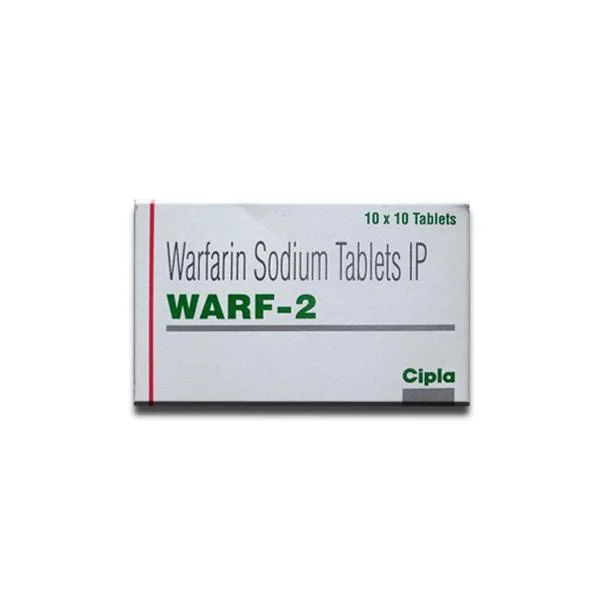
Warf 2mg (Warfarin)
Previous product
Trivedon 20mg (Trimetazidine)
A$16.56 A$48.16Price range: A$16.56 through A$48.16
Next product
Carvidon MR 35mg (Trimetazidine)
A$43.75 A$127.36Price range: A$43.75 through A$127.36
A$25.70 A$49.82Price range: A$25.70 through A$49.82
In Stock
In Stock
Warf 2mg (Warfarin)
| Pack Size | Price | Quantity | Add To Cart | |
|---|---|---|---|---|
| 60 Tablet/s | A$25.70 | |||
| 90 Tablet/s | A$37.69 | |||
| 120 Tablet/s | A$49.82 | |||
| Want to order in bulk / B2B price? Send Inquiry | ||||
×
Sorry!! Out of Stock
Sorry! Warf 2mg (Warfarin) is out of stock
Please click below to view other similar medications.
View All Warfarin Products
Offer You Can't Resist
Free Shipping
Enjoy Free Shipping on Orders above AUD304 (USD199)
Estimate Shipping :
07 September - 14 September
48
Secure Packaging
My order was packaged carefully and arrived in good condition. The whole process was handled professionally, and communication was excellent. Thank you for the great service
 Australia
August 18, 2026
Last Updated on June 29, 2026

Description
Warf 2mg (Warfarin) – Comprehensive Product Information
Brand Name: Warf 2mg
Generic Name: Warfarin Sodium
Strength: 2 mg
Dosage Form: Oral tablet
Manufacturer: Cipla Ltd.
Therapeutic Class: Anticoagulant (Vitamin K antagonist)
What is Warf 2mg (Warfarin)?
Warf 2mg is a prescription anticoagulant (blood thinner) that is employed to help prevent and treat blood clots. It is a source of Warfarin Sodium, an antagonist of vitamin K, which aids in the reduction of clots that cause harm to the blood vessels. The medication is typically used to prevent stroke and deep vein thrombosis (DVT), pulmonary embolism (PE), and the complications that result from atrial fibrillation or the mechanical valves in your heart.
How Does Warf 2mg Work?
Warfarin is a drug that works by stopping the synthesis of vitamin K-dependent clotting factors (Factors II, VII, IX, and X) within the liver. Vitamin K is crucial to clotting blood. In reducing the development of these clotting agents, Warfarin decreases the blood’s capability to make blood clots. This reduces the possibility of severe cardiovascular issues like heart attack, stroke, or embolism.
Indications and Uses
Warf 2mg is utilized in many clinical conditions that require anticoagulation:
- Prevention and treatment of venous thrombosis and pulmonary embolism (PE)
- Prevention of strokes and systemic embolism for patients suffering from atrial fibrillation.
- The prevention of thromboembolic issues in patients suffering from Mechanical heart valves
- Post-surgically, the treatment of thromboprophylaxis is especially important in surgical procedures for cardiac or orthopedic patients.
- Treatment of recurrent myocardial infarction (MI) or transient ischemic attacks (TIAs)
Dosage and Administration
Warf 2mg is to be taken in a dose of oral typically every day during the course of every day, either with or without food.
Initial Dose:
- The dose that is recommended for the first time is usually in the range of 2 mg to 5 mg every day.
- The precise dose for starting is dependent on the specific patient’s factors like the age of the patient, their liver function, other medication as well as comorbidities.
Maintenance Dose:
- The usual maintenance dosage is 2 mg up to 10 mg daily.
- The aim is to keep that INR (International Normalized Ratio) within a target area, usually 2.0 to 3.0 for most conditions.
- Regular monitoring of the INR is crucial, particularly in the initial phase, as well as when other medicines are added or taken out.
Missed Dose:
If a dose has been missed, take it as quickly as you remember the next day. Do not increase the dosage over the next day. If you miss an entire day, consult your doctor.
Important Precautions
Before starting Warf 2mg, notify your doctor if:
- Have liver or kidney disease
- Suffer from bleeding disorders or ulcers
- Are pregnant, planning to become pregnant, or breastfeeding
- Have recently undergone surgery or have upcoming surgery
- Use alcohol regularly
- Have a history of hypertension or stroke
Do not make any significant changes to the food habits, specifically those that include products that contain Vitamin K (e.g., broccoli, spinach, kale), since they can decrease the efficacy of Warfarin.
Side Effects
As with all medicines, Warf 2mg is prone to causing negative side effects. Some patients may not be affected; however, some of the most common negative effects can be:
Common Side Effects:
- Mild bruising
- Nosebleeds
- Bleeding gums
- Heavy menstrual bleeding
- Nausea or vomiting
Serious Side Effects (Seek immediate medical attention):
- Unexplained or excessive bleeding (e.g., in urine, stool, or vomit)
- Severe headache or dizziness (possible sign of internal bleeding)
- Joint pain or swelling
- Chest pain or shortness of breath
- Purple toes or skin rash (possible sign of Warfarin-induced skin necrosis)
Drug Interactions
Warf 2mg is a drug that interacts with an array of drugs, supplements, and some foods.
Notable Interactions Include:
Medications that Increase Warfarin Effect (higher bleeding risk):
- Aspirin and NSAIDs (e.g., ibuprofen, naproxen)
- Antibiotics (e.g., erythromycin, ciprofloxacin)
- Antifungals (e.g., fluconazole)
- SSRIs and SNRIs (e.g., fluoxetine, sertraline)
Medications that Decrease Warfarin Effect (clotting risk):
- Barbiturates
- Carbamazepine
- Vitamin K supplements
- Rifampin
Inform your doctor of the herbal products, medications (especially St. John’s Wort), as well as over-the-counter drugs that you take.
Dietary Considerations
Vitamin K is a crucial part of the way Warfarin functions. Rapid changes in your consumption of foods rich in vitamin K may affect your INR levels, as well as the safety of the treatment.
Foods High in Vitamin K to Consume Consistently:
- Leafy greens: spinach, kale, swiss chard, collards
- Broccoli, brussels sprouts
- Green tea
It does not necessarily have to avoid the foods listed above; however, you should ensure that you are eating them regularly to prevent fluctuation in INR.
Use in Pregnancy and Lactation
- Pregnancy: Warf 2mg is unsuitable for pregnant women because of the possibility of birth defects as well as bleeding in the fetus. When anticoagulation is required during the pregnancy period, heparin is usually preferable.
- Breastfeeding: Warfarin is generally considered to be safe while nursing, generally speaking. However, you should always talk to your physician.
Monitoring Therapy
The Warf 2 mg treatment requires periodic blood tests to check the INR levels:
- INR too low: risk of clot formation
- INR too high: risk of excessive bleeding
At first, INR may be checked on a regular basis or once a week. When the INR is stabilized, tests can be cut down to every 2 to 4 weeks.
Storage Instructions
- Store at room temperature (15°C to 30°C)
- Be safe against heat, moisture, and the light
- Stay out of the reach of pets and children
Overdose and Emergency
In the event of an overdose, Warf 2mg could cause dangerous bleeding. Signs and symptoms can be:
- Blood in urine or stool
- Excessive bruising
- Coughing up or vomiting blood
If you suspect that you have taken an overdose, get medical assistance. The treatment could consist of the injection of vitamin K, fresh frozen plasma, or any other therapeutic measures.
Frequently Asked Questions (FAQs)
Can I take Warf 2mg with alcohol?
The effects of alcohol can alter how Warfarin is used and can raise the possibility of bleeding. It is recommended to restrict or stay clear of drinking alcohol while you are taking Warfarin.
Can I stop taking Warf 2mg abruptly?
No. Stopping suddenly can cause clots to form or a stroke. Always check with your physician before taking any steps to modify you.
Is it safe to take herbal supplements with Warf 2mg?
A variety of herbal remedies may be incompatible when combined with Warfarin. Always consult with your doctor before using any herbal treatment or other supplements.
Conclusion
Warf 2mg (Warfarin) is an essential medication to prevent or treat blood clots, aiding in reducing the chance of developing serious heart problems. But, because of its low therapeutic index as well as the potential for interactions with other medications, it is required to have constant surveillance of your diet as well as open contact with your doctor.
Does not start, stop, or modify the dose of Warf 2mg unless you have professional advice. If used correctly, Warfarin can be a reliable and safe tool for longer-term anticoagulation treatment.
Related products

Reviews
There are no reviews yet.