
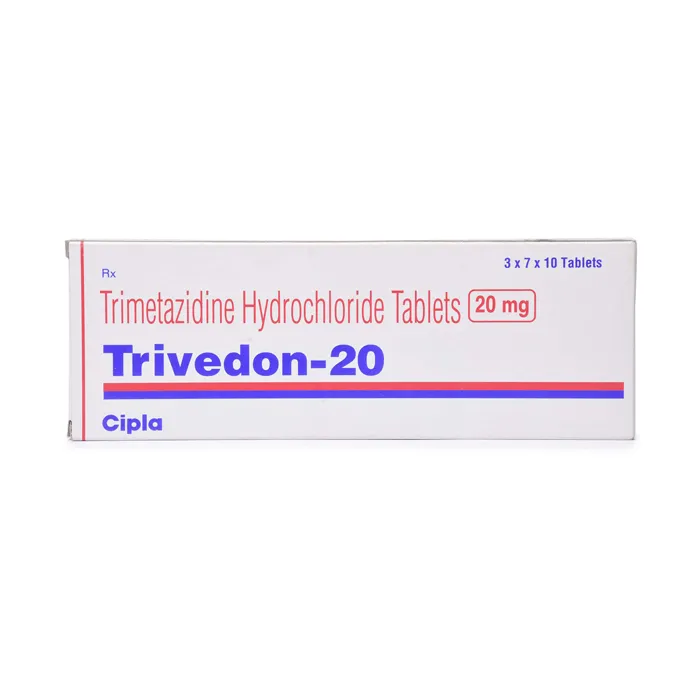
Trivedon 20mg (Trimetazidine)
Previous product

Kenacort Oral Paste 5g (Triamcinolone)
A$4.94 A$25.42Price range: A$4.94 through A$25.42
Next product
Warf 2mg (Warfarin)
A$17.80 A$34.50Price range: A$17.80 through A$34.50
A$11.47 A$33.35Price range: A$11.47 through A$33.35
In Stock
In Stock
Trivedon 20mg (Trimetazidine)
| Pack Size | Price | Quantity | Add To Cart | |
|---|---|---|---|---|
| 30 Tablet/s | A$11.47 | |||
| 60 Tablet/s | A$22.32 | |||
| 90 Tablet/s | A$33.35 | |||
| Want to order in bulk / B2B price? Send Inquiry | ||||
×
Sorry!! Out of Stock
Sorry! Trivedon 20mg (Trimetazidine) is out of stock
Please click below to view other similar medications.
View All Trimetazidine Products

Offer You Can't Resist
Free Shipping
Enjoy Free Shipping on Orders above AUD304 (USD199)
Estimate Delivery :
19 October - 26 October
50
Excellent service overall
Smooth checkout, quick dispatch, and secure delivery. Excellent service overall
 Australia
October 1, 2026
Last Updated on June 22, 2026

Description
Introduction
Trivedon 20mg is a preparation for pharmaceutical use that contains an active component, trimetazidine, which is widely known for its use in the treatment of angina pectoris and other heart-related conditions. It’s part of a class of metabolic agents. They work by boosting the energy metabolic rate of cardiac muscle cells and thus improving their functioning in ischemic situations.
Trimetazidine is particularly effective in people who suffer from persistent stable angina. It reduces the severity and frequency of attacks of angina. Additionally, it is used in different heart diseases that are irascible and, occasionally, in conditions affecting the inner ears function.
This report provides a comprehensive description of Trivedon 20mg, with a focus on its pharmacological properties and dosage information, along with indications, warnings, and side effects.
What is Trivedon 20mg?
Trivedon 20mg is a prescription medicine that is formulated in tablets for oral consumption that contain 20mg of trimetazidine dihydrochloride. Trimetazidine is a drug that improves the metabolic rate of cardiac cells in the absence of oxygen, without impacting the hemodynamics of the heart rate and blood pressure.
Active Ingredient
- Trimetazidine Dihydrochloride 20mg
Trimetazidine is a metabolic regulator that assists cardiac cells in producing energy with greater efficiency, in particular in cases where oxygen levels are low because of narrowing or blocked coronary arteries.
Indications
Trivedon 20mg is usually used to treat:
- Chronic Stable Angina Pectoris: In order to reduce the intensity and frequency of anginal attacks.
- Ischemic Heart Disease: In addition to therapy for improving the myocardial metabolic rate.
- Vertigo and Tinnitus: Sometimes, it is prescribed to increase circulation and metabolic rate for disorders of the inner ear; however, this is not as often.
Mechanism of Action
The primary function of Trimetazidine is metabolism modulation:
- It hinders it from releasing the enzyme long-chain 3-ketoacyl CoA Thiolase (LC 3-KAT) in cardiac mitochondria.
- This inhibits the shift of myocardial metabolism to substrates, shifting it from oxidation of fatty acids to the oxidation of glucose.
- Glucose-oxidation generates higher levels of ATP for each oxygen molecule consumed than the process of fatty acid oxidation.
- This alteration improves the efficacy of oxygen use, while preserving the energy source within cardiac cells that are irascible.
- Contrary to traditional anti-anginal medications that reduce the heart rate or blood pressure, it boosts metabolism in cells.
Dosage and Administration
Recommended Dosage
- The standard adult dosage is 20 mg once a day.
- Tablets must be consumed with meals in order to minimize gastrointestinal side effects.
- The dosage can be altered by the physician who prescribes it, depending on the patient’s response.
Administration Guidelines
- Drink the tablets completely with water.
- Regular dosing schedules help to maintain steady blood levels.
- The duration of treatment is contingent on the disease being treated, as well as the patient’s response. Typically, prolonged use is recommended for chronic diseases.
Precautions and Contraindications
Precautions
- Be cautious when using trimetazidine in patients suffering from Parkinson’s syndrome or Parkinsonian symptoms since trimetazidine could aggravate these ailments.
- Patients suffering from impaired renal function might require dosage adjustments or surveillance.
- Contact your doctor of any additional problems with your brain.
- Can cause headaches and dizziness. Do not drive or operate equipment if you are the person who is affected.
Contraindications
- A known hypersensitivity to trimetazidine.
- People suffering from Parkinson’s disease or associated movement disorders.
- Severe renal impairment.
- In lactation and during pregnancy, use is not advised unless it is required and monitored by an experienced physician.
Side Effects
Trivedon 20mg is typically very well-tolerated; like other medications, it could produce side effects.
Common Side Effects
- Mild gastrointestinal disturbances (nausea, vomiting, abdominal pain).
- Headache or dizziness.
- Flushing or warmth sensation.
Rare but Serious Side Effects
- Disorders of movement, such as tremors, as well as rigidity and anxiety (especially among elderly patients).
- Allergic reactions like rash, itching, or swelling.
- Palpitations or unusual heart rhythms (very rare).
If a serious reaction is observed, patients should consult a physician immediately.
Drug Interactions
- Trimetazidine has a small risk of interacting with drugs.
- Be cautious when taking in conjunction with other medicines that can affect the central nervous system.
- Tell your doctor about the current medicines and supplements you are taking.
Benefits of Trivedon 20mg
- Metabolic Improvement: Improves the efficiency of myocardial cells without impacting the heart rate or blood pressure.
- Symptom Relief: Lowers the frequency and severity of attacks on the heart.
- Better Tolerance: A minimal impact on hemodynamics, which makes it suitable for those who are intolerant to beta-blockers and calcium channel blockers.
- Versatile Use: It is possible to combine other cardiovascular drugs to provide comprehensive control.
- Improved Quality of Life: Aids patients in managing chronic stable angina and has fewer side effects.
Storage Instructions
- Keep it in a cool, dry area below 25°C (77°F).
- Stay away from direct sun and moisture.
- Be sure to keep away from young children.
Patient Counseling Information
- Follow the exact dosage in the manner it is prescribed.
- Avoid abrupt discontinuation of treatment without consulting your physician.
- Inform us of any new or more severe neurological signs immediately.
- Keep track of follow-up appointments to monitor efficacy and side effects.
- Do not engage in any activity that requires alertness when you are experiencing dizziness or sleepiness.
Conclusion
Trivedon 20mg (Trimetazidine) is an important addition to the management of angina that is stable and chronic, as well as other ischemic heart diseases. In addition to improving the myocardial metabolic rate and efficiency in energy use, it offers a unique way to control symptoms without affecting the heart rate or blood pressure. In a controlled manner, with the guidance of a medical professional, it can greatly enhance the outcomes of patients and improve their health.
If you or your loved one is experiencing signs of angina or heart-related problems, talk to your medical doctor to determine if Trivedon 20mg might be a good treatment option.
Related products







Reviews
There are no reviews yet.