
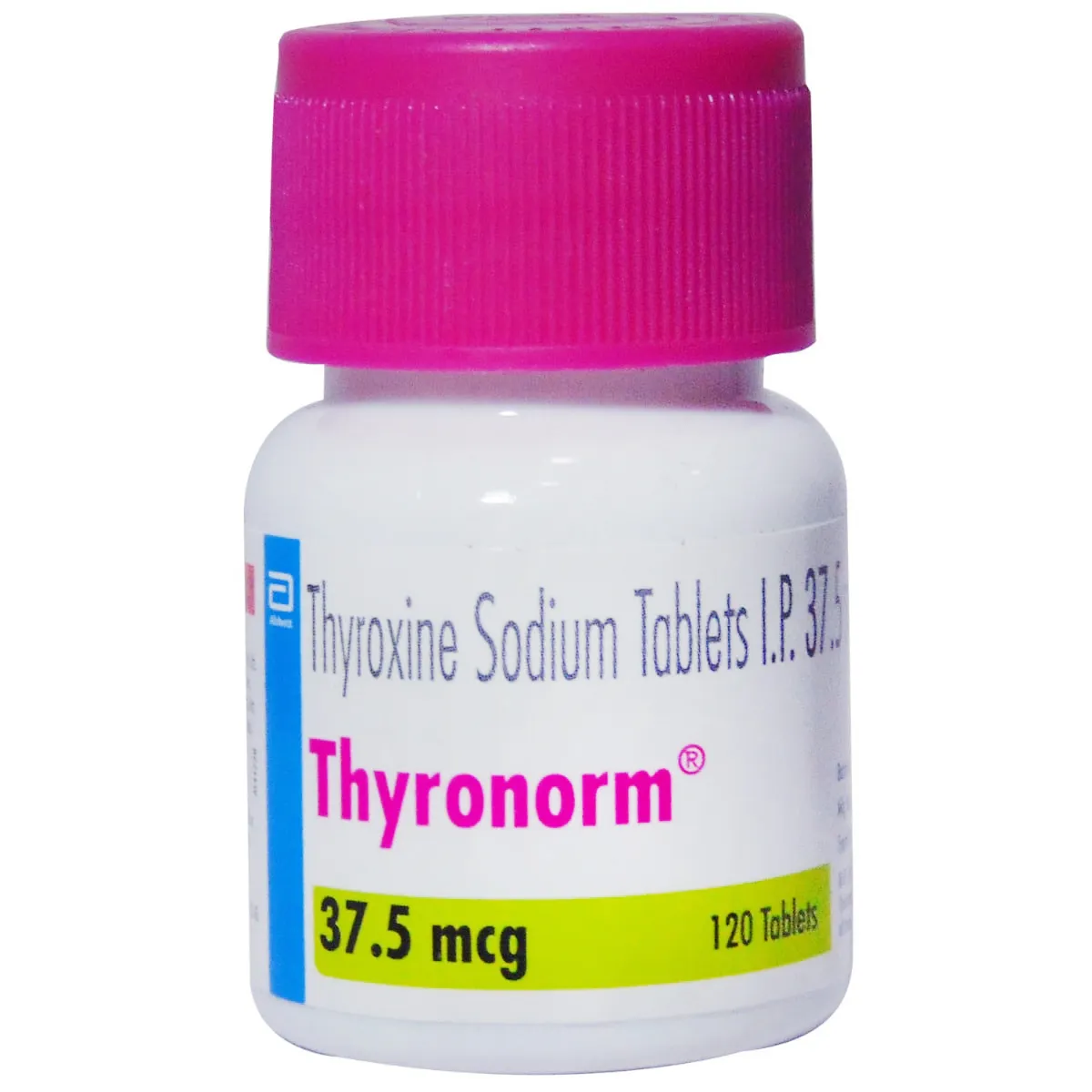
Thyronorm 37.5mcg (Thyroxine Sodium)
Previous product
Thyronorm 200mcg (Thyroxine Sodium)
$20.00 $58.00Price range: $20.00 through $58.00
Next product
Tilstigmin 15mg (Neostigmine Bromide)
$13.00 $34.00Price range: $13.00 through $34.00
$15.00 $98.75Price range: $15.00 through $98.75
In Stock
In Stock
Thyronorm 37.5mcg (Thyroxine Sodium)
| Pack Size | Price | Quantity | Add To Cart | |
|---|---|---|---|---|
| 120 Tablet/s | $15.00 | |||
| 360 Tablet/s | $27.50 | |||
| 720 Tablet/s | $51.25 | |||
| 1440 Tablet/s | $98.75 | |||
| Want to order in bulk / B2B price? Send Inquiry | ||||
×
Sorry!! Out of Stock
Sorry! Thyronorm 37.5mcg (Thyroxine Sodium) is out of stock
Please click below to view other similar medications.
View All Thyroxine Sodium Products

Offer You Can't Resist
Free Shipping
Enjoy Free Shipping on Orders above AUD304 (USD199)
Estimate Shipping :
11 July - 18 July
49
Last Updated on June 19, 2026

Description
Introduction
Thyronorm 37.5mcg is a medicine that contains Thyroxine sodium as an active ingredient. It is used extensively for the treatment of hypothyroidism. This is a disease in which the thyroid glands do not produce sufficient thyroid hormones. Thyroxine sodium is a chemical variant of the hormone thyroxine (T4), a hormone produced naturally through the thyroid gland. It works by boosting the levels of thyroid hormone that are low inside the body, improving the metabolism of the body, and ensuring essential physiological functions.
Composition and Dosage Form
Every tablet of Thyronorm has 37.5 micrograms of Thyroxine Sodium. It is intended for oral use and usually prescribed in doses that are individualized to the patient’s medical condition, weight, age, and the effectiveness of therapy. The 37.5 milligram dose is generally employed to initiate treatment or in patients who require an adjustment in dose.
Mechanism of Action
Thyroxine sodium functions as a substitute hormone and restores the hormone levels of patients suffering from hypothyroidism. Thyroxine (T4) is a prohormone that converts in the peripheral tissues to triiodothyronine (T3) T3, the active thyroid hormone. The hormones are able to bind with nuclear receptors within cells. They influence gene expression and the process of synthesis and metabolism of protein, as well as the growth of. Through restoring the levels of hormones, Thyronorm helps regulate various organ functions like blood pressure, temperature, and energy production.
Indications
Thyronorm 37.5 mcg is indicated for treating:
- Primary hypothyroidism: Iodine deficiency is the cause as well as thyroid surgery. Also known as an autoimmune thyroiditis or inherited hypothyroidism.
- Secondary hypothyroidism: Because of a hypothalamic or pituitary dysfunction.
- Myxedema: A severe case of hypothyroidism that needs replacement hormones.
- Goiter: Thyronorm is a medication that can help control certain types of goiter, which are associated with hypothyroidism.
- Thyroid hormone suppression therapy: In certain instances, Thyronorm is used to stop the expansion of malignant or benign thyroid nodules.
Usage and Administration
Thyronorm is to be taken according to the prescription of a medical expert. The tablets should be taken each day once, usually in the morning on an empty stomach. about 30-60 minutes before breakfast to increase intake. A consistent schedule helps to maintain steady levels of thyroid hormones in the blood. The dosage can be gradually adjusted depending on the individual’s thyroid hormone levels and their clinical reaction.
For adults, the initial dosage usually starts low and then increases every couple of months until the desired result is reached. If you are an elderly patient or suffer from heart disease, it is typically initiated at a lower dose and increased carefully. The doses for children vary depending on weight and age.
Pharmacokinetics
When administered orally, Thyroxine Sodium is rapidly taken up by the gastrointestinal tract. Peak concentrations in plasma occur within two to four hours. The rate of bioavailability for the drug is around 80-90 percent. Thyronorm is a strong binder to plasma proteins, including thyroxine-binding globulin (TBG), transthyretin, and albumin. Thyroxine’s half-life is about 7 days, which allows for a daily dose.
Metabolism is primarily a function of the kidneys and liver, in which thyroxine converts to the more active triiodothyronine (T3) or the inactive reverse T3. The elimination process is mostly via urine and feces.
Contraindications
Thyronorm 37.5 mcg is not to be administered to patients suffering from:
- The adrenal system is insufficiency that has not been treated.
- Hypersensitivity to Thyroxine or other excipients contained that are in the composition.
- Acute myocardial infarction (recent heart attack).
- Therotoxicosis (overactive thyroid), when used as a suppression therapy, as instructed by a physician.
Precautions and Warnings
A careful monitoring of patients is crucial for Thyronorm treatment in order to prevent excessive treatment or over-treatment. It is recommended to take the following steps when contemplating:
- Cardiovascular Disease: Heart disease patients, those with hypertension, or angina require careful dose adjustment to avoid heart stress.
- Diabetes: Thyroid hormones influence glucose metabolism, which requires adjustments to diabetic medication.
- Pregnancy and Lactation: Thyronorm is usually considered to be safe for lactation and pregnancy in the right doses. But careful monitoring by an experienced healthcare professional is essential for maintaining euthyroid health.
- Elderly Patients: Changes in the body’s physiological function due to age can affect drug metabolism, so dosage reduction and monitoring are recommended.
- Interaction with Other Drugs: Thyronorm can interact with a variety of medicines, including anticoagulants, digitalis supplements, calcium antiacids, and iron preparations, which may affect the effectiveness or increase the negative effect.
Side Effects
In the prescribed dosage, Thyronorm is generally well-tolerated. But certain patients might have side effects, particularly when doses are high. Some of the side effects are:
- Hyperthyroidism symptoms include anxiety, sweating, palpitations, sleepiness, insomnia, and weight reduction.
- Increased appetite or changes in bowel habits.
- Headache or tremors.
- Allergic reactions including rash, itching, or swelling.
- Rarely, angina or arrhythmias in susceptible individuals.
If any negative side effects are observed, patients must consult the doctor immediately.
Overdose
An overdose of Thyronorm could cause the onset of thyrotoxicosis, or hyperthyroidism. The first signs may be an increased heart rate and chest pain. Other symptoms include anxiety, sweating, and indigestion. In the event of an overdose, it can cause serious complications like arrhythmias in the heart or stroke. Medical attention should be sought immediately in the event of suspected overdose.
Storage
Thyronorm tablets must be stored in a dry and cool location, far from moisture and direct sunlight. Make sure the medicine is away from animals and children. Be sure not to take the medication after the expiration date.
Clinical Considerations
Treatment for Thyronorm needs regular examination of thyroid function tests (TFTs), which include TSH, T3, and T4 levels. Modifications to dosages are based on lab findings and symptoms to reach a state of euthyroidism, a level of hormones that is within the normal range.
Effects of therapy can take several weeks before they manifest. Patients are advised not to break the regimen prescribed and to keep up with subsequent appointments.
Patient Counseling
Patients must be informed about the causes of hypothyroidism, as well as the necessity for long-term treatment using Thyronorm. It is important to inform patients that abrupt withdrawal from the treatment can increase hypothyroid symptoms and other complications.
The patient should receive advice regarding how to schedule the dose with respect to mealtimes as well as other medications for optimal absorption. Patients are also advised to notify any symptoms that are unusual symptoms or reactions to the medication immediately.
Additional Information
| Active Ingredient: | Thyroxine Sodium |
|---|---|
| Indication: | Hypothyroidism |
| Manufacturer: | Abbott India Pvt. Ltd. |
| Packaging: | 120 Tablets in Bottle |
| Strength: | 37.5mcg |
| Delivery Time: | 7 To 15 days |
Related products


Recently Viewed
Reviews
There are no reviews yet.