

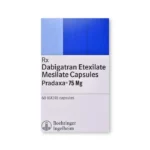
Pradaxa 150mg (Dabigatran Etexilate)
Previous product

Pradaxa 110mg (Dabigatran Etexilate)
$70.00 $190.00Price range: $70.00 through $190.00
Next product

Brilinta 90mg (Ticagrelor)
$76.00 $206.00Price range: $76.00 through $206.00
$70.00 $190.00Price range: $70.00 through $190.00
In Stock
In Stock
Pradaxa 150mg (Dabigatran Etexilate)
| Pack Size | Price | Quantity | Add To Cart | |
|---|---|---|---|---|
| 30 Capsule/s | $70.00 | |||
| 60 Capsule/s | $130.00 | |||
| 90 Capsule/s | $190.00 | |||
| Want to order in bulk / B2B price? Send Inquiry | ||||
×
Sorry!! Out of Stock
Sorry! Pradaxa 150mg (Dabigatran Etexilate) is out of stock
Please click below to view other similar medications.
View All Dabigatran Etexilate Products

Offer You Can't Resist
Free Shipping
Enjoy Free Shipping on Orders above AUD304 (USD199)
Estimate Shipping :
08 June - 15 June
21
Last Updated on May 13, 2026

Description
Blood clots can cause grave health issues, such as stroke, deep vein thrombosis (DVT), and pulmonary embolism (PE). Controlling these risks efficiently is essential, as well as Pradaxa 150 mg, which is a drug that contains Dabigatran Etexilate, the main ingredient. Dabigatran Etexilate is a widely used oral anticoagulant to keep harmful clots from forming. This blog will provide an in-depth comprehension of Pradaxa and how it functions and its functions, dosage, the effects of side effects, safety cautions, and the most frequently asked questions.
What is Pradaxa 150mg?
Pradaxa is a prescription anticoagulant medicine that contains Dabigatran Etexilate, which is an inhibitor of thrombin directly. Contrary to traditional blood thinners such as warfarin, Pradaxa is effective by stopping thrombin, the enzyme that is essential to the formation of blood clots. This reduces the chance of suffering from strokes and blood clots in a variety of health conditions, without the diet restrictions or repeated testing of blood required by the older anticoagulants.
How Does Pradaxa Work?
In the event of an injury after an injury, the body produces blood clots in order to stop the bleeding. The formation of abnormal clots in blood vessels may result in blockages that can cause embolisms or strokes. Dabigatran blocks thrombin, which is the key enzyme responsible for converting fibrinogen into fibrin in the formation of clots. Through blocking thrombin, Pradaxa stops the development and expansion of clots. It also reduces the possibility of dangerous situations, including:
- Ischemic stroke (caused by a clot blocking blood flow to the brain)
- Systemic embolism (blockage of blood vessels by clots)
What is Pradaxa Used For?
Pradaxa 150mg is used mainly to treat:
- Prevention of Stroke as well as Systemic Embolism in patients who suffer from Atrioventricular fibrillation non-valvular (irregular heart rate). The irregular heart rhythm can increase the possibility of developing clots in the heart.
- Treatment and Prevention of Deep Vein Thrombosis (DVT) and Pulmonary Embolism (PE) — diseases that involve clots within deep veins (often legs) or in the lungs.
- Reduction of Recurrence of DVT and PE after initial treatment.
Dosage and Administration
- The recommended dosage of Pradaxa to prevent strokes in patients suffering from atrial fibrillation is 150 mg once a day.
- The dose should be taken in a mouthful and with a glass of water, and without or with food.
- The consistency of timing is essential for maintaining steady blood levels.
- The need for dose adjustments is dependent on the function of your kidneys; your physician will decide on what dosage is appropriate.
- Be sure to avoid missing doses and do not cease using Pradaxa without consulting your healthcare doctor.
Important Precautions
- Kidney Function: Pradaxa is excreted mainly by the kidneys. The kidneys of patients with impairment have to adjust their dose or undergo careful control.
- Bleeding Risk: Similar to all anticoagulants, Pradaxa can increase the chance of bleeding. Tell your physician if you are suffering from any bleeding disorder or are taking any other blood thinners.
- Surgery or Dental Procedures: Discuss with your physician concerning Pradaxa usage, since Pradaxa may need to be temporarily stopped before treatments to decrease the risk of bleeding.
- Pregnancy and Breastfeeding: The security of Pradaxa for breastfeeding and pregnant women is not fully established. Consult your physician.
- Drug Interactions: Certain medicines, such as antiplatelets the NSAIDs, and some antifungals, could increase the risk of bleeding if combined in conjunction with Pradaxa.
Possible Side Effects
Although Pradaxa is generally well-tolerated, some adverse effects could be:
- Bleeding (e.g., nosebleeds, bleeding gums, unusual bruising)
- Gastrointestinal symptoms such as indigestion, stomach pain, or nausea
- Anemia (low red blood cell count due to bleeding)
- Rare allergic reactions (rash, itching, swelling)
Get medical attention immediately for bleeding that is severe or bruising that is not explained, nausea, or vomiting of blood or black stool.
Benefits of Pradaxa 150mg
- No routine blood monitoring: Contrary to warfarin, Pradaxa does not require regular blood tests for INR.
- Fixed dosing: Easy dosing schedule that doesn’t require regular adjustment.
- Rapid onset and offset: Rapid action and speedier removal from the body when removed.
- Reduced dietary restrictions: A lesser amount of interaction with food or other medicines compared to anticoagulants.
Frequently Asked Questions (FAQs)
Q1: Can I take Pradaxa with food?
A1: Yes, Pradaxa may indeed be consumed in combination with and without meals.
Q2: What if I miss a dose?
A2: Do not miss the dose until immediately within the same day. Take care not to double the dosage to cover the missed dose.
Q3: Can I drink alcohol while on Pradaxa?
A3: The consumption of alcohol may increase the risk of bleeding. Limit your alcohol consumption and consult your doctor.
Q4: How long do I need to take Pradaxa?
A4: The duration of treatment depends on the medical condition you are suffering from. Patients may require longer-term treatment to lower the chance of having a stroke.
Q5: Can I stop Pradaxa on my own?
A5: No. A sudden stop can raise the chance of bleeding. Always consult your doctor before stopping.
Q6: Does Pradaxa affect pregnancy?
A6: The safety of the pregnancy stage isn’t well-studied. Discuss options with your doctor in case you’re pregnant or plan to become pregnant.
Conclusion
Pradaxa 150mg (Dabigatran Etexilate) is a new and effective anticoagulant, which provides important advantages in the prevention of strokes as well as treatment of blood clots. Its simplicity to use, the fixed dosage, as well as the absence of monitors, make it a popular choice for many patients. Like all drugs, there are risks associated with it that are particularly related to bleeding. So, the need for careful medical supervision is vital.
If you or your loved one is prescribed Pradaxa, be sure to understand the dose regimen, any potential negative effects, as well as the safety warnings. A regular contact with your doctor will assist you in managing the disease safely and efficiently.
Additional Information
| Manufacturer | Boehringer Ingelheim India Pvt.Ltd |
|---|---|
| Pharmaceutical | Capsule/s |
| Strength | 150mg |
| Pack Size | 30 Capsule/s , 60 Capsule/s , 90 Capsule/s |
Related products


Reviews
There are no reviews yet.