
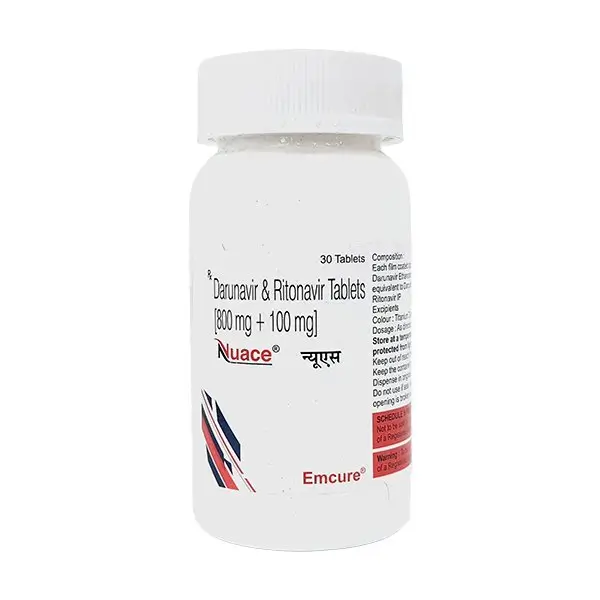
Nuace (Darunavir/Ritonavir)
Previous product
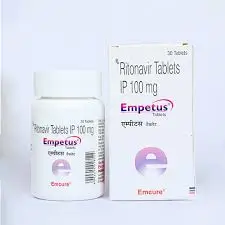
Empetus (Ritonavir)
$50.00 $125.00Price range: $50.00 through $125.00
Next product
Provanol SR 40mg (Propranolol)
$24.00 $52.00Price range: $24.00 through $52.00
$180.00 $470.00Price range: $180.00 through $470.00
In Stock
In Stock
Nuace (Darunavir/Ritonavir)
| Pack Size | Price | Quantity | Add To Cart | |
|---|---|---|---|---|
| 30 Tablet/s | $180.00 | |||
| 60 Tablet/s | $340.00 | |||
| 90 Tablet/s | $470.00 | |||
| Want to order in bulk / B2B price? Send Inquiry | ||||
×
Sorry!! Out of Stock
Sorry! Nuace (Darunavir/Ritonavir) is out of stock
Please click below to view other similar medications.
View All Darunavir/Ritonavir Products
Offer You Can't Resist
Free Shipping
Enjoy Free Shipping on Orders above AUD304 (USD199)
Estimate Shipping :
13 July - 20 July
49
Last Updated on April 30, 2026

Description
Introduction
Human Immunodeficiency Virus (HIV) remains a major global health challenge, affecting millions of people worldwide. Over the years, antiretroviral therapy (ART) has transformed HIV from a life-threatening condition into a manageable chronic illness. One of the key advancements in ART is the combination of Darunavir and Ritonavir, commonly referred to as Nuace. This combination is widely used due to its strong antiviral activity, high resistance barrier, and manageable safety profile.
This guide explains how Nuace works, its benefits, side effects, dosing, and its important role in HIV treatment.
What is Nuace (Darunavir/Ritonavir)?
Nuace is a combination antiretroviral medication that includes Darunavir and Ritonavir. Darunavir belongs to a class of drugs known as protease inhibitors (PIs), which block the HIV protease enzyme. This enzyme is essential for the virus to replicate and mature into infectious particles.
On its own, Darunavir is metabolized quickly in the body, which can reduce its effectiveness. This is where Ritonavir plays a key role. Although Ritonavir is also a protease inhibitor, it is primarily used here as a pharmacokinetic booster. It slows down the breakdown of Darunavir in the liver, increasing its concentration in the bloodstream and enhancing its effectiveness.
This combination results in stronger, longer-lasting antiviral activity, making it a valuable option in HIV treatment.
How Does Nuace Work?
Nuace works through a synergistic mechanism. Darunavir inhibits the HIV protease enzyme, preventing the virus from processing proteins necessary for replication. This leads to the production of immature, non-infectious viral particles.
Ritonavir enhances this effect by inhibiting liver enzymes (particularly CYP3A4) that would normally break down Darunavir. As a result, higher levels of Darunavir remain active in the body for a longer period.
Together, this combination helps:
- Reduce viral load (amount of HIV in the blood)
- Increase CD4 cell count (a key marker of immune health)
- Slow disease progression
- Reduce the risk of HIV transmission
Efficacy and Clinical Benefits
Nuace has proven highly effective in both treatment-naïve patients (those new to therapy) and treatment-experienced patients (those who have used other HIV medications before).
Clinical studies show that Darunavir/Ritonavir can achieve:
- Sustained viral suppression
- Significant increases in CD4 cell counts
- Improved immune function
One of its major advantages is its high genetic barrier to resistance. This means HIV requires multiple mutations to become resistant to Darunavir, making it effective even in patients who have developed resistance to other treatments.
This makes Nuace especially useful for patients who have failed previous ART regimens.
Side Effects and Safety Profile
Like all medications, Nuace may cause side effects, although many patients tolerate it well.
Common Side Effects:
Other Possible Effects:
- Elevated liver enzymes (monitoring required)
- Skin rash (usually mild but should be reported)
- Increased cholesterol and triglyceride levels
Serious but Rare Side Effects:
- Severe liver toxicity
- Allergic reactions
- Significant metabolic disturbances
Regular monitoring by a healthcare provider helps manage these risks effectively.
Dosing and Administration
Nuace is typically available as a fixed-dose combination tablet containing:
- Darunavir 800 mg
- Ritonavir 100 mg
The usual adult dose is:
- One tablet once daily with food
Taking the medication with food improves absorption and reduces stomach-related side effects. Patients should take the medicine at the same time every day to maintain consistent drug levels.
For individuals with liver or kidney issues, dose adjustments or close monitoring may be required.
Resistance and Cross-Resistance
One of the key strengths of Darunavir/Ritonavir is its high resistance barrier. HIV must undergo multiple genetic changes to overcome its effects, making treatment more durable.
However, cross-resistance can occur in patients who have previously developed resistance to other protease inhibitors. In such cases, resistance testing is recommended before starting therapy to ensure effectiveness.
Drug Interactions
Both Darunavir and Ritonavir are metabolized by liver enzymes, particularly CYP3A4. This creates the potential for drug interactions.
Common interacting medications include:
- Antifungal drugs
- Anticonvulsants
- Certain antibiotics
- Other HIV medications
Ritonavir can increase the levels of some drugs in the bloodstream, which may lead to toxicity. Therefore, it is essential to inform your doctor about all medications, supplements, or herbal products you are taking.
Conclusion
Nuace (Darunavir/Ritonavir) is a highly effective and reliable treatment option in modern HIV therapy. Its strong antiviral action, high resistance barrier, and ability to maintain long-term viral suppression make it a cornerstone of antiretroviral treatment.
While it may cause some side effects and requires monitoring for drug interactions, most patients tolerate it well. With proper medical supervision and adherence to treatment, Nuace helps individuals living with HIV achieve better health outcomes and improved quality of life.
For many patients, this combination is not just a medication—it is a powerful tool in managing HIV and living a longer, healthier life.
Additional Information
| Active Ingredient: | Darunavir/Ritonavir |
|---|---|
| Indication: | HIV infection |
| Manufacturer: | Emcure Pharmaceuticals Ltd. |
| Packaging: | 30 Tablets in bottle |
| Strength: | 900mg |
| Delivery Time: | 7 To 15 days |
Related products



Recently Viewed



Reviews
There are no reviews yet.