
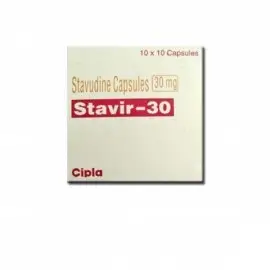
Stavir 30mg (Stavudine)
Previous product

Synthivan 300/100mg (Atazanavir/Ritonavir)
A$105.00 A$237.50Price range: A$105.00 through A$237.50
Next product
Stavir 40mg (Stavudine)
A$24.00 A$53.75Price range: A$24.00 through A$53.75
A$21.00 A$47.50Price range: A$21.00 through A$47.50
Out of Stock
Out of Stock
Stavir 30mg (Stavudine)
| Pack Size | Price | Quantity | Add To Cart | |
|---|---|---|---|---|
| 60 Capsule/s | A$21.00 | |||
| 120 Capsule/s | A$32.50 | |||
| 180 Capsule/s | A$47.50 | |||
| Want to order in bulk / B2B price? Send Inquiry | ||||
×
Sorry!! Out of Stock
Sorry! Stavir 30mg (Stavudine) is out of stock
Please click below to view other similar medications.
View All Stavudine Products
Offer You Can't Resist
Free Shipping
Enjoy Free Shipping on Orders above AUD304 (USD199)
21
Excellent service overall
Smooth checkout, quick dispatch, and secure delivery. Excellent service overall
 Australia
October 1, 2026
Last Updated on June 07, 2026

Description
Overview
Stavir 30mg is a form of stavudine, an anti-HIV medication that is used to treat HIV (Human Immunodeficiency Virus) infection. It’s part of a category of medicines called Nucleoside Reverse Transcriptase Inhibitors (NRTIs). Stavudine acts by preventing the activity of reverse transcriptase, which is an enzyme HIV utilizes to multiply itself within the body. Inhibiting this process, it helps decrease the levels of HIV present in the body. It also improves immunity and decreases the development of HIV infection.
Stavir is often utilized in conjunction with other antiretroviral medicines to provide a full method of treatment. It aids in managing the illness and lowers the possibility of HIV transmission.
Indications
Stavir 30mg is recommended to treat:
- HIV Infection: Stavudine is used as a component of an antiretroviral regimen (ART) to treat HIV disease in adults as well as children. It’s used in conjunction with other NRTIs and non-nucleoside reverse transcriptase inhibitors (NNRTIs) as well as the protease inhibitors (PIs).
- Prevention of Vertical Transmission: Stavudine can be administered during labor, pregnancy, and during delivery to lower the possibility of transmission of HIV from the mother to the child.
- Post-exposure Prophylaxis (PEP): The drug can be utilized after possible exposure to HIV to decrease the chance of contracting the virus.
Mechanism of Action
Stavudine is an NRTI that blocks the function of the reverse transcriptase enzyme. Reverse transcriptase plays a crucial role in HIV’s replication because it converts viral RNA into DNA, which then fuses with the host’s genetic material.
When stavudine enters the body, it’s converted into its active form, stavudine triphosphate. The active metabolite faces competition with the substrate of reverse transcriptase. This blocks its function and also prevents viruses’ DNA from being created. Through a disruption of this process, stavudine hinders the replication of viruses and lowers the load of virus in the bloodstream.
Dosage and Administration
The dose of Stavir 30mg is determined by the patient’s weight, age, and the extent of HIV disease. The recommended dosages for patients include:
- Adults:
- Standard Dose: A 30mg tablet taken at least twice a day according to the regimen prescribed.
- In the case of those with impaired renal function, the need for dosage adjustments could be needed.
- Pediatric Use (age ≥ 3 months):
- The dosage for children is generally measured by weight. Stavir is typically given based on weight levels that range between 1 mg/kg and up to 2 mg/kg taken two times daily.
Administration:
- Stavir 30mg is best consumed orally, with or without food.
- The drug is usually taken as an overall regimen that includes other antiretroviral medicines.
- It is crucial to adhere to the recommended dosing schedule strictly because ignoring doses may result in the growth of resistance to the medication for HIV forms.
Contraindications
Stavir 30mg is not recommended for the following reasons:
- Hypersensitivity: Anyone who is allergic to stavudine or one of its components shouldn’t take this drug.
- Severe Renal Impairment: Stavir is not recommended for patients suffering from severe kidney dysfunction (creatinine clearance <50 mL/min) without dosage adjustments, or even if they do, strict surveillance is needed.
- Liver Disease: Stavudine is processed by the liver. Those with severe liver problems can experience harmful effects.
- Pregnancy and Lactation: Although stavudine is a drug that can be utilized in pregnancy to decrease the transmission of the baby’s fetus, it is recommended that this medication be employed when the advantages outweigh the potential risks. Make sure to consult with a doctor prior to taking it.
Warnings and Precautions
- Lactic Acidosis:
- Stavudine, like the other NRTIs, can trigger lactosis, an uncommon but serious disease. Patients need to be watched for any signs of nausea or stomach pain, vomiting, and weakness of the muscles.
- Peripheral Neuropathy:
- Stavudine could result in nerve damage that results in peripheral neuropathy (numbness, tingling, or pain in the feet and hands). It is a condition that can be caused by dose and is reversible following stopping the medication; however, severe cases need medical intervention.
- Hepatic Effects:
- The function of the liver should be checked while taking Stavir, specifically for those with liver diseases, such as hepatitis.
- Bone Marrow Suppression:
- Stavudine can cause a decrease in bone marrow function. This can lead to anemia as well as neutropenia. The blood count should be checked frequently.
- Fat Redistribution:
- Stavudine’s long-term use can result in changes to weight distribution, which could include abdominal fat accumulation around the face. It can also cause loss of fat in the limbs and limbs, which is known as lipodystrophy.
Adverse Reactions
Common side effects of Stavir 30mg include:
- Gastrointestinal Issues: Nausea, diarrhea, abdominal pain, and vomiting.
- Central Nervous System Effects: Headache, dizziness, and insomnia.
- Metabolic Effects: Increased blood sugar levels (hyperglycemia) and increased cholesterol.
- Skin Reactions: Rash, itching, and dry skin.
Some serious adverse side effects can be a result of:
- Lactic Acidosis: Symptoms include rapid breathing, fatigue, and weakness.
- Peripheral Neuropathy: Burning, pain, or tingling sensations can occur in the feet or hands.
- Liver Toxicity: Yellowing of the skin or eyes (jaundice), abdominal pain, or dark urine.
- Bone Marrow Suppression: Low blood cell counts leading to fatigue, infections, and easy bruising.
Drug Interactions
Stavir is a drug that can be a drug that interacts with other medicines, for example:
- Didanosine (another NRTI): Stavudine co-administration can raise the chance of adverse effects such as peripheral neuropathy and pancreatitis.
- Rifampin (for tuberculosis): Rifampin could reduce the effectiveness of stavudine due to the stimulation of liver enzymes, which convert the drug.
- Probenecid: Increases stavudine’s plasma levels, which requires dosage adjustment.
- Zidovudine: If used in conjunction with stavudine, this combination increases the risk for anemia as well as neutropenia.
Patients should inform the doctor of any additional supplements, medications, or other over-the-counter medications they’re taking to stay clear of possible interactions that could be dangerous.
Storage
- Store Stavir 30mg at room temperature (20-25°C / 68-77°F) away from moisture and heat.
- Place the medicine in the original container to keep it safe from the sun’s rays.
- Don’t use the product beyond the expiration date that is printed on the package.
Frequently Asked Questions (FAQs)
Q1: How do I take Stavir 30mg?
- Use Stavir 30mg exactly in accordance with the instructions of your physician. It is a tablet that can be taken either with or without food, usually 2 or 3 times daily. Inhale the tablet completely with an ice-cold glass. If you do not take your dose, get it back promptly and do not wait to take the next dose. Never double the dosage.
Q2: Can Stavir cure HIV?
- No, it’s not true; Stavir 30mg does not treat HIV. It aids in managing the disease through lowering the amount of viral infection as well as improving immune function; however, lifelong treatment is generally necessary.
Q3: Can Stavir be taken during pregnancy?
- Stavir is a drug that can be administered during pregnancy to decrease the chance of HIV transfer to an infant. However, it is only used under the guidance of a medical professional. It is essential to weigh the risks and potential benefits.
Q4: What are the signs of an overdose?
- Some symptoms of overdose include fatigue, nausea, vomiting, or dizziness. Take immediate medical care if you suspect that you have taken an overdose.
Q5: How long do I need to take Stavir?
- Stavir is often included in a long-term HIV treatment plan. Monitoring by a health care professional is vital to evaluate its effectiveness and modify treatments as required.
Summary
Stavir 30mg (stavudine) is an antiretroviral drug employed to control HIV disease. Inhibiting the reverse transcriptase enzyme, stavudine, aids in stopping the reproduction of the virus, enhancing immunity, and reducing the course of illness. It is useful when used in conjunction with other antiretroviral medications, but it could cause unwanted negative effects, like peripheral neuropathy, lactic acidosis, and liver toxicities, making careful surveillance vital. Be sure to follow your physician’s guidelines to maximize results from treatment and to minimize the potential risk.
Related products

Reviews
There are no reviews yet.