
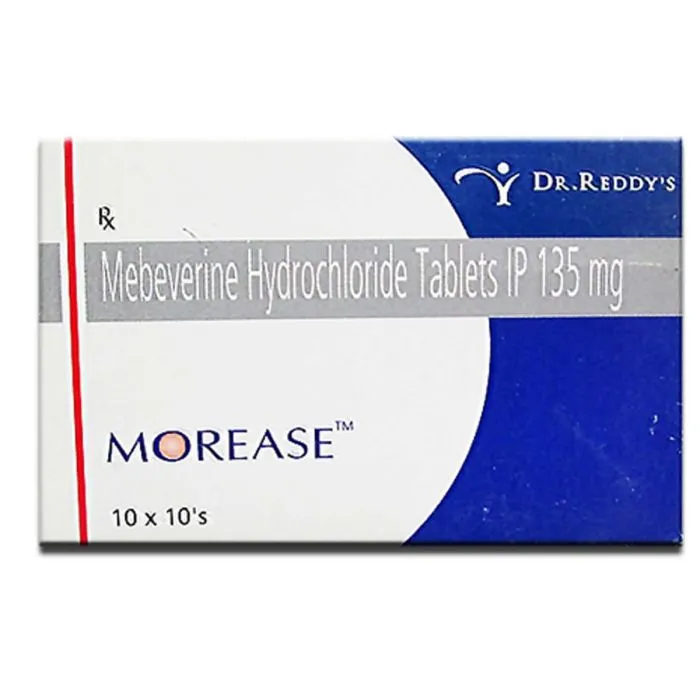
Morease 135mg (Mebeverine)
Previous product


Angizem CD 90mg (Diltiazem)
A$18.00 A$34.00Price range: A$18.00 through A$34.00
Next product

Morr-F 5% (Minoxidil/Finasteride)
A$30.00 A$144.00Price range: A$30.00 through A$144.00
A$17.00 A$35.00Price range: A$17.00 through A$35.00
In Stock
In Stock
Morease 135mg (Mebeverine)
| Pack Size | Price | Quantity | Add To Cart | |
|---|---|---|---|---|
| 30 Tablet/s | A$17.00 | |||
| 60 Tablet/s | A$24.00 | |||
| 90 Tablet/s | A$35.00 | |||
| Want to order in bulk / B2B price? Send Inquiry | ||||
×
Sorry!! Out of Stock
Sorry! Morease 135mg (Mebeverine) is out of stock
Please click below to view other similar medications.
View All Mebeverine Products

Offer You Can't Resist
Free Shipping
Enjoy Free Shipping on Orders above AUD304 (USD199)
Estimate Delivery :
20 October - 27 October
46
Excellent service overall
Smooth checkout, quick dispatch, and secure delivery. Excellent service overall
 Australia
October 1, 2026
Last Updated on April 25, 2026

Description
Morease 135mg is an often prescription medication that is often used to treat IBS, also known as irritable bowel syndrome (IBS), as well as other digestive issues. It is mostly known for its antispasmodic properties and helps ease the muscle tension in the digestive tract and reduce the discomfort and cramping that is often caused by IBS. Mebeverine can be found under a variety of brands, among the most popular can be found as “Morease 135mg.” The medication is usually utilized to treat discomforts like abdominal pain, bloating, and infrequent bowel movements.
In this piece, we’ll go over the medicinal properties, indications, mechanism of action, adverse reactions, dosage, as well as patient concerns that are related to Mebeverine 135 mg.
What is Morease 135mg?
Morease 135mg is an antispasmodic drug. Antispasmodics relieve muscles that spasm, that is, a kind of muscle inside organs, such as the intestinal tract. When you suffer from IBS, it is the case that the smooth muscles of the gut are frequently contracted in an inappropriate way, which can cause pain, cramping, and changes in the way you eat. In relaxing the muscle, Mebeverine aids in the reduction of the symptoms.
Mebeverine is categorized as a non-selective antagonist of muscarinic receptors. It is a drug that blocks the actions of acetylcholine, the neurotransmitter involved in the contraction of muscles. This decreases the spasms that occur in the intestinal tract but does not affect regular gut movement.
Mebeverine’s 135 mg dose is typically given to patients of all ages for the treatment of IBS symptoms. The medication is offered as a tablet and is usually taken by mouth.
Pharmacokinetics of Mebeverine
Ingestion of Mebeverine is absorbed quickly from the stomach. It is highly bioavailable, which means that a significant portion of the amount is absorbed into the bloodstream and is able to carry out its effect. Mebeverine is converted into metabolites within the liver, principally through enzymes belonging to the cytochrome P450 family. It is excreted through urine with a half-life of about two to three hours. A short half-life implies that Mebeverine could have to be administered frequently throughout the day for its efficiency to last.
Indications for Mebeverine
Mebeverine is commonly used for the treatment of functional gastrointestinal diseases, specifically IBS. IBS is a frequent occurrence that is characterised by a variety of symptoms. Some examples include:
- Abdominal pain and cramping
- Bloating
- Altered bowel habits (diarrhea, constipation, or alternating between the two)
- Flatulence
This can seriously impact people’s lives as Mebeverine offers an effective treatment that addresses the muscle spasms that are causing them.
In addition to IBS, Mebeverine may also be prescribed for gastrointestinal disorders that cause muscles that are spasm-prone, like diverticulitis and the inflammatory bowel disorder (IBD), but IBD is a lesser-known condition.
Mechanism of Action
Mebeverine works as an antispasmodic, reducing the acetylcholine action, the neurotransmitter that binds muscle receptors located in the smooth muscle in the digestive tract. The binding causes muscle contraction. Through blocking the effects of acetylcholine, Mebeverine causes the smooth muscles to relax, decreasing spasms as well as providing relief from digestive conditions.
In contrast to other antispasmodic medications, Mebeverine is not a drug that has major effects on the other organs in the body, like the heart. That implies that it has fewer side effects.
Dosage and Administration
The usual dosage for Mebeverine 135mg is one tablet, which is taken three times in the morning, before meals. But the precise dosage will vary based on the individual patient’s condition, and the healthcare professional may alter the dose according to the needs.
Mebeverine is best taken in conjunction with a glass of water. It is important not to chew or crush the tablets since this can alter how the medication is taken in. The medicine should be consumed daily as prescribed, even when you feel better, for the sake of ensuring that symptoms are controlled.
Side Effects of Mebeverine
As with all medicines, Mebeverine can cause side effects. It is, however, generally accepted as safe and is well-tolerated if it is taken according to the directions. The most common side effects are:
- Mild gastrointestinal upset (e.g., nausea or constipation)
- Headaches
- Dizziness
- Dry mouth
The effects of these side effects are typically short-term and usually disappear when the body adapts to the treatment. If any of these more serious side effects happen, it is recommended that the patient be treated by a physician immediately:
- Severe allergic reactions (e.g., rash, itching, swelling)
- Severe abdominal pain
- Difficulty swallowing or breathing
Patients must inform their doctor of any medical conditions they have, and the other medicines they’re using, in order to prevent potential interaction with other medications.
Contraindications and Warnings
Mebeverine is to be used at a moderate dose when patients suffer from:
- An underlying gastrointestinal obstruction or dilation
- Liver or kidney disease (as it is metabolized and excreted by these organs)
- Pregnancy or breastfeeding (the security of Mebeverine during lactation and pregnancy is not well-established.)
People who have an allergy to Mebeverine or any of its ingredients are advised not to take the drug.
Patients should also avoid operating machinery or driving in the event of dizziness or sleepiness as an adverse result of their medication.
Drug Interactions
Mebeverine is not known to cause important interactions with any other medicines. It is crucial to inform your healthcare doctor about all other medications that you’re taking, which include herbal and over-the-counter medicines. Certain medicines that alter liver enzymes could modify the way that Mebeverine is processed and could increase or reduce its efficacy.
Patient Considerations
In prescribing Mebeverine to patients, doctors will take into consideration a variety of factors to make sure that they provide the most favorable outcome to the individual patient. This could comprise:
- The patient’s age and general state of health
- The intensity and frequency of IBS symptoms
- Other medical issues the patient could be suffering from
- Possible drug interactions with the other medications that patients are taking
In certain situations, it is recommended to make lifestyle adjustments, including dietary adjustments or stress management strategies, and regular workouts can be suggested along with Mebeverine for optimal treatment results.
Alternatives to Mebeverine
While Mebeverine has proven beneficial for a lot of people suffering from IBS It isn’t the only option for treatment. The other antispasmodic medications comprise:
- Hyoscine butylbromide: Another antispasmodic is used for digestive problems, which helps relax the muscles of smoothness.
- Dicyclomine: The same drug blocks acetylcholine and helps decrease spasms that occur in the intestinal tract.
In certain instances, there are instances when patients will be given medication to treat the particular symptoms of IBS, like constipation medications and antidiarrheals to treat diarrhea.
Lifestyle and Dietary Considerations
In addition to medication, making specific lifestyle changes and diet modifications could significantly enhance the control of IBS symptoms. This could include:
- Dietary changes: Refrain from eating foods that can trigger symptoms, such as high-fat meals, spicy food, or dairy items.
- Probiotics: Many patients get relief from their symptoms when they take probiotics. They help bring back a balanced balance of the gut microbiome.
- Stress management: Methods like yoga meditation, deep breathing exercises can help in reducing stress, which is a frequent trigger of IBS symptoms.
Conclusion
Mebeverine 135 mg is a commonly utilized and efficient treatment for the alleviation of the symptoms that are associated with irritable bowel syndrome and various gastrointestinal diseases. The antispasmodic effect of Mebeverine provides relief of abdominal pain, bloating, and frequent stool motions. If taken according to the prescription, it is typically well-tolerated and carries a lower incidence of adverse side effects.
Related products








Reviews
There are no reviews yet.