
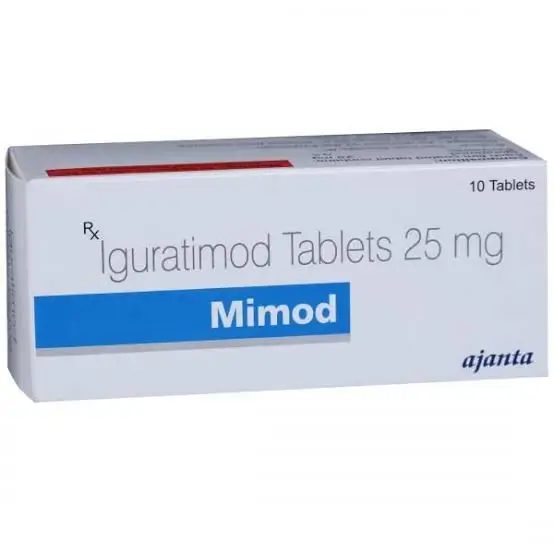
Mimod 25mg (Iguratimod)
Previous product
Midotab 5mg (Midodrine)
$90.00 $297.00Price range: $90.00 through $297.00
Next product
Minocyclone 100mg (Minocycline)
$65.00 $275.00Price range: $65.00 through $275.00
$32.00 $73.44Price range: $32.00 through $73.44
In Stock
In Stock
Mimod 25mg (Iguratimod)
| Pack Size | Price | Quantity | Add To Cart | |
|---|---|---|---|---|
| 30 Tablet/s | $32.00 | |||
| 60 Tablet/s | $54.40 | |||
| 90 Tablet/s | $73.44 | |||
| Want to order in bulk / B2B price? Send Inquiry | ||||
×
Sorry!! Out of Stock
Sorry! Mimod 25mg (Iguratimod) is out of stock
Please click below to view other similar medications.
View All Iguratimod Products

Offer You Can't Resist
Free Shipping
Enjoy Free Shipping on Orders above AUD304 (USD199)
Estimate Delivery :
17 September - 24 September
50
Very easy to order
I have been struggling with staying focused and maintaining productivity for years, particularly during long workdays. After researching various options, I decided to give Modalert 100 MG a try, and I can confidently say it has been a game-changer for me.
 Australia
February 11, 2025
Response from Modalertaustralia
Thank you for sharing your experience! We’re glad to hear Modalert 100 MG has helped support your focus and productivity during long days. Feedback like this means a lot to us and to others considering their options. Please continue to use the medication as directed, and feel free to reach out if you ever need assistance.
Last Updated on April 25, 2026

Description
Mimod 25mg (Iguratimod): A Comprehensive Guide to Managing Rheumatoid Arthritis
Rheumatoid arthritis (RA) is a persistent autoimmune disorder that can cause discomfort, inflammation, and swelling of joints. Managing RA effectively is vital for preventing joint injuries and maintaining high health and quality of living. There are many treatments to choose from. Mimod 25mg is a medication that contains Iguratimod is a newly developed treatment that promises promising results.
The comprehensive guide will cover Mimod 25mg, what it is, how it operates, and its benefits and dosage guidelines, possible negative effects, as well as precautions to be aware of.
What is Mimod 25mg?
Mimod 25mg prescription medicine whose active ingredient is Iguratimod, which is a disease-modifying antirheumatic medication (DMARD). DMARDs are drugs that can stop the progression of autoimmune disorders like arthritis and rheumatoid arthritis by focusing on the root cause of immune system malfunction, rather than managing symptoms.
Iguratimod is well-known for its immunomodulatory properties and anti-inflammatory benefits, aiding in reducing joint inflammation and preventing joint injury.
How Does Iguratimod Work?
Iguratimod is a drug that blocks the creation of inflammatory cytokines (proteins that trigger inflammation within the body. It also reduces the function of immune cells, which target joints during RA, reducing inflammation and preventing cartilage destruction of bone.
In addition, it blocks the activity of nuclear factor-kappa B (NF-kB), the protein complex that is involved in the initiation of inflammation responses. This efficiently reduces the overactivity of the immune system, that is which is a hallmark of RA.
Uses and Indications
Mimod 25mg is primarily used for:
- Rheumatoid Arthritis (RA): Reduce joint inflammation, pain, and stiffness. Also, to avoid joint injury.
- In some cases, it is combined with other DMARDs and treatments such as methotrexate to increase the impact.
- It could also be prescribed for different autoimmune inflammatory disorders according to the judgment of a physician.
Dosage and Administration
Recommended Dosage
- The usual dosage for Mimod is 25 mg once a day (total 50 mg daily).
- The dosage can be altered based on the response of patients and their tolerance.
- Always follow your physician’s prescriptions in detail.
How to Take Mimod
- Drink water or tablets with the tablet.
- Taken in combination with or without food, however, taking it with food can lessen stomach discomfort.
- Follow a steady schedule to ensure that you have a steady level of the drug.
- Follow the prescribed medication regardless of whether symptoms get better to stop the progression of the disease.
Potential Side Effects
Although Mimod is typically well-tolerated, certain patients might be afflicted by side effects:
Common Side Effects
- Gastrointestinal issues: nausea, abdominal discomfort, diarrhea
- Elevated liver enzymes (detected via blood tests)
- Rash or skin reactions
- Headache
Less Common/Serious Side Effects
- Liver toxicity (rare but serious)
- Blood disorders (such as leukopenia or thrombocytopenia)
- Allergic reactions
- Interstitial lung disease (very rare)
A regular check-up with your healthcare doctor is vital to identify and address any side effects quickly.
Precautions and Warnings
- Liver Function: Iguratimod can affect the liver’s function. The tests for liver enzymes must be performed frequently.
- Blood Tests: It is important to keep track of blood count numbers regularly to keep track of blood-related side consequences.
- Pregnancy and Breastfeeding: Breastfeeding and pregnancy safety are not fully established. Consult your doctor.
- Other Medications: Tell your physician about all medications you’re taking in order to stay clear of negative interactions.
- Pre-existing Conditions: Contact your doctor if you have liver diseases, blood disorders, or lung conditions.
Drug Interactions
Iguratimod may interact with:
- Other immunosuppressants, or DMARDs (cautious combination is recommended)
- The metabolism of drugs in the liver can influence the liver enzymes
- Medications affecting blood counts
Make sure you disclose any medication supplementation and natural products that you take.
Lifestyle and Management Tips
- Keep a healthy diet in check and drink plenty of water.
- Regularly engage in a light exercise routine to help maintain joint mobility.
- Reduce or avoid drinking alcohol to decrease strain on the liver.
- Regularly attend medical checks to check for any issues.
- Take care of stress and take adequate rest. This can influence the autoimmune process.
Frequently Asked Questions (FAQs)
How long does it take for Mimod to show effects?
It can take anywhere from several weeks to a couple of months to noticeably improve the symptoms. This is because DMARDs perform their work slowly.
Can Mimod be taken with methotrexate?
Yes, Iguratimod can be employed in conjunction with methotrexate, under the supervision of a physician.
What should I do if I miss a dose?
Do it as quickly as you can remember, unless you’re near the time of the next dose. Avoid taking double doses.
Is Mimod addictive?
No, it isn’t an addiction.
Can I stop Mimod when I feel better?
No, the decision to stop with no medical advice could cause a worsening of the condition.
Conclusion
Mimod 25mg (iguratimod) is a reliable treatment for rheumatoidarthritis through targeting the immune system, and limiting inflammation. It reduces stiffness, joint pain, and also prevents joint damage over time, and improves the health and quality of life.
If you’ve been given Mimod, make sure you follow the regimen closely, make sure to attend regularly scheduled check-ups, and speak freely with your physician concerning any concerns or consequences.
Consult your physician before changing any aspect of your lifestyle or medication in connection with RA treatment.
Additional Information
| Active Ingredient: | Iguratimod |
|---|---|
| Indication: | Rheumatoid Arthritis |
| Manufacturer: | Ajanta Pharma Ltd. |
| Strength: | 25mg |
| Packaging: | 15 Tablets in 1 Strip |
| Delivery Time: | 7 To 15 days |
Related products


Recently Viewed




Reviews
There are no reviews yet.