

Malirid 7.5mg (Primaquine)
Previous product

Magnesium Oxide
A$39.00 A$110.00Price range: A$39.00 through A$110.00
Next product

Maxxima-V 130mg (Sildenafil Citrate)
A$75.00 A$165.00Price range: A$75.00 through A$165.00
A$6.00 A$18.00Price range: A$6.00 through A$18.00
In Stock
In Stock
Malirid 7.5mg (Primaquine)
| Pack Size | Price | Quantity | Add To Cart | |
|---|---|---|---|---|
| 28 Tablet/s | A$6.00 | |||
| 56 Tablet/s | A$10.00 | |||
| 84 Tablet/s | A$18.00 | |||
| Want to order in bulk / B2B price? Send Inquiry | ||||
×
Sorry!! Out of Stock
Sorry! Malirid 7.5mg (Primaquine) is out of stock
Please click below to view other similar medications.
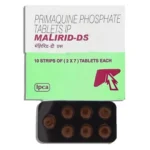
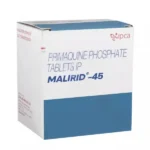
View All Primaquine Products
Offer You Can't Resist
Free Shipping
Enjoy Free Shipping on Orders above AUD304 (USD199)
Estimate Delivery :
12 October - 19 October
33
Excellent service overall
Smooth checkout, quick dispatch, and secure delivery. Excellent service overall
 Australia
October 1, 2026
Last Updated on April 20, 2026

Description
Introduction
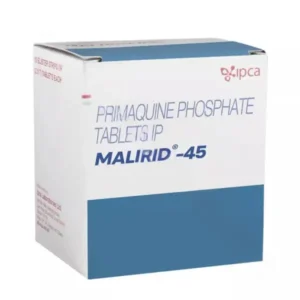
Malirid 7.5mg is the brand term used to describe Primaquine, which is an antimalarial drug mostly used to prevent the recurrence of Plasmodium vixax as well as Plasmodium ovale diseases by focusing on those stages in the liver that are dormant (hypnozoites). Primaquine plays a vital role to eradicate malaria because of its special capacity to remove the latent types of malaria parasites that other antimalarials cannot have the ability to affect.
The 7.5 mg dosage is usually utilized for adult treatment, usually as part of treatment regimens that combine.
Chemical and Pharmacological Profile
- Generic Name: Primaquine
- Brand Name: Malirid
- Drug Class: Antimalarial, 8-aminoquinoline derivative
- Chemical Formula: C15H21N3O
- Mechanism of Action:
Primaquine inhibits the parasite’s mitochondrial electron transport as well as replicating DNA by producing reactive oxygen species. It is primarily active against the stage of hypnozoite within the liver. To prevent relapses of malaria, it also has some effect against blood-stage malaria parasites.
Indications
Malirid (Primaquine) is indicated for:
- Radical cure of P. vivax and P. ovale malaria: Eliminating hypnozoites in the liver that have been dormant and avoiding relapse.
- Terminal prophylaxis: To avoid relapses for patients who have been exposed to P. Vivax or P. ovale.
- Prophylaxis of malaria: Sometimes, they are used in conjunction with other medications to reduce the risk of malaria in endemic areas.
Dosage and Administration
- Standard adult dose: 15 mg daily base over 14 weeks (sometimes 7.5 mg daily), dependent on the body’s weight and the clinical situation.
- For prophylaxis: Weekly doses of lower doses are administered during the period of the exposure, plus further weeks following the departure from the area of endemicity.
- Route: Oral tablets.
It is recommended to take primaquine together with food in order to lessen the stomach disturbances.
Pharmacokinetics
- Absorption: The drug is rapidly absorbed by the intestinal tract.
- Peak plasma levels: Within 1-3 hours after the oral dose.
- Metabolism: The liver is a major source of metabolism, predominantly through the enzyme CYP450.
- Half-life: Around 4-7 hours.
- Excretion: Mainly renal.
Efficacy
Primaquine has been identified as the most widely-available antimalarial, which is effective against liver hypnozoites, which is why it is essential to prevent relapses of P. Vivax and P. ovale infection. It’s frequently combined with blood schizonticides, such as chloroquine, which can provide the treatment for active infections and the prevention of Relapse.
Side Effects
Although generally tolerated, Malirid (Primaquine) may be the cause of:
Common Side Effects:
- Gastrointestinal discomfort: nausea, vomiting, abdominal pain
- Headache
- Dizziness
Serious Side Effects:
- Hemolytic anemia: In particular, in people suffering from diabetes, 6-phosphate dehydrogenase (G6PD) deficiency caused by oxidative stress causes the breakdown of red blood cells. This could be life-threatening.
- Methemoglobinemia: Rarely occurring condition where the delivery of oxygen is affected due to an abnormality of hemoglobin.
- Allergic reactions: Pruritus, rashes, and, in rare instances, anaphylaxis.
Contraindications
- G6PD deficiency: It is not recommended for those suffering from G6PD deficiency due to the possibility of hemolytic anemia.
- Pregnancy: Avoiding it during the first trimester due to the danger to the fetus, as well as uncertainty about the G6PD condition.
- A hypersensitivity to primaquine and related substances.
Precautions
- G6PD testing: It is recommended to start therapy before starting the treatment to prevent bleeding.
- Pregnancy and breastfeeding: Be cautious when using alternatives. They are preferred when it is possible.
- Monitoring: Patients must be closely monitored to look for indications for hemolysis (dark urine or fatigue, jaundice, etc.) while receiving the course of treatment.
- Use in children: Dose adjustment based upon your weight and the clinical guidelines.
Drug Interactions
- Chloroquine: It is commonly administered in conjunction with blood-stage disease, while primaquine is targeted at the liver stage.
- Other antimalarials: It is possible to combine them depending on your regimen.
- Drugs affecting CYP450: It can alter the primaquine metabolism as well as its efficiency.
Special Considerations
- G6PD deficiency screening: Essential to ensure safe use.
- Relapse prevention: The ability of Primaquine to remove Hynozoites can reduce the impact of malaria-related relapses and transmission.
- Resistance: While primaquine resistance is not common, an improper dose could result in treatment failure.
Storage
- Keep at room temperature and far from light and moisture.
- Be sure to keep away from young children.
Summary
Malirid 7.5 mg (Primaquine) is a crucial antimalarial medication that is used for the elimination of liver hypnozoites from P. vixax as well as P. ovale. It also helps to prevent malaria-related relapses. It is well tolerated; however, it should be used with caution for patients suffering from G6PD deficiencies because of the possibility of acute hemolytic anemia.
An appropriate screening for patients, adhering to doses, as well as medical monitoring, will ensure that the use of Primaquine is safe and efficient. Primaquine continues to be an important element in the combat against malaria, particularly to prevent relapse and provide the most radical treatment.
Additional Information
| Active Ingredient: | Primaquine |
|---|---|
| Indication: | Malaria |
| Manufacturer: | Ipca Laboratories Ltd. |
| Strength: | 7.5mg |
| Packaging: | 7 Tablets in 1 Strip |
| Delivery Time: | 7 To 15 days |
Related products


Reviews
There are no reviews yet.