
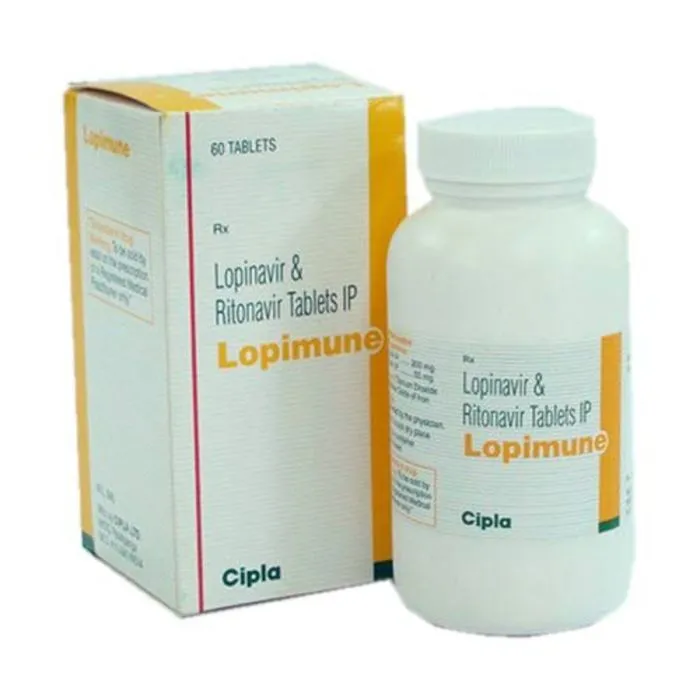
Lopimune (Lopinavir/Ritonavir)
Previous product
Tadagra Prof (Tadalafil)
A$124.18 A$316.24Price range: A$124.18 through A$316.24
Next product

Super Eroxib (Tadalafil/Dapoxetine)
A$108.30 A$167.50Price range: A$108.30 through A$167.50
A$173.28 A$519.84Price range: A$173.28 through A$519.84
In Stock
In Stock
Lopimune (Lopinavir/Ritonavir)
| Pack Size | Price | Quantity | Add To Cart | |
|---|---|---|---|---|
| 60 Tablet/s | A$173.28 | |||
| 120 Tablet/s | A$346.56 | |||
| 180 Tablet/s | A$519.84 | |||
| Want to order in bulk / B2B price? Send Inquiry | ||||
×
Sorry!! Out of Stock
Sorry! Lopimune (Lopinavir/Ritonavir) is out of stock
Please click below to view other similar medications.
View All Lopinavir/Ritonavir Products
Offer You Can't Resist
Free Shipping
Enjoy Free Shipping on Orders above AUD304 (USD199)
Estimate Shipping :
27 August - 03 September
21
Recommended
Very satisfied with the service. Everything was well organized, communication was clear, and the shipment was professionally prepared. I would recommend this company for its reliable service
 Australia
August 14, 2026
Last Updated on April 19, 2026

Description
Introduction
Lopimune is a pharmaceutical brand that has been marketed as a combination medication that has two antiretroviral active agents: Lopinavir and Ritonavir. It is used mainly in treatments for Human Immunodeficiency Virus (HIV) disease. Available under various brands across the world, Lopimune plays a crucial function in combination antiretroviral therapy (cART), which helps in reducing viral replication as well as boosting the immune function of those suffering from HIV.
Components and Mechanism of Action
- Lopinavir: Lopinavir is an inhibitor of protease (PI). It disables HIV-1’s protease enzyme that is crucial for the process of replication. HIV protease can break down polyproteins of HIV into functional components that are essential to assemble infectious virus particles. By blocking the enzyme, Lopinavir stops the development of new viral particles and thus reduces the amount of virus in your body.
- Ritonavir: Ritonavir can also be a protease inhibitor, but its principal function with respect to this is as a pharmacokinetic enhancement or booster. Ritonavir effectively blocks cytochrome P450 3A4 (CYP3A4) enzyme within the liver. It is responsible for metabolizing Lopinavir. Inhibiting CYP3A4, Ritonavir slows the degradation of the drug, raising its plasma concentration as well as efficiency. This boost effect permits lower doses of the drug and lowers the frequency of doses.
Indications
Lopimune is recommended for the treatment of HIV-1 infections together with antiretroviral drugs. It’s prescribed to treat:
- Patients who are not treated (those recently diagnosed as having HIV)
- Treatment-experienced patients with resistant viral strains
- Patients in need of a protease inhibitor-based treatment
It is commonly employed in conjunction in combination with Nucleoside reverse transcriptase inhibitors (NRTIs) like Tenofovir as well as Emtricitabine to create an extremely effective antiretroviral treatment.
Dosage and Administration
Lopimune is generally given orally and is as tablets or an oral solution. Adult dosages are:
- Two tablets are taken daily either with or without food.
The average tablet includes 200 mg of Lopinavir as well as 50 mg Ritonavir.
In the case of children, dosage is dependent on age and weight, and an oral solution formula is typically preferable for a simpler dosage.
Patients must be sure to be on the right track with their recommended regimen in order to avoid resistance and to maintain the suppression of viruses.
Pharmacokinetics
- Absorption: Lopinavir is a moderately bioavailable drug that is significantly enhanced by Ritonavir. In the presence of food, it can boost the absorption.
- Distribution: Lopinavir is very tightly connected with plasma protein (about 98%-99%).
- Metabolism: Both medications are processed within the liver via CYP3A enzymes. Ritonavir acts as a blocker to reduce the metabolism of Lopinavir.
- Elimination: Lopinavir’s elimination time is that is approximately 5 to 6 hours after being boosted with Ritonavir, which allows twice daily Dosing.
Efficacy
Clinical trials have proven that Lopimune, together with antiretrovirals in other combinations, decreases HIV load to undetectable levels for several patients, improving CD4T-cell count and lessening the likelihood of related complications of AIDS.
In particular, the pivotal study referred to by the name of “Kaletra trial” demonstrated that patients who received Lopinavir/Ritonavir had an impressive virologic reduction compared to the other inhibitors of protease.
Side Effects and Safety Profile
The most common adverse reactions are:
- Gastrointestinal issues: diarrhea, nausea, vomiting, abdominal pain
- Elevated liver enzymes and hepatotoxicity
- Lipodystrophy (fat redistribution)
- Hyperlipidemia (increased cholesterol and triglycerides)
- Insulin resistance and hyperglycemia
- Elevated bilirubin levels
- Possible cardiac conduction abnormalities (PR interval prolongation)
The risk of severe allergic reactions is very low; however, they do require urgent medical attention.
Drug Interactions
Because Ritonavir is a powerful CYP3A4 inhibitor, Lopimune interacts with many medicines. The most notable interactions are:
- Other antiretrovirals (e.g., other reverse transcriptase inhibitors that are not nucleosides, different protease inhibitors)
- Certain statins (risk of muscle toxicity)
- Anticoagulants (e.g., warfarin)
- Antiarrhythmics
- Anticonvulsants
- Certain antifungals and antibiotics
Health professionals must examine all medications that are concurrently used to ensure that there are no dangerous interactions.
Resistance
The resistance to Lopinavir could develop when the virus mutates and reduces its binding affinity with the protease enzyme. Ritonavir’s ability to boost the immune system helps keep the proper levels of drugs to fight resistant strains. However, treatment adherence is crucial to avoid resistance.
The test for genotypic resistance is typically employed when there is a virologic problem for the purpose of guiding subsequent treatment.
Special Populations
- Pregnancy: Lopinavir/Ritonavir is generally considered safe and recommended for pregnant women suffering from HIV. However, surveillance is required.
- Liver Impairment: Alternate therapies or dose adjustments could be necessary for patients suffering from liver impairment.
- Renal Impairment: A significant dose adjustment is not usually required; being cautious is suggested.
Global Impact and Use
Lopimune is extensively used for HIV treatments across the globe, particularly in settings with limited resources, because of its inclusion within the WHO Treatment guidelines. Co-formulations make therapy easier is more effective, increase adherence, and decreases the burden of pills.
Generic versions have made these drugs more readily available to the world.
Recent Developments
The latest protease inhibitors, as well as Integrase inhibitors, are now the preferred initial-line treatment options for some guidelines because of improved adverse effects and resistance-related barriers. But Lopimune is still a viable choice, particularly in situations where other options are not available or used in secondary-line therapies.
The research continues to improve dosages for pediatrics as well as use for HIV-2 infections.
Summary
Lopimune is a combination of Lopinavir and Ritonavir, which is an essential antiretroviral treatment for treating HIV disease. It prevents the replication of HIV by blocking the HIV protease enzyme. HIV protease enzyme. This is accompanied by Ritonavir increasing the levels of Lopinavir for increased effectiveness. It’s well-established in terms of safety and has a wide world impact, and is crucial in total HIV treatment despite the ever-changing treatment options.
Related products


Recently Viewed

Reviews
There are no reviews yet.