
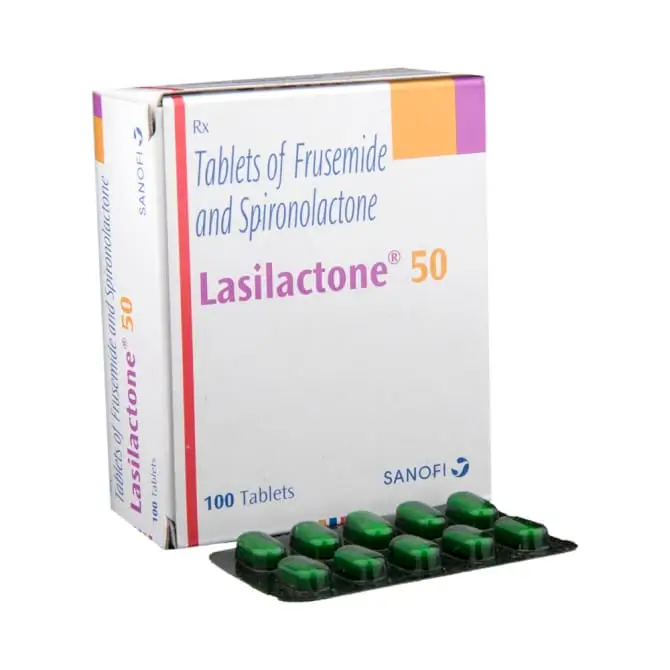
Lasilactone 50mg (Frusemide/Spironolactone)
Previous product
Myoril 4mg (Thiocolchicoside)
$37.50 $87.50Price range: $37.50 through $87.50
Next product
Myoril 8mg (Thiocolchicoside)
$45.00 $105.00Price range: $45.00 through $105.00
$15.00 $28.00Price range: $15.00 through $28.00
In Stock
In Stock
Lasilactone 50mg (Frusemide/Spironolactone)
| Pack Size | Price | Quantity | Add To Cart | |
|---|---|---|---|---|
| 60 Tablet/s | $15.00 | |||
| 90 Tablet/s | $22.00 | |||
| 120 Tablet/s | $28.00 | |||
| Want to order in bulk / B2B price? Send Inquiry | ||||
×
Sorry!! Out of Stock
Sorry! Lasilactone 50mg (Frusemide/Spironolactone) is out of stock
Please click below to view other similar medications.
View All Frusemide/Spironolactone Products
Offer You Can't Resist
Free Shipping
Enjoy Free Shipping on Orders above AUD304 (USD199)
Estimate Shipping :
01 September - 08 September
34
Easy to use and helpful
Great result…!! Happy by using Waklert 50 mg, It was 100% effective. I am happy to use this product… Thank you Modalertaustralia 🙂
 Australia
January 4, 2025
Response from Modalertaustralia
Thank you for sharing your experience! We’re glad to hear Waklert 50 mg worked well for you and that you’re happy with the results. Your feedback means a lot to us. Please continue using the medication as directed and consult a healthcare professional if you have any questions.
Last Updated on April 19, 2026

Description
Comprehensive Guide on Uses, Benefits, and Precautions
Controlling fluid retention as well as certain kidney or heart conditions typically will require the use of a variety of medicines to regulate electrolytes and eliminate excessive fluids from the body. Lasilactone 50 mg, which combines two diuretics that are powerful — Frusemide (Furosemide) and Spironolactone is an all-purpose prescription to treat these conditions. This blog article focuses on what Lasilactone 50mg does, what it is, how it operates, and its benefits and dosage guidelines, as well as side effects and safety warnings.
What is Lasilactone 50mg?
Lasilactone 50mg is a combination medicine that contains:
- Frusemide (Furosemide) — a potent loop diuretic.
- Spironolactone — It is a diuretic that is potassium-sparing as well as an antagonist of aldosterone.
This formula combines the powerful effect of eliminating fluids from Frusemide and the potassium-retention capabilities of Spironolactone, aiding in reducing excess fluid while also reducing the possibility of imbalances in potassium.
How Does Lasilactone Work?
Two active ingredients function in synergy:
- Frusemide is a drug that acts within the loop of Henle inside the kidneys, preventing the reabsorption of sodium and chloride. It also causes a rise in the amount of urine (diuresis) and helps your body to eliminate salt and water. It is extremely effective in the rapid elimination of fluids.
- Spironolactone operates in the distal tubules as well as the collecting ducts of the kidney, blocking the effect of aldosterone. It is a hormone that encourages potassium loss and sodium retention. In doing this, it decreases the amount of fluid retained but does not result in excessive loss of potassium.
Combining these two, Lasilactone can provide a balanced diuresis which eliminates salt and water, while defending against the depletion of potassium, which could be harmful and lead to heart problems.
Common Medical Uses of Lasilactone 50mg
Lasilactone is frequently prescribed in the following situations:
- Edema (Fluid Retention)
A build-up of fluids can happen in several ways, which include:
- Congestive heart failure (CHF)
- Liver cirrhosis with ascites
- Kidney diseases like nephrotic syndrome
Lasilactone can reduce swelling and accumulation of fluid in tissues by encouraging the production of urine and balancing electrolytes.
- Hypertension (High Blood Pressure)
Diuretics such as Frusemide and Spironolactone aid in lowering blood pressure by decreasing blood volume via the increased amount of urine. It is possible to use the combination to treat other conditions when the medications do not work.
- Heart Failure
In the event of heart failure in heart failure, the heart is unable to function efficiently, which leads to swelling and retention of fluids. Lasilactone helps reduce fluid overflow and relieves symptoms like breathing problems and swelling of the legs.
- Hyperaldosteronism
Spironolactone is a component of the mixture that prevents the overproduction of the aldosterone hormone which results in sodium retention and loss of potassium. This is beneficial for situations that have excessive production of aldosterone.
Dosage and Administration
The amount of Lasilactone that is prescribed is dependent on the disease being treated, as well as the individual aspects like kidney function, the severity of fluid retention, as well as electrolyte levels.
- The typical starting dosage could include one tablet per day. However, modifications can be suggested by your health professional.
- It is generally taken in a mouthful and is usually taken in combination with or without food.
- Tablets must be consumed along with a large glass of water.
- The consistency in timing is essential to maintain constant levels of medication within the body.
Important: Do not alter the dose or discontinue the medicine without consulting your physician.
Potential Side Effects of Lasilactone 50mg
While it’s effective, Lasilactone can cause adverse side effects. These should be closely monitored
Common Side Effects:
- More frequent urination and thirst
- Lightheadedness or dizziness, particularly during standing up fast (due to blood pressure being lower)
- Instabilities in electrolytes (such as high potassium or low sodium)
- Muscle cramps, weakness, or muscle twitches
Serious Side Effects:
- Hyperkalemia (high potassium levels): Spironolactone may result in potassium retention that can lead to potentially dangerous arrhythmias in the heart.
- Hyponatremia (low sodium levels)
- Allergic reactions (rash, itching, swelling)
- Dehydration
- Kidney dysfunction or worsening kidney failure
- Breast tenderness or enlargement (due to Spironolactone’s anti-androgen effects)
- Gynecomastia in men
Important Precautions
Before starting Lasilactone, inform your healthcare provider if you:
- Have kidney or liver problems
- Are pregnant or breastfeeding
- Have a history of high potassium levels or heart arrhythmias
- Are you on any other medication that can affect your potassium levels (e.g., ACE inhibitors or potassium supplements)
- Have low blood pressure or electrolyte imbalances
Regular monitoring of the electrolytes in blood the kidney’s function, as well as the blood pressure, is vital in the course of treatment, to avoid complications.
Drug Interactions
Lasilactone could interact with a variety of substances, and this can alter the way it functions or cause negative side effects:
- Potassium supplements or potassium-sparing diuretics: Risk of hyperkalemia.
- ACE inhibitors or ARBs: Also, you can increase your potassium levels.
- Nonsteroidal anti-inflammatory drugs (NSAIDs): It can reduce the efficacy of diuretics.
- Digoxin: Unbalanced electrolytes can raise the danger of toxicity.
- Lithium: Diuretics may increase the levels of lithium and increase the risk of toxic effects.
Be sure to inform your physician of any medications or supplements you take.
Lifestyle and Dietary Tips
While you are taking Lasilactone, certain lifestyle modifications could improve the results:
- Keep hydrated. Be sure to adhere to your physician’s recommendations regarding fluid intake.
- Do not eat foods high in potassium when your physician suggests foods high in potassium, like oranges, bananas, and tomatoes.
- Reduce salt intake in order to reduce the retention of fluid.
- Take care when standing up to avoid dizziness.
- Check your blood pressure regularly and note any significant changes.
What to Do If You Miss a Dose
If you are unable to remember Lasilactone in the morning, then take it as quickly as you can remember, unless it’s almost time for the next dose. Don’t take a second dose to compensate for the missed dose, since it could increase the chance of adverse reactions.
When to Seek Medical Attention
Get medical attention immediately if you are experiencing:
- Severe dizziness or fainting
- Palpitations or irregular heartbeats
- Severe muscle weakness or muscle cramps
- Indications of allergic reactions, including rashes, swelling, or breathing difficulties
Storage Instructions
- Store Lasilactone tablets inside a dry, cool space away from direct sunlight.
- Be sure to keep away from youngsters.
- Don’t use the medicine until the expiration date has passed.
Conclusion
Lasilactone 50mg is an efficient combination drug that helps to control the issue of fluid retention as well as related disorders using the strengths that are Frusemide as well as Spironolactone. Promoting the elimination of fluids while conserving potassium, it provides an appropriate treatment plan for those suffering from kidney, heart, or liver conditions that cause hypertension or edema.
Due to the possibility of negative side effects and interactions with drugs, it is recommended to always be administered under the strict supervision of a medical professional. Continuous monitoring of renal function, blood pressure, and electrolyte levels is vital to ensure safety and reliable treatment.
If you or your family member has received Lasilactone 50 mg, knowing how it functions as well as following your doctor’s guidelines can help you control the condition in a safe way and increase the quality of your life.
Related products



Recently Viewed
Reviews
There are no reviews yet.