
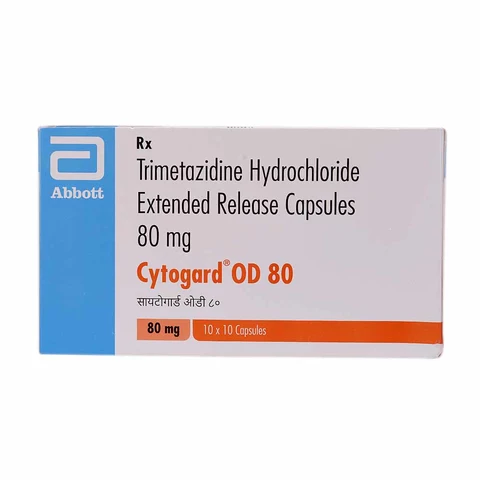
Cytogard 80mg (Trimetazidine)
Previous product
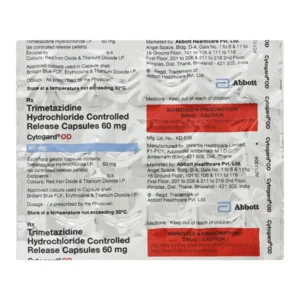
Cytogard 60mg (Trimetazidine)
$43.00 $112.00Price range: $43.00 through $112.00
Next product
Dabibrook 110mg (Dabigatran)
$58.00 $142.94Price range: $58.00 through $142.94
$43.00 $112.00Price range: $43.00 through $112.00
In Stock
In Stock
Cytogard 80mg (Trimetazidine)
| Pack Size | Price | Quantity | Add To Cart | |
|---|---|---|---|---|
| 30 Capsule/s | $43.00 | |||
| 60 Capsule/s | $78.00 | |||
| 90 Capsule/s | $112.00 | |||
| Want to order in bulk / B2B price? Send Inquiry | ||||
×
Sorry!! Out of Stock
Sorry! Cytogard 80mg (Trimetazidine) is out of stock
Please click below to view other similar medications.
View All Trimetazidine Products

Offer You Can't Resist
Free Shipping
Enjoy Free Shipping on Orders above AUD304 (USD199)
Estimate Shipping :
07 June - 14 June
44
Last Updated on November 28, 2025

Description
Cardiac Metabolic Agent for Stable Angina & Heart Efficiency
Cytogard 80mg with the main substance Trimetazidine is an anti-anginal metabolic medication created to enhance circulation and the energy metabolic process within the heart. It is prescribed to patients suffering from persistent stable angina pectoris. Cytogard enhances the heart’s capability to function in poor oxygen levels, especially during exercise.
In optimising the way in which the heart utilizes energy, Cytogard helps to reduce chest discomfort and improve the endurance of exercise, and enhances the overall heart performance while not affecting the heart rate or blood pressure. It is an essential therapy in chronic cardiovascular health throughout Australia.
What Is Cytogard 80mg?
Cytogard 80mg can be described as an extended-release oral preparation made up of trimetazidine dihydrochloride, a medicine that functions at the cellular level within the heart. In contrast to conventional anti-anginal medicines, which alter heart rate or blood pressure, Trimetazidine works directly upon metabolic processes in the heart and helps heart cells improve the utilization of oxygen in times that are stressful (e.g., the cold, exercise, or emotional stress).
The most common use for it is as an add-on treatment for patients suffering from unstable angina who aren’t fully controlled by first-line medication such as beta-blockers and Nitrates.
Key Product Overview
| Feature | Description |
| Active Ingredient | Trimetazidine dihydrochloride 80mg |
| Drug Class | Metabolic anti-anginal agent |
| Formulation | Extended-release tablet |
| Primary Use | Stable angina pectoris |
| Prescription Required? | Yes (Australia) |
| Usual Dosing | One tablet once daily (80mg ER) |
| Effect On BP/HR | None — no change in blood pressure or heart rate |
| Onset of Action | Within days (progressive improvement) |
| Storage | Below 25°C; protect from moisture |
How Does Trimetazidine Work?
Trimetazidine boosts heart energy metabolism through switching energy production away from fatty acid oxidation to glucose oxidation, which is an efficient use of oxygen. The change increases myocardial performance, particularly in situations where oxygen levels are low (such as in heart attacks).
Benefits:
- Increases the cellular energy utilization in the heart
- Reduces instances of angina
- Increases exercise tolerance
- Minimises reliance on vasodilators (like nitrates)
In addition, it is a non-inhibitory drug that has none of the direct effects on the heart rate, blood pressure, or the coronary artery diameter. This makes it ideal for those who can’t take other cardio-related medications.
What Is Cytogard 80mg Used For?
Cytogard is indicated in particular to treat long-term care of patients with stable angina and is particularly appropriate for patients with:
- Do not tolerate beta-blockers as well as calcium channel blockers
- Are need to find an additional treatment for existing anti-anginal therapies
- Are there coexisting disorders that limit the use of other drugs for cardiovascular health
| Condition | Role of Cytogard |
| Stable angina pectoris | Lowers the severity and frequency of chest pain |
| Ischaemic heart disease | Enhances the energy efficiency of myocardial cells |
| Effort-related cardiac fatigue | Increases exercise tolerance |
| Chronic heart strain | Increases the metabolic rate of cardiac cells under stress |
Note: It’s not indicated for acute Angina attacks and unstable angina.
How to Take Cytogard 80mg
Standard Dosage:
- A tablet (80mg) once daily. The best way to do this is during the same hour throughout the day.
- Take a full glass of water with a straw; do not crush or chew.
- It can be consumed either with or without food.
Don’t surpass the dosage recommended; be sure to comply with your doctor’s instructions.
Treatment Duration:
- Cytogard is designed to be used for long-term use.
- The continuation of therapy is determined by the control of symptoms as well as an evaluation by a cardiologist.
Safety, Warnings & Monitoring
Do Not Use If:
- You suffer from the disease Parkinson’s or other movement disorders
- If you suffer from a severe impairment of your kidneys
- You’re not yet 18 years old
Use with Caution:
- In elderly patients (renal function monitoring recommended)
- If you’ve experienced a pattern of tremor, rigidity, as well as gait stability
- If you are pregnant or nursing — only with medical supervision
Drug Interactions:
- Cytogard has a very low risk of drug interactions. However, you should consult your doctor about any medications you take, and in particular:
- Other anti-anginals
- Parkinson’s medications
- Kidney-related drugs
Possible Side Effects
Although generally tolerated, certain patients can have:
Common Side Effects:
- Nausea or abdominal discomfort
- Headache
- Dizziness
- Fatigue
Rare or Serious:
- Tremor, stiffness, or unsteadiness (extrapyramidal symptoms)
- Sleep disturbances
- Allergic rash or itching
- Vision changes (rare)
Consult a physician in the event that any neurological signs develop unusually.
Storage Instructions
- Place in a safe place at room temperature at 25°C or less.
- Maintain the original packaging
- Be safe from light and moisture
- Stay out of the reach of children and pets
10 Frequently Asked Questions (FAQs)
-
What is Cytogard 80mg used for?
It is used to treat angina by increasing the efficiency of energy within heart muscle cells, particularly in cases where oxygen supply has been diminished.
-
Does Cytogard lower blood pressure or heart rate?
No. Trimetazidine is a drug that works without regard to blood pressure and heart rate and is therefore appropriate for those suffering from heart rate or blood pressure problems.
-
How soon can I expect results?
A majority of patients report decreased frequency of angina after just a couple of days to weeks after a day of use, depending on the severity.
-
Can I take Cytogard with other heart medications?
Yes — it’s usually employed with beta-blockers, nitrates, or calcium channel blocking drugs. Make sure you inform your doctor about any medication you take.
-
Is it safe to use long-term?
Yes. Cytogard is specifically designed for continuous usage; however, periodic checks and checks on kidney function are suggested, particularly when you are older.
-
What should I do if I miss a dose?
Do the missed dose whenever you remember. If you’re close to your next dose, take the skipped dose. Don’t overdose.
-
Can Cytogard be used during exercise?
Yes. It’s actually designed to enhance the endurance of exercise by assisting the heart in physical exercise.
-
Is it safe for elderly patients?
In general, yes. However, dose adjustments and the monitoring of kidney function could be required when a person is elderly.
-
Can I use Cytogard during pregnancy?
This medication is not generally recommended. Only use it if it is clearly stated by a physician. Your physician.
-
Does Cytogard treat acute angina attacks?
No. It’s not a medication for emergency use. If you experience sudden chest pain, it is recommended to use quick-acting medications like sublingual Nitrates or get emergency assistance.
Final Thoughts
Cytogard 80mg (Trimetazidine) is a modern, well-tolerated, and safe anti-anginal therapy that aids in the heart’s metabolic processes and not only the flow of blood. It’s a great treatment for people who are looking to increase their endurance, fewer chest painful instances and better cardiovascular stability in particularly when traditional medications aren’t sufficient or can cause negative side effects.
It is a part of a total cardiovascular health program that includes eating habits, exercises, and risk factor managementCytogard is a part of a comprehensive strategy for heart health that includes risk factor management. Cytogard is a secure and efficient alternative therapy to long-term treatment for angina.
Additional Information
| Active Ingredient: | Trimetazidine |
|---|---|
| Indication: | Chest Pain (Angina) |
| Manufacturer: | Abbott India Pvt. Ltd. |
| Packaging: | 15 Capsules in 1 Strip |
| Strength: | 80mg |
| Delivery Time: | 7 To 15 days |
Related products






Recently Viewed


Reviews
There are no reviews yet.