
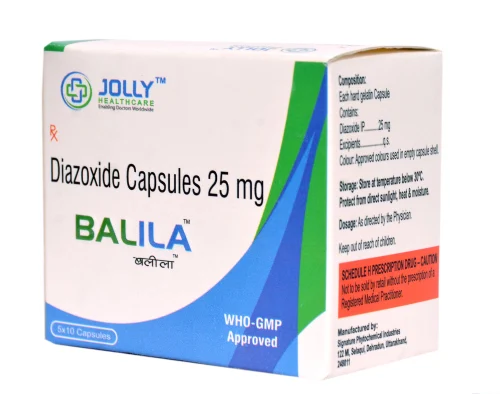
Balila 25mg (Diazoxide)
Previous product
Bacloheal 25mg (Baclofen)
A$56.15 A$132.66Price range: A$56.15 through A$132.66
Next product
BD Emerald 10ml Syringe with Needle (Syringe)
A$18.25 A$53.34Price range: A$18.25 through A$53.34
A$138.98 A$343.93Price range: A$138.98 through A$343.93
In Stock
In Stock
Balila 25mg (Diazoxide)
| Pack Size | Price | Quantity | Add To Cart | |
|---|---|---|---|---|
| 30 Capsule/s | A$138.98 | |||
| 60 Capsule/s | A$245.67 | |||
| 90 Capsule/s | A$343.93 | |||
| Want to order in bulk / B2B price? Send Inquiry | ||||
×
Sorry!! Out of Stock
Sorry! Balila 25mg (Diazoxide) is out of stock
Please click below to view other similar medications.
View All Diazoxide Products
Offer You Can't Resist
Free Shipping
Enjoy Free Shipping on Orders above AUD304 (USD199)
Estimate Delivery :
12 October - 19 October
39
Excellent service overall
Smooth checkout, quick dispatch, and secure delivery. Excellent service overall
 Australia
October 1, 2026
Last Updated on November 13, 2025

Description
Balila 25mg is a source of Diazoxide. This medication is utilized to control diabetes caused by cancers of the insulin-producing system, as well as other reasons for overproduction of insulin. Additionally, it can be used in specific situations involving high blood pressure and in emergencies. For Australia, Balila 25mg is usually prescribed to paediatric or adult patients who suffer from uncommon medical or endocrine issues and under the supervision of a specialist.
What is Balila 25mg?
Balila 25mg is an oral capsule that contains Diazoxide, a potassium channel activator. It inhibits insulin release by the pancreas as well as relaxing the blood vessels’ smooth muscles, which serves double objectives:
- Blood glucose levels can be elevated in those suffering from severe or persistent hypoglycaemia
- The ability to lower blood pressure in hypertensive emergencies (less frequently used nowadays)
How Does Diazoxide Work?
Diazoxide works by activating potassium channels within pancreatic beta cells. This prevents calcium flow and is essential for the secretion of insulin. It results in a lower release of insulin, which helps to stabilize blood sugar levels that are extremely low.
In the vascular smooth muscle, Diazoxide induces relaxation. This causes vasodilation as well as lowered blood pressure.
When Is Balila 25mg Prescribed?
Balila 25mg is generally administered under strict medical supervision. It is not considered a primary-line drug. It can be prescribed for:
- Congenital hyperinsulinism (CHI) in newborns and infants
- Insulinoma-related hypoglycaemia in adults
- Refractory or emergency hypertension (less common)
- Glycaemic control in select endocrinologic conditions
In Australian medical practices, Diazoxide is classified as one of the specialist medications that is usually administered at a hospital or by prescription from an endocrinologist.
Benefits of Balila 25mg
✔ Effective Hypoglycaemia Control
Increases blood glucose levels rapidly because insulin is suppressed.
✔ Oral Administration
Balila 25mg is a medicine that can be consumed by mouth. This is more efficient compared to IV treatment.
✔ Used in Paediatric Settings
It is widely used to treat congenital hyperinsulinism in Australian neonatal units.
✔ Dual Mechanism
The glucose elevation as well as the blood pressure reduction effects could be used when needed.
Dosage Guide and Clinical Considerations
The dosage of Diazoxide is largely specific and is based on the body’s weight, the patient’s health, and the patient’s response to treatment. The following is a summary of what Diazoxide can do for you:
| Patient Type | Typical Dosage | Frequency |
| Infants (CHI) | 5–15 mg/kg/day | In 2–3 divided doses |
| Children/Adolescents | 3–8 mg/kg/day | In divided doses |
| Adults (Insulinoma) | 300–600 mg/day | In divided doses |
Note: Be sure to follow the dose regimen that is prescribed by your doctor. Do not self-adjust your dosage. It is risky.
Administration Tips
- Consume capsules completely – Do not take them apart or chew on them.
- Use in conjunction with food – It helps reduce stomach discomfort.
- Monitoring blood sugar – Regular glucose check-ups are crucial.
- Keep hydrated – Retention of fluids can occur. Monitor your fluid balance.
Possible Side Effects of Balila 25mg
Diazoxide can cause some negative side effects, a few of which need medical attention:
Common:
- Fluid retention (swelling in hands/feet)
- Excessive hair growth (hypertrichosis)
- Nausea or lack of appetite
- Increased urination
Serious (seek immediate help):
- Sudden weight gain
- Trouble breathing
- Fast or irregular heartbeat
- Low blood pressure (in hypertensive use)
- Blood abnormalities (thrombocytopenia, neutropenia)
Precautions and Warnings
- Do not use for regular lower blood sugar – It is only used for specific situations such as CHI and insulinoma.
- Awareness in the case of heart disease – It is possible that heart disease can cause hypertension or fluid overflow.
- Beware of it while pregnant – Unless it’s deemed necessary by your doctor.
- Risks of interaction – may be in contact with diuretics, insulin, antihypertensives, or Sulfonylureas.
Balila 25mg vs Other Hypoglycaemia Treatments
| Medication | Use Case | Form | Key Feature |
| Balila (Diazoxide) | CHI, insulinoma | Oral capsule | Insulin-suppressive action |
| Glucose Gel | Emergency low sugar | Oral gel | Rapid-acting but temporary |
| Glucagon | Acute hypoglycaemia | Injectable | Emergency rescue treatment |
| Octreotide | CHI (off-label) | Injectable | Inhibits insulin & other hormones |
10 Unique FAQs: What, How, Why
-
What is Balila 25mg used for?
Primarily used to treat diabetes caused by disorders like congenital hyperinsulinism or insulinoma.
-
How does Diazoxide raise blood glucose?
It reduces insulin secretion through the opening of potassium channels within beta cells of the pancreas.
-
Why is Balila not used for regular hypoglycaemia?
It works by affecting the secretion of insulin and is only suitable in severe or long-term cases, and not to treat simple sugar levels.
-
Can children take Balila 25mg?
Yes, In fact, it’s often given to babies and children who have CHI under the supervision of a specialist.
-
What if a dose is missed?
Do it as quickly as possible. If you are close to your next dose, don’t take it. Do a double dosage.
-
Does Balila cause side effects in kids?
This can lead to the retention of fluids and an increase in hair growth. These must be monitored.
-
How fast does Balila work?
Affected glucose levels are typically evident within the first few hours after the initial dosage.
-
Why is blood sugar monitoring important with Balila?
To prevent hyperglycaemia (too much sugar) or the recurrence of hypoglycaemia following dose adjustments.
-
Can it be stopped abruptly?
No. Dosage can be tapered or adjusted only under medical supervision.
-
Why is Diazoxide rarely used for hypertension now?
Antihypertensive medicines that are safer and more effective have mostly replaced Diazoxide to control blood pressure.
Final Thoughts
Balila 25mg (Diazoxide) plays an essential role in the treatment of the rare, but severe metabolic diseases such as congenital hyperinsulinism as well as insulinomas. The unique capacity of the drug to inhibit the production of insulin can make it an indispensable instrument in endocrine and paediatric treatment. But, it is not recommended for all-purpose use and should be supervised by a qualified medical professional, followed up, and modified by a medically trained specialist.
For an Australian patient, Balila is typically initiated within the hospital setting and is accompanied by closely monitored glucose levels as well as specialized supervision. When used properly, it is able to help prevent high blood sugar levels and greatly improve the health of those suffering from rare issues with glucose regulation.
Additional Information
| Active Ingredient: | Diazoxide |
|---|---|
| Indication: | Management of Hypoglycemia |
| Manufacturer: | Jolly Healthcare |
| Packaging: | 10 Capsule in strip |
| Strength: | 25mg |
| Delivery Time: | 7 To 15 days |
Related products

Recently Viewed
Reviews
There are no reviews yet.