
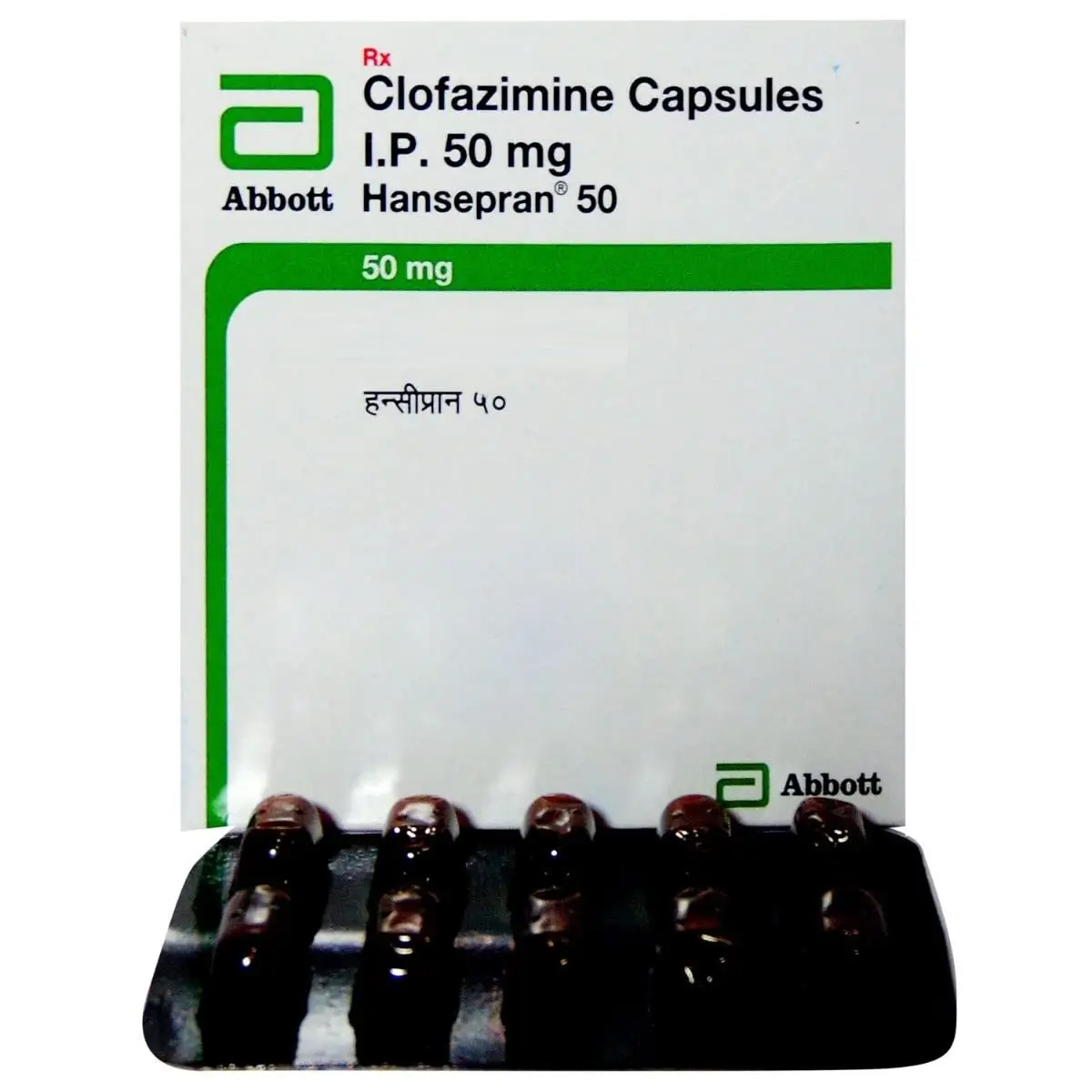
Hansepran 50mg (Clofazimine)
Previous product

Hansepran 100mg (Clofazimine)
$30.00 $80.00Price range: $30.00 through $80.00
Next product
Bandrone 150mg (Ibandronic Acid)
$27.00 $70.00Price range: $27.00 through $70.00
$20.00 $40.00Price range: $20.00 through $40.00
In Stock
In Stock
Hansepran 50mg (Clofazimine)
| Pack Size | Price | Quantity | Add To Cart | |
|---|---|---|---|---|
| 60 Capsule/s | $20.00 | |||
| 120 Capsule/s | $40.00 | |||
| Want to order in bulk / B2B price? Send Inquiry | ||||
×
Sorry!! Out of Stock
Sorry! Hansepran 50mg (Clofazimine) is out of stock
Please click below to view other similar medications.
View All Clofazimine Products
Offer You Can't Resist
Free Shipping
Enjoy Free Shipping on Orders above AUD304 (USD199)
Estimate Shipping :
03 September - 10 September
36
Secure Packaging
My order was packaged carefully and arrived in good condition. The whole process was handled professionally, and communication was excellent. Thank you for the great service
 Australia
August 18, 2026
Last Updated on March 30, 2026

Description
Comprehensive Guide to Hansepran 50mg (Clofazimine)
Hansepran 50mg, which contains the active component Clofazimine, is a vital medicine that is used for treating leprosy (Hansen’s disease). Additionally, it is utilized in some cases for other conditions due to specific bacteria. This blog will provide the most complete understanding of Hansepran 50 mg, focusing on its effects, the mechanism of action, dose, adverse effects, warnings, as well as important details for patients.
What is Hansepran 50mg?
Hansepran 50mg tablet is a formula made up of Clofazimine, which is an antimicrobial drug with anti-inflammatory properties. It’s part of a group of medicines known as the riminophenazines. Clofazimine has been used over the years as an essential component of multi-drug treatment regimens that treat leprosy, which is an infection that is caused by the bacterium Mycobacterium Leprae.
Hansepran can reduce the burden of bacteria on patients, slow the progression of leprosy, and ease certain inflammatory reactions associated with leprosy.
What is Leprosy?
Leprosy is also known as Hansen’s disease, is an intractable infectious disease that mostly affects the body’s skin and peripheral nerves, mucous membranes, and eyes. The cause is Mycobacterium Leprae. Leprosy may cause irritation of the skin, nerve damage, as well as disability if untreated.
While leprosy is not common across the globe, it’s an issue for public health in a few countries, especially in subtropical and tropical regions.
How Does Clofazimine Work?
Clofazimine is a multifaceted drug to fight Mycobacterium Leprae:
- Antimicrobial Action: Clofazimine blocks the growth of bacterial cells by binding to the DNA of bacteria and blocking replication. It stops bacteria from growing.
- Anti-inflammatory Effect: Clofazimine can also help reduce inflammation that is associated with leprosy-related reactions (called the erythema nodosum lesprosum) that can cause painful skin nodules as well as other signs.
The combination of antimicrobial and anti-inflammatory characteristics provides Clofazimine with extremely effective treatment in the treatment of the underlying infection as well as the associated complications.
Indications and Uses of Hansepran 50mg
Hansepran 50mg can be used to treat:
- Treatment of leprosy: It’s used in the recommendations of the World Health Organization’s multi-drug treatment (MDT) for both multibacillary (MB) as well as paucibacillary (PB) varieties of leprosy.
- Prevention and treatment of leprosy reactions: Particularly, it aids in the control of the erythema nodosum lesprosum (ENL), which is an inflammatory pain that can be painful.
- Off-label usage is sometimes used to treat different mycobacterial diseases, for example, Mycobacterium Avium complex (MAC) with or without other antibiotics.
Dosage and Administration
The dosage for Hansepran 50mg is determined by the nature of the disease, its severity, as well as patient-specific factors like age and weight. In general, the following dosage methods are used with medical supervision:
- For multibacillary leprosy (adults):
50 mg once a day or 100 mg 3 times a week, paired with other drugs to treat leprosy (e.g., the rifampicin drug, as well as dapsone) in the context of MDT. - For paucibacillary leprosy (adults):
It is possible to give less often or, at times, not give depending on the clinical judgement of the doctor. - For leprosy reactions (ENL):
It is possible to increase dosages temporarily (e.g., 100 mg a day) in order to treat the symptoms.
The length of treatment can vary from months if not years, depending on the disease type and the response.
Note: Follow the doctor’s guidelines attentively. Never stop or alter the dose without consulting a medical expert.
How to Take Hansepran 50mg
- Drink the tablet orally along with drinking water.
- It is advised to consume the medication in conjunction with food to minimize adverse effects on the gastrointestinal tract.
- Follow the timetable strictly.
- Don’t miss doses or stop treatment too soon, since insufficient therapy may cause resistance.
Possible Side Effects of Clofazimine
Although Hansepran is usually well-tolerated, it can cause adverse consequences. Many are manageable and mild; however, some may need medical attention.
Common Side Effects:
- Skin discoloration: Clofazimine can cause a brownish-red to dark discoloration of the body fluids and skin. It is treatable, but it may require a few months following stopping treatment before it disappears.
- Gastrointestinal symptoms: Abdominal pain, nausea, diarrhea, or constipation.
- Dry skin and itching
- Photosensitivity: A higher sensitivity to sunlight. People are advised to stay away from long-term exposure to sunlight.
Less Common or Serious Side Effects:
- Peripheral neuropathy: Tingling, numbness, or pain in the hands and feet.
- Eye problems: Blurred vision or irritation.
- Hepatotoxicity: Signs include jaundice, fatigue, or dark urine.
- Allergic reactions: Rash, swelling, difficulty breathing (rare but serious).
If you notice any serious symptoms or allergic reactions develop, seek out a physician immediately.
Precautions and Warnings
- Tell your physician if you are a victim of kidney or liver disease or a heart condition.
- Clofazimine could create skin discoloration can cause distress for certain patients. Psychological help may be required.
- Do not expose yourself to too much sun by wearing protective clothing and sunscreen.
- This medicine should be administered under the supervision of a medical professional as part of the combination therapy of leprosy.
- A regular check-up and surveillance of the liver’s function, as well as blood counts, could be needed as part of the treatment.
- Do not use them during breastfeeding and pregnancy unless it is clearly stated by a physician.
Drug Interactions
Hansepran could interfere with other medicines:
- Rifampicin and Dapsone: Commonly, they are used in conjunction with MDT usually secure when under supervision.
- Other drugs metabolized by the liver: It could alter the levels of their concentration. Therefore, monitoring is needed.
- Your healthcare professional should be informed about all supplements and medications taking.
Use in Special Populations
- Pregnant women: Make sure you are convinced that the benefits outweigh any risks. Studies on animals have revealed that there are some dangers.
- Breastfeeding mothers: It’s not known whether clofazimine is absorbed into breast milk. Be cautious.
- Children: The need for adjustments to doses is possible, but only when under the strictest surveillance.
Storage Instructions
- Keep Hansepran Tablets at room temperature, and away from light and moisture.
- Be sure to keep away from young children.
- Don’t use past the date of expiration.
Frequently Asked Questions (FAQs)
-
Why does my skin change color while taking Hansepran?
Clofazimine is a substance that accumulates in fat tissues and the skin, which causes the skin to turn dark red to brown. The condition is non-injurious and easily reversed; however, it can take several months for the discoloration to disappear after discontinuing the medication.
-
Can Hansepran cure leprosy?
Hansepran is a component of multi-drug treatment, aids in curing leprosy by killing bacteria while also reducing inflammation. It doesn’t reverse any nerve damage, but can slow progress.
-
How long will I need to take Hansepran?
The length of treatment depends on the severity of leprosy and its response. It typically takes from 6 months to one year or more.
-
Is Hansepran safe?
When it is taken in accordance with the prescribed dosage under the supervision of a medical professional, the medication is typically safe. The side effects can be controlled; however, it is essential to monitor the dosage regularly.
-
Can I stop treatment if I feel better?
No. If you stop treatment too early, it could result in a lack of cure and resistance to bacterial infections. Be sure to complete the whole treatment.
Conclusion
Hansepran 50mg (Clofazimine) is an essential medicine in the fight against leprosy. It has an anti-inflammatory as well as an anti-microbial benefit. The use of this drug has revolutionized the management of this fearful disease, decreasing the number of patients suffering and improving outcomes for patients all over the world.
If you or a person you know has been prescribed Hansepran, knowing the significance of adhering to the prescription, observing for any adverse reactions, as well as maintaining regular contact with health professionals, is vital to ensure the success of treatment.
Always talk to your physician or health professional before beginning or stopping Hansepran or any other drug.
Related products






Reviews
There are no reviews yet.