
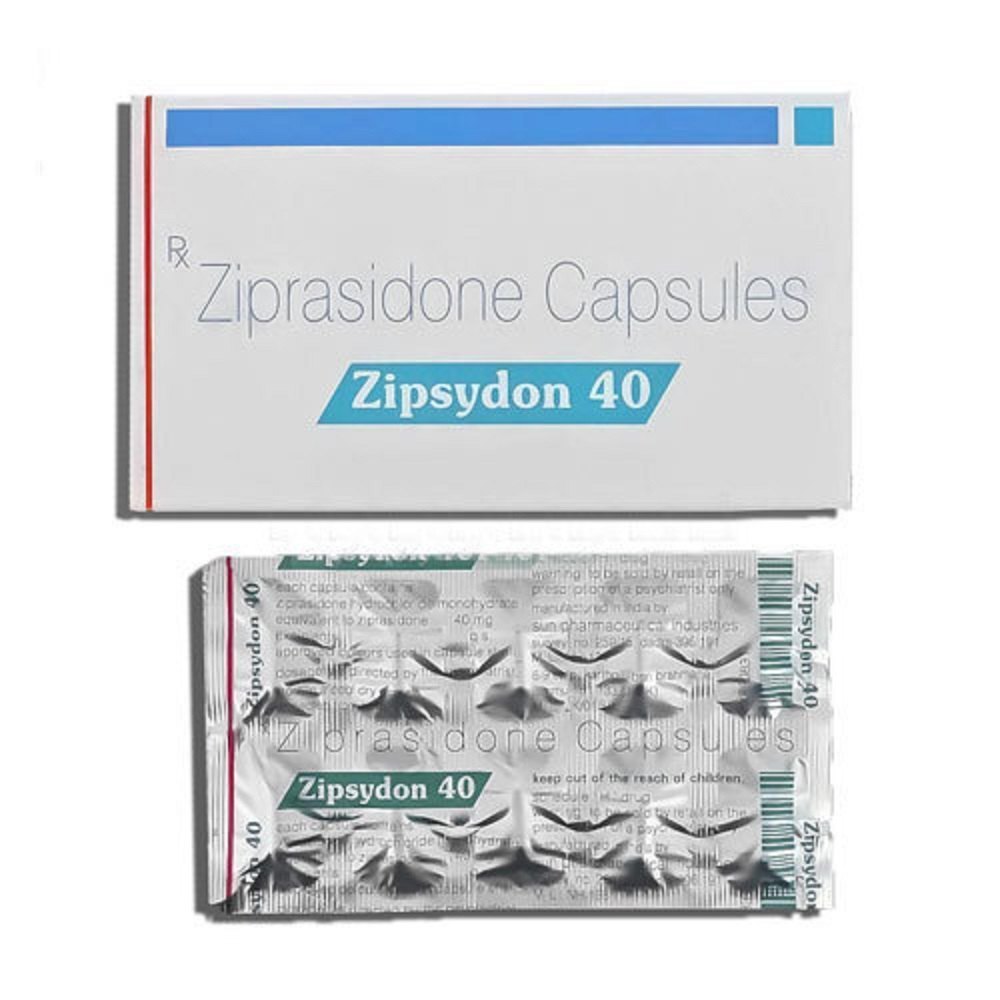
Zipsydon 40mg (Ziprasidone)
Previous product

Zipsydon 20mg (Ziprasidone)
A$36.00 A$115.00Price range: A$36.00 through A$115.00
Next product
Zocon-AS Kit
A$48.00 A$119.00Price range: A$48.00 through A$119.00
A$60.00 A$190.00Price range: A$60.00 through A$190.00
In Stock
In Stock
Zipsydon 40mg (Ziprasidone)
| Pack Size | Price | Quantity | Add To Cart | |
|---|---|---|---|---|
| 50 Capsule/s | A$60.00 | |||
| 100 Capsule/s | A$108.00 | |||
| 200 Capsule/s | A$190.00 | |||
| Want to order in bulk / B2B price? Send Inquiry | ||||
×
Sorry!! Out of Stock
Sorry! Zipsydon 40mg (Ziprasidone) is out of stock
Please click below to view other similar medications.
View All Ziprasidone Products
Offer You Can't Resist
Free Shipping
Enjoy Free Shipping on Orders above AUD304 (USD199)
Estimate Delivery :
11 September - 18 September
49
Secure Packaging
My order was packaged carefully and arrived in good condition. The whole process was handled professionally, and communication was excellent. Thank you for the great service
 Australia
August 18, 2026
Last Updated on July 02, 2026

Description
Product Overview
Zipsydon 40mg contains Ziprasidone, an antipsychotic medication that is typical and employed in treating bipolar disorder and schizophrenia. Ziprasidone is well-known for its effectiveness in treating the negative and positive symptoms of schizophrenia as well as for stabilizing bipolar disorder’s mood.
Zipsydon provides a therapeutic alternative that is a good choice for metabolism and weight gain results compared with other antipsychotics. The drug has antagonistic actions across a range of neurotransmitter receptors which are responsible for its mood stabilizing and antipsychotic properties.
Active Ingredient
- Ziprasidone hydrochloride equivalent to Ziprasidone 40 mg per capsule/tablet
Indications
Zipsydon 40mg is indicated for:
- Treatment for schizophrenia in adolescents and adults who are 13 and over.
- Treatment of manic or mixed episodes that is associated with bipolar disorder in children and adults who are 10 and over.
- The treatment for maintenance of bipolar disorder to lessen the frequency of mood disorders.
- Off-label treatment may also include therapy for depression with treatment resistance (under the supervision of a physician).
Mechanism of Action
Ziprasidone operates through a mixture of dopamine D2 as well as serotonin 5-HT2A receptor antagonism. This assists in relieving psychotic symptoms and controlling mood. It is also a good ally for serotonin 5-HT1A receptors (partial agonist) that may lead to anxiolytic or antidepressant effects.
Ziprasidone’s diverse receptor profile comprises:
- D2 receptor antagonism: Lowers the positive symptoms of psychotic disorders (hallucinations and illusions).
- 5-HT2A receptor antagonism: Reduces symptoms of extrapyramidal and helps improve the negative signs.
- 5-HT1A partial agonism: It can improve your mood and reduce anxiety symptoms.
- Adrenergic α1 receptor antagonism: Orthostatic hypotension can occur in some patients.
- Histamine H1 receptor antagonism: The effect is not as sedative as other antipsychotics.
Dosage and Administration
- Initial dose: The typical dose is 20 mg two times a day taken orally along with food in order to improve the absorption.
- Titration: The dosage can be gradually increased depending on the clinical response and tolerability. It can be increased to 80 mg once a day (maximum daily dosage is 160 mg).
- Maintenance dose: Individually, it varies. Typically, the dosage ranges between 40 and 80 mg once a day.
- Tablets and capsules should be taken whole. Taking along with meals increases bioavailability by 50 to 70%.
- When bipolar disorder is present, dosage adjustments must be individualized and carefully monitored.
Pharmacokinetics
- Absorption: The bioavailability of the oral cavity increases substantially in conjunction with food (approximately two times the amount).
- Peak plasma concentration: Reached 6-8 hours post-dose.
- Distribution: The volume of distribution is around 1.5 L/kg.
- Metabolism: Hepatic metabolism is extensive, primarily through the aldehyde-oxidase enzyme and CYP3A4.
- Half-life: Around 7 hours (range between 6 and 10 hours).
- Elimination: In feces and urine, excreted predominantly in the form of compounds.
Efficacy
The results of clinical trials show the efficacy of ziprasidone in:
- The reduction of positive symptoms (hallucinations and illusions) as well as negative symptoms (apathy and social withdrawal) for schizophrenia.
- Manic and mixed episode control with bipolar disorder.
- Improved overall function and overall quality of life.
As compared to the other antipsychotics, ziprasidone has a reduced chance of weight gain as well as metabolic disorders, which makes it an appealing choice for those who are at risk of these adverse reactions.
Safety and Side Effects
Common side effects:
- Drowsiness or sedation
- Dizziness, especially on standing (orthostatic hypotension)
- Nausea and vomiting
- Nasal congestion
- Restlessness or akathisia (a sense of inner restlessness)
- Headache
- Dry mouth
Serious side effects:
- QT interval prolongation (potentially life-threatening arrhythmias) — ECG monitoring is recommended for at-risk patients
- Neuroleptic malignant syndrome (rare but serious)
- Extrapyramidal symptoms (tremors, rigidity, bradykinesia)
- Tardive dyskinesia (involuntary movements, usually with long-term use)
- Hyperglycemia and diabetes mellitus (less common compared to other antipsychotics)
- Elevated prolactin levels (galactorrhea, gynecomastia, menstrual irregularities)
Contraindications
- Hypersensitivity is known to ziprasidone, or other formulation excipients.
- Patients who have a previous history of QT lengthening, congenital QT syndrome, or recent myocardial infarction.
- Use in conjunction with other medicines that are known to lengthen the QT period.
- Hepatic impairment severe.
- Take care when using this medication in patients with an electrolyte disorder or cardiovascular disease.
Warnings and Precautions
- Baseline and periodically scheduled ECG monitors in patients suffering from high-risk factors for prolonging QT.
- Keep track of levels of blood glucose and lipids frequently.
- Be cautious when using this medication in people suffering from psychosis related to dementia because of the higher chance of death.
- Beware of abrupt withdrawal; decrease the dosage gradually to lessen withdrawal symptoms.
- Check for any indications of neuroleptic malignant disorder or extreme extrapyramidal signs.
- Take into consideration the possibility of orthostatic hypotension, especially at the beginning of treatment, or when dosage increases.
Drug Interactions
- CYP3A4 inhibitors (e.g., ketoconazole, ritonavir) can increase the plasma concentration of ziprasidone.
- CYP3A4 inducers (e.g., carbamazepine, rifampin) may reduce ziprasidone levels, lowering efficacy.
- In conjunction with other QT prolonging medications increases the chance of arrhythmias.
- Take care when combining CNS depressants (alcohol and benzodiazepines) due to the potential for additive effects of sedation.
- Check blood pressure when using antihypertensive medications.
Use During Pregnancy and Lactation
- Ziprasidone falls under the pregnancy class C. It is only used if necessary following risk-benefit evaluation.
- The human research data is limited; animal studies indicate a possibility of harm to fetuses.
- In breast milk, it is excreted. Breastfeeding is not advised for the treatment.
Storage
- Place Zipsydon capsules/tablets in the refrigerator at room temperatures, 20-25°C (68-77°F).
- Be sure to shield yourself from light and moisture.
- Make sure that the area is safe for young children.
Patient Counseling Information
- You can take Zipsydon along with your food for better absorption.
- Take tablets whole, but don’t crush or chew.
- If you notice any heartbeat-related symptoms such as fainting, dizziness, palpitations, or an irregular heartbeat right away.
- Do not drink alcohol or other CNS depressants, unless they are prescribed by your physician.
- Don’t stop your medication suddenly and consult with your doctor before making any changes.
- Be aware of any possible negative side effects, such as drowsiness or restlessness. Inform your physician if you notice any discomfort.
- Constant follow-ups on ECG and blood sugar levels, as well as weight control, are vital.
- Let your physician know about any medications you’re using to prevent interactions.
Summary Table
| Parameter | Details |
| Generic Name | Ziprasidone hydrochloride |
| Brand Name | Zipsydon |
| Drug Class | Atypical antipsychotic |
| Strength | 40 mg per capsule/tablet |
| Indications | Schizophrenia, bipolar disorder (manic/mixed episodes) |
| Dosage | 20-80 mg twice daily with food, max 160 mg/day |
| Mechanism of Action | Dopamine D2 and serotonin 5-HT2A receptor antagonist |
| Common Side Effects | Drowsiness, dizziness, nausea, restlessness |
| Serious Side Effects | QT prolongation, neuroleptic malignant syndrome |
| Contraindications | QT prolongation, hypersensitivity, severe hepatic impairment |
| Storage | Room temperature, dry place |
Conclusion
Zipsydon 40mg (Ziprasidone) is a highly effective typical antipsychotic to treat bipolar disorder and schizophrenia, having a lesser chance of metabolic-related side effects than other antipsychotics. Its well-balanced receptor activity provides advantages in the treatment of psychotic symptoms and mood stability.
Proper dosing, adherence, and regular monitoring–including ECG and metabolic parameters–are essential to optimize treatment outcomes and minimize risks. Education of patients and awareness of possible side effects can help ensure security when using Zipsydon.
Additional Information
| Active Ingredient: | Ziprasidone |
|---|---|
| Indication: | Schizophrenia, Bipolar Disorder |
| Manufacturer: | Sun Pharmaceutical Industries Ltd. |
| Packaging: | 10 Capsules in Strip |
| Strength: | 40mg |
| Delivery Time: | 7 To 15 days |
Reviews (1)
1 review for Zipsydon 40mg (Ziprasidone)
Related products
Daniel Brooks –
Zipsydon 40 Mg has really helped me stabilize my mood. I feel more balanced and focused every day.