
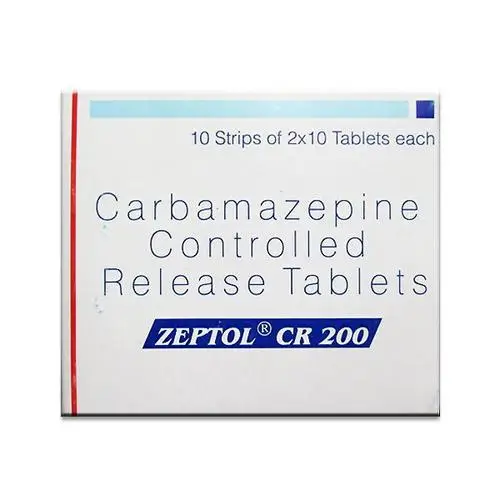
Zeptol 200mg (Carbamazepine)
Previous product

Topamac 100mg (Topiramate)
A$42.00 A$92.50Price range: A$42.00 through A$92.50
Next product

Levipil 750mg (Levetiracetam)
A$35.00 A$78.00Price range: A$35.00 through A$78.00
A$12.00 A$18.00Price range: A$12.00 through A$18.00
In Stock
In Stock
Zeptol 200mg (Carbamazepine)
| Pack Size | Price | Quantity | Add To Cart | |
|---|---|---|---|---|
| 60 Tablet/s | A$12.00 | |||
| 90 Tablet/s | A$14.00 | |||
| 120 Tablet/s | A$18.00 | |||
| Want to order in bulk / B2B price? Send Inquiry | ||||
×
Sorry!! Out of Stock
Sorry! Zeptol 200mg (Carbamazepine) is out of stock
Please click below to view other similar medications.
View All Carbamazepine Products

Offer You Can't Resist
Free Shipping
Enjoy Free Shipping on Orders above AUD304 (USD199)
Estimate Shipping :
23 July - 30 July
32
Excellent service
The website is easy to navigate, and my order arrived exactly as expected. Excellent service
 Australia
June 27, 2026
Last Updated on June 30, 2026

Description
Introduction
Zeptol 200mg contains Carbamazepine, an anticonvulsant drug that is widely utilized and a mood stabilizing medication. It’s most commonly used in the treatment of epilepsy, trigeminal neuralgia, and other mental disorders, such as bipolar disorder. Zeptol is a drug that stabilizes the nerve membranes that are hyperexcited, preventing neural firing that is repetitive and decreasing the propagation of synaptic impulses.
Composition
- Each tablet contains:
Carbamazepine – 200 mg - Excipients are lactose, microcrystalline cellulose, and magnesium stearate, along with other substances to guarantee tablet integrity and bioavailability.
Pharmacological Class
- Therapeutic Class: Antiepileptic, Mood Stabilizer
- Pharmacological Class: Dibenzazepine derivative, sodium channel blocker
- ATC Code: N03AF01
Mechanism of Action
Carbamazepine works by blocking the voltage-gated sodium channels in neurons. The blockade helps to stabilize the inactive status of the sodium channel, which reduces the capability of neurons to function at high frequencies, and consequently slows down the spread of seizures. In addition, it regulates neurotransmitter release and shows moderate anticholinergic effects.
Indications
- Epilepsy: Partial seizures, with or without secondary generalization, generalized seizures, Mixed seizures
- Trigeminal neuralgia: The relief of neuropathy pain is available, caused by trigeminal neuralgia
- Bipolar disorder: Treatment of manic episodes and acute mixed episodes, as well as the maintenance treatment that prevents the possibility of relapse
Dosage and Administration
- Epilepsy:
The initial dose is usually 100 mg once a day, slowly increasing to 200 mg each week, depending on tolerance and response and tolerance. It can be up to 800-1200 mg in divided doses. - Trigeminal Neuralgia:
Start by taking 100 mg two times every day, gradually increasing to the dose that is effective, usually 200-400 mg two times daily. - Bipolar Disorder:
Doses vary based on the patient’s response. It can range between 400 and 1200 mg per day. - Tablets are best swallowed completely in water. Ideally, this should be done after meals to prevent gastrointestinal discomfort.
- It is recommended to monitor blood levels regularly for maintaining therapeutic plasma levels (typically 4-12 mcg/mL).
Contraindications
- Hypersensitivity to carbamazepine, tricyclic antidepressants, or related compounds
- History of bone marrow suppression or aplastic anemia
- Utilization of MAO inhibitors in the past 14 days
- Severe hepatic or renal impairment
- Cardiac conduction disorders or AV block
Warnings and Precautions
- Hematologic effects: Very rare, but severe adverse reactions like aplastic anemia, agranulocytosis, and so on. Check blood count regularly.
- Hyponatremia: Could result in SIADH. Monitor your serum sodium levels, particularly in the elderly and those taking diuretics.
- Skin reactions: The risk of experiencing severe reactions to the skin, such as Stevens – Johnson syndrome and toxic epidermal necrolysis. More frequent in some ethnic populations (e.g., the allele HLA-B*1502 found in Asians).
- Hepatic toxicity: Perform liver function tests regularly.
- Drug interactions: Potentially an inducer of CYP enzymes. Affects the metabolism of many medications, including oral contraceptives, warfarin, and other antiepileptics.
- Suicidal ideation: The use of antiepileptic medications can increase the risks; be aware of mood swings.
Adverse Effects
Common:
- Dizziness, drowsiness
- Nausea, vomiting
- Ataxia and coordination difficulties
- Blurred vision or diplopia
- Dry mouth
Serious (rare):
- Blood dyscrasias (aplastic anemia, agranulocytosis)
- Severe rash (Stevens-Johnson syndrome, toxic epidermal necrolysis)
- Liver toxicity
- Cardiac arrhythmias
Drug Interactions
- Carbamazepine triggers CYP3A4 as well as other enzymes. They reduce the levels in plasma of medications like oral contraceptives and warfarin, corticosteroids, and other antiepileptics.
- Some medications (e.g., the erythromycin drug or ketoconazole) could inhibit carbamazepine metabolism and increase the risk of toxicity.
- Use in conjunction with MAO inhibitors is not recommended.
- Carefully monitor therapy when combined with other CNS depressants and antiepileptics.
Use in Special Populations
- Elderly: Take care when using this product due to a higher risk of hyponatremia and CNS negative side effects.
- Pregnancy: Category D. Use only when the benefits are greater than the risks because of the risk of malformations in the fetus.
- Lactation: Excessive in breast milk. Monitor infants for adverse effects.
- Hepatic/Renal impairment: Be cautious; dosage adjustments may be required.
Monitoring
- The baseline blood count and the periodic blood count (CBC) for the purpose of detecting blood dyscrasias
- Liver function tests (LFTs) periodically
- The levels of sodium in the blood, particularly for those who are elderly or who are at risk
- The therapeutic drug monitor to determine the concentration of carbamazepine in plasma.
- Check for indications of hypersensitivity or allergic reactions
Storage
- Keep tablets stored in a dry, cool location at room temperature (15-30 °C)
- Guard against light and moisture
- Be sure to keep it out of the Children’s reach
Patient Counseling
- Do not take Zeptol 200mg as directed. Do not abruptly stop taking it without medical supervision.
- Consume tablets completely, preferring to do so at the end of a meal.
- Beware of alcohol and CNS depression while in therapy.
- Notify anyone of any rash, unusual bleeding, fever, or jaundice right away.
- Tell your physician about all other supplements and medications being consumed.
- Make sure you are using a contraceptive that is effective during treatment as well as for a few days after stopping treatment.
Conclusion
Zeptol 200mg (Carbamazepine) is a key element in managing epilepsy, trigeminal neuropathy, and bipolar disorder. Through proper dosing, monitoring, and information, Zeptol can effectively control seizures and neuropathic pain as well as maintain the quality of living. Being aware of adverse effects and interactions will ensure the safety and effectiveness of use.
Related products


Reviews
There are no reviews yet.