
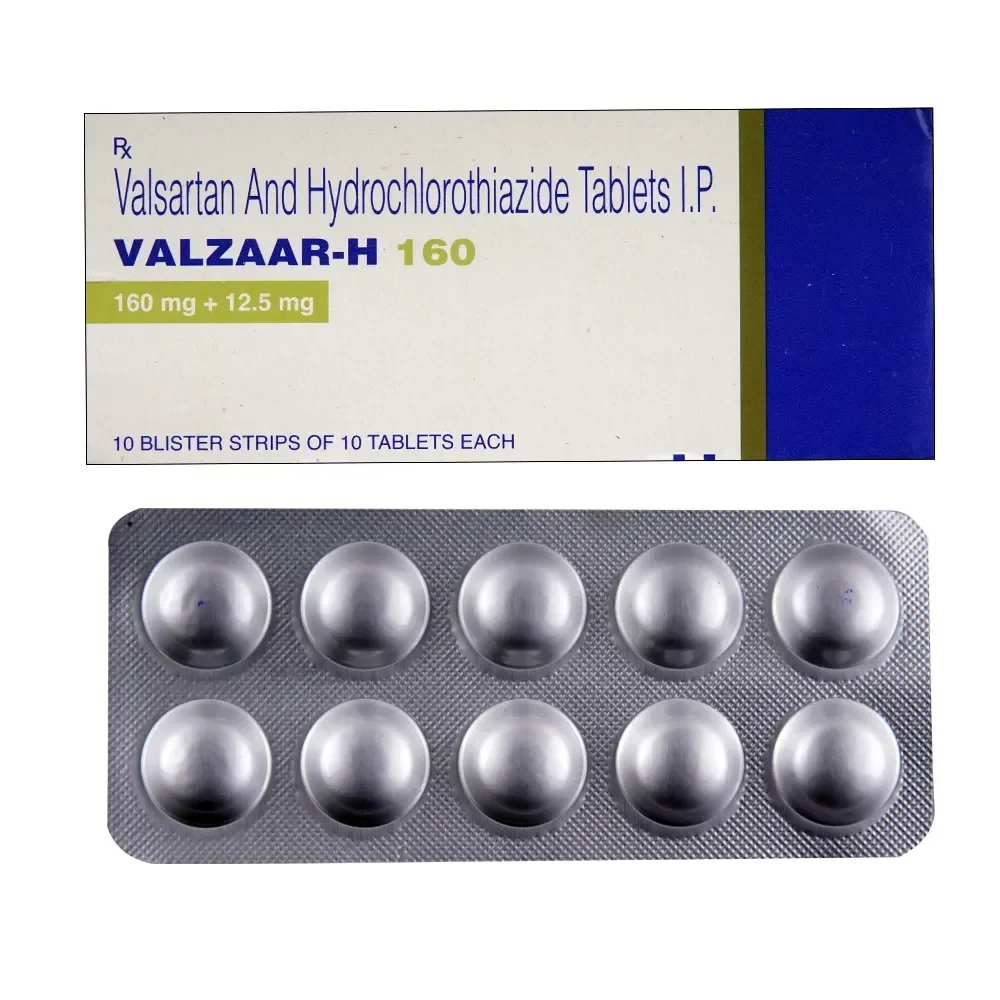
Valzaar H 160mg (Valsartan/Hydrochlorothiazide)
Previous product

Valocon 450mg (Valganciclovir)
$30.00 $165.00Price range: $30.00 through $165.00
Next product
Vasfree 100mg (Flupirtine)
$30.00 $72.00Price range: $30.00 through $72.00
$58.00 $140.00Price range: $58.00 through $140.00
In Stock
In Stock
Valzaar H 160mg (Valsartan/Hydrochlorothiazide)
| Pack Size | Price | Quantity | Add To Cart | |
|---|---|---|---|---|
| 30 Tablet/s | $58.00 | |||
| 60 Tablet/s | $104.00 | |||
| 90 Tablet/s | $140.00 | |||
| Want to order in bulk / B2B price? Send Inquiry | ||||
×
Sorry!! Out of Stock
Sorry! Valzaar H 160mg (Valsartan/Hydrochlorothiazide) is out of stock
Please click below to view other similar medications.
View All Valsartan/Hydrochlorothiazide Products
Offer You Can't Resist
Free Shipping
Enjoy Free Shipping on Orders above AUD304 (USD199)
Estimate Delivery :
20 October - 27 October
22
Excellent service overall
Smooth checkout, quick dispatch, and secure delivery. Excellent service overall
 Australia
October 1, 2026
Last Updated on June 22, 2026

Description
Valzaar H 160mg (Valsartan/Hydrochlorothiazide) – Product Information
Brand Name: Valzaar H 160mg
Generic Name: Valsartan and Hydrochlorothiazide
Strength: Valsartan 160 mg / Hydrochlorothiazide 12.5 mg
Dosage Form: Oral Tablet
Therapeutic Class: Antihypertensive Combination (Angiotensin II Receptor Blocker + Thiazide Diuretic)
Prescription Status: Prescription Only Medicine (Rx)
Product Overview
Valzaar H 160mg is a fixed-dose antihypertensive medicine that contains Valsartan, which is an antagonist of the angiotensin II receptor blocker (ARB), as well as Hydrochlorothiazide, a thiazide diuretic. This combo is intended to treat the problem of hypertension (high blood pressure) effectively by utilizing two mechanisms in tandem to lower blood pressure, and reduce the chance of heart attacks and strokes like stroke or heart attacks.
This type of combination can be particularly beneficial when patients require more than one medication for controlling their blood pressure or are not responding well to single therapy.
Composition
Each tablet of Valzaar H 160mg contains:
- Valsartan: 160 mg
- Hydrochlorothiazide: 12.5 mg
- Inactive ingredients: lactose monohydrate, microcrystalline cellulose, magnesium stearate, and other excipients.
Mechanism of Action
- Valsartan:
Valsartan is a selective blocker of angiotensin II type 1 (AT1) receptors located in various tissues, including the vascular smooth muscle and adrenal gland. Angiotensin II (AT1) is a potent vasoconstrictor and increases aldosterone production, which increases blood pressure. Blocking these receptors causes vasodilation and decreases the secretion of aldosterone, increases water and sodium excretion, and lowers blood pressure. - Hydrochlorothiazide:
Hydrochlorothiazide can be described as a diuretic that acts in the distal convoluted tubules within the kidney, causing inhibition of the reabsorption of sodium and chloride, increasing the excretion rate of chloride, sodium, and water. It reduces the volume of plasma, cardiac output, and eventually reduces blood pressure. Diuretic effects complement the vasodilatory effect of valsartan.
Together, they work in concert to give more efficient and lasting blood pressure control.
Indications
Valzaar H 160mg is indicated for:
- Management of essential hypertension: In order to lower blood pressure among adult patients, in particular patients who need combinations of therapy in order to attain sufficient control.
- Adjunctive therapy: In patients who cannot be controlled with the monotherapy of valsartan or hydrochlorothiazide.
Note: Hypertension control reduces the likelihood of coronary morbidity and death.
Dosage and Administration
- Recommended dose: A tablet of Valzaar H 160mg each day, once daily. Orally.
- Tablets are best swallowed whole, along with water.
- The pill can be taken either in combination with or without food; however, it should be consumed every day.
- Dosage can be modified by a physician in response to responses of the patient.
- In some cases, beginning with monotherapy could be suggested prior to switching over to the combination therapy.
Dose adjustments:
- People with kidney impairment, or older patients, might require constant control and adjustment of doses.
- The highest dose recommended for Valsartan can be 320 mg per day (alone or when used in combination). However, fixed-dose combination doses should be taken according to the prescription.
Contraindications
- Hypersensitivity to valsartan, hydrochlorothiazide, sulfonamide-derived drugs, or any excipients in the formulation.
- Anuria (inability to produce urine).
- Acute or severe kidney injury that is not under medical care.
- Hyperkalemia (high potassium levels).
- Pregnancy (especially in the second and third trimesters) and breastfeeding.
- Severe hepatic impairment or cholestasis.
Warnings and Precautions
- Pregnancy and breastfeeding:
Valzaar H is not recommended during pregnancy due to the possibility of toxic effects on fetal development and should not be administered during lactation until the benefits outweigh any risks. - Renal function:
Keep track of renal function regularly, particularly in those with kidney impairment, congestive heart insufficiency, or who are using other drugs for nephrotoxicity. - Electrolyte imbalance:
The risk of developing hypokalemia (low potassium) caused by hydrochlorothiazide or the risk of hyperkalemia (high potassium) due to valsartan requires periodic monitoring of electrolytes in the serum. - Hypotension:
Hypotension can be symptomatic, especially in salt-restricted or volume-depleted patients. - Diabetes:
Thiazide diuretics can raise blood sugar levels; it is important to monitor the diabetic patient attentively. - Photosensitivity:
Hydrochlorothiazide can increase sensitivity to the sun; thus, patients should stay away from the sun for a long time. - Liver disease:
Be cautious in patients suffering from an impairment in the liver; they may require adjustments to the dose.
Side Effects
Common Side Effects
- Dizziness or lightheadedness (especially on standing)
- Headache
- Fatigue
- Increased urination
- Gastrointestinal disturbances (nausea, diarrhea)
- Muscle cramps or weakness
- Elevated blood sugar or cholesterol levels
Serious Side Effects (Rare)
- Severe hypotension
- Electrolyte imbalances (hyponatremia, hypokalemia, hyperkalemia)
- Acute renal failure
- Allergic reactions (rash, itching, swelling)
- Pancreatitis or liver enzyme abnormalities
- Photosensitivity reactions
Anyone experiencing serious side effects needs medical attention immediately.
Drug Interactions
- Potassium supplements or potassium-sparing diuretics: Hyperkalemia is a risk factor that increases.
- Other antihypertensives: Additive blood pressure-lowering effects, monitor for hypotension.
- NSAIDs: It may reduce the antihypertensive effects and affect renal function.
- Lithium: The risk of lithium poisoning increases.
- Diabetic medications: Might require adjustment of dose due to changes in blood sugar levels.
- Corticosteroids or ACTH: The risk for hypokalemia is increased.
Use in Special Populations
- Elderly: Sensitivity to antihypertensives may increase; Start with a lower dosage when needed.
- Renal impairment: Be cautious, and monitor the function of your kidneys regularly.
- Hepatic impairment: Take care when using this medication; dose adjustments could be required.
Storage
- Place tablets in a cooler, dry area far from direct sunlight.
- Storage temperature recommended: below 30°C (86°F).
- Make sure that the area is safe for young children.
- Avoid using tablets past their expiry dates.
Patient Counseling Information
- Use Valzaar H 160mg exactly according to the prescription; don’t take a break between doses.
- Drink the tablet completely by drinking a glass of water, either with or without food.
- Beware of sudden changes in your position to avoid fainting or dizziness.
- Be sure to report any symptoms like muscle weakness, swelling, abnormal heartbeat, or extreme dizziness to your medical doctor immediately.
- Keep regular appointments to check your blood pressure as well as laboratory tests.
- Beware of excessive intake of salt and keep a healthy food plan.
- Discuss with your doctor all other supplements and medications you take.
- Make sure to apply sunscreen and use protective clothing to limit photosensitive reactions.
Summary
Valzaar H 160mg (Valsartan/Hydrochlorothiazide) is an effective, convenient fixed-dose combination antihypertensive medication that combines the complementary actions of an angiotensin II receptor blocker and a thiazide diuretic. It provides complete blood pressure management for those who suffer from hypertension, particularly those who require combination therapy to ensure the best treatment.
In addition to improving blood pressure management, Valzaar H lowers the chance of suffering from cardiovascular issues such as heart attacks, strokes, and kidney diseases. By ensuring proper control and lifestyle changes, Valzaar H 160mg can help patients attain better health outcomes and improve their quality of life.
Additional Information
| Active Ingredient: | Valsartan/Hydrochlorothiazide |
|---|---|
| Indication: | High Blood Pressure |
| Manufacturer: | Torrent Pharmaceuticals Ltd. |
| Packaging: | 10 Tablets in 1 Strip |
| Strength: | 160mg/12.5mg |
| Delivery Time: | 7 To 15 days |
Related products






Reviews
There are no reviews yet.