
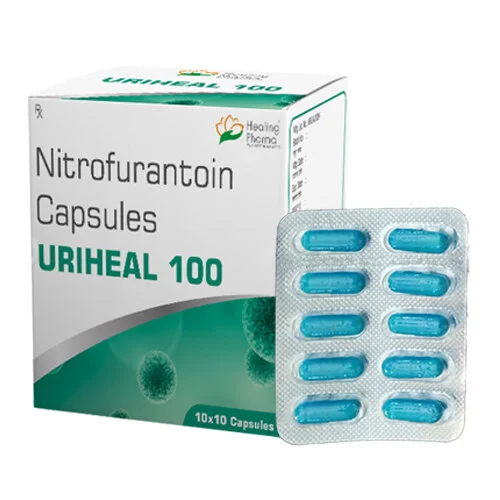
Uriheal 100mg (Nitrofurantoin)
Previous product

Unwanted Kit (Mifepristone/Misoprostol)
A$23.00 A$70.00Price range: A$23.00 through A$70.00
Next product

Valaforce 1000mg (Valacyclovir)
A$63.00 A$146.25Price range: A$63.00 through A$146.25
A$25.00 A$115.00Price range: A$25.00 through A$115.00
In Stock
In Stock
Uriheal 100mg (Nitrofurantoin)
| Pack Size | Price | Quantity | Add To Cart | |
|---|---|---|---|---|
| 50 Capsule/s | A$25.00 | |||
| 100 Capsule/s | A$44.00 | |||
| 200 Capsule/s | A$82.00 | |||
| 300 Capsule/s | A$115.00 | |||
| Want to order in bulk / B2B price? Send Inquiry | ||||
×
Sorry!! Out of Stock
Sorry! Uriheal 100mg (Nitrofurantoin) is out of stock
Please click below to view other similar medications.
View All Nitrofurantoin Products
Offer You Can't Resist
Free Shipping
Enjoy Free Shipping on Orders above AUD304 (USD199)
Estimate Delivery :
24 October - 31 October
26
Excellent service overall
Smooth checkout, quick dispatch, and secure delivery. Excellent service overall
 Australia
October 1, 2026
Last Updated on June 22, 2026

Description
Introduction
Uriheal 100mg, with an active ingredient, Nitrofurantoin is a long-standing antibiotic that is used to treat and avoid Urinary tract infections (UTIs) caused by susceptible bacteria. It is especially beneficial against common uropathogens, which include Escherichia Coli, Enterococcus faecalis, as well as Staphylococcus saprophyticus. Its distinct mechanism of action and specifically targeted activity in the urinary tract are a top option for UTIs that are not complicated.
Composition and Dosage Form
- Active Ingredient: Nitrofurantoin 100 mg
- Dosage Form: Oral capsules
- Packaging: Available in blister packs containing 10 capsules
Mechanism of Action
The chemical nitrofuran is a synthetic antibiotic. When it is administered orally, the drug is absorbed quickly and subsequently absorbed into the urine. It then exerts its antibacterial action. It is reduced by flavoproteins from bacterial flora into reactive intermediates which damage bacteria’s DNA, ribosomal protein, and macromolecules. The multi-targeted action blocks the growth of bacterial cells and causes their death of bacterial cells.
Due to its quick kidney excretion as well as its high levels of urinary substances, Nitrofurantoin is highly effective when treating infections that are localized to the urinary tract. It has very little systemic effect.
Indications
Uriheal 100mg is indicated for:
- Treatment for acute and uncomplicated urinary tract infections that are caused by resistant species of bacteria.
- Prevention and treatment of chronic UTIs, particularly in those who tend to suffer from frequent UTIs.
- Treatment for symptomatic bacteriuria during pregnancy, if it is appropriate.
- It is used to treat infections caused by bacteria that are sensitive to Nitrofurantoin, which includes E. Coli, Enterococcus spp., Staphylococcus aureus, as well as Klebsiella species.
Dosage and Administration
Adults:
- To treat acute infections for acute infections, the recommended dose is 100 mg once a day (every 24 hours).
- The duration of treatment typically ranges between 5 and 7 days if the infection is not severe.
- To prevent recurrent illnesses, a dosage of 50 to 100 mg each day before bedtime can be prescribed.
Pediatrics:
- Dosage should be based upon your body weight and the condition of your clinical and consult a physician.
Administration Tips:
- It is recommended to take it with meals or milk in order to increase the absorption of food and to reduce irritation in the gastrointestinal tract.
- Consume capsules as they are. Do not crush them or chew them.
- Make sure you drink enough water during the treatment.
Pharmacokinetics
- Absorption: Nitrofurantoin is absorbed quickly from the digestive tract, but it undergoes extensive metabolism in the first pass.
- Distribution: It is found in the urine and has very low plasma levels.
- Metabolism: Partially metabolized by the liver.
- Excretion: The majority of urine excreted remains unchanged.
- Half-life: Between 20 and 1 hour. Frequent dosing required to keep the therapeutic level.
Contraindications
- Hypersensitivity is a known complication of Nitrofurantoin or nitrofuran derivatives.
- Patients suffering from an impairment in their renal function (creatinine clearance less than 60mL/min) due to a lack of amount of drug in urine, as well as an increased risk of toxicity.
- The term pregnancy (38-42 weeks of gestation) in labor, and during the delivery process, and also in infants younger than one month, because of the possibility of hemolytic anemia.
- A history of cholestatic jaundice or liver dysfunction that is related to Nitrofurantoin.
Warnings and Precautions
- Be cautious with elderly patients or those who have pre-existing pulmonary, liver, or neurological diseases.
- In the long run, prolonged use can cause lung toxicity, including pneumonitis as well as fibrosis. Monitor for respiratory signs.
- It is important to monitor the function of your liver during long-term treatment.
- Do not use during pregnancy unless you are prescribed by an experienced healthcare professional.
- Do not use if you have a case of severe renal impairment because of the potential for accumulation and toxic effects.
- Patients must report any signs of asthma, allergic reactions, or unusual fatigue immediately.
Potential Side Effects
Common side effects:
- Nausea, vomiting, loss of appetite
- Diarrhea or abdominal discomfort
- Headache or dizziness
- Discoloration of urine (brownish color) — harmless and temporary
Serious but rare side effects:
- Pulmonary reactions: acute, subacute, or chronic pneumonitis, pulmonary fibrosis
- Hepatic toxicity: hepatitis, cholestatic jaundice
- Peripheral neuropathy is a common occurrence, notably in the case of prolonged use or kidney impairment
- The hypersensitivity reaction can manifest as fever, rash, and eosinophilia
- Hemolytic anemia among patients suffering from G6PD insufficiency or infants
Drug Interactions
- Antacids containing magnesium trisilicate may reduce Nitrofurantoin absorption.
- Probenecid could reduce the excretion from the kidneys of Nitrofurantoin, which increases the risk of toxicity.
- The use of other nephrotoxic medications should be taken with caution.
- Oral Typhoid vaccination may become less effective after Nitrofurantoin treatment.
- Be sure to inform your doctor of any medications, supplements, or herbal remedies you’re taking.
Use in Special Populations
- Pregnancy: Avoiding them in the final trimester, but can be utilized in earlier phases if the positive effects outweigh the risk.
- Lactation: The excretion of Nitrofurantoin occurs in breast milk in tiny amounts. It is recommended to take care.
- Pediatrics: Use only under strict medical supervision. Dosing is adjusted according to weight.
- Elderly: An increased risk of developing pulmonary or peripheral neuropathy. Monitor closely.
- Renal impairment: Not recommended when significant renal dysfunction occurs.
Storage Instructions
- Keep it in a cool, dry location below 25°C (77°F).
- Protect from moisture and direct sunlight.
- Be sure to keep away from children.
- Do not use beyond the expiration date printed on the package.
Patient Counseling Information
- Consume Uriheal 100mg exactly as directed along with a glass of milk or food to ease stomach discomfort.
- Follow the entire program of treatment, even if the symptoms start to improve, in order to reduce resistance.
- Maintain good hydration during treatment.
- Contact your physician when you feel shortness of breath, persistent cough, redness, jaundice, or any tingling or numbness in your feet or hands.
- Urine discoloration can be normal and completely normal.
- Be sure to avoid missing doses to ensure the effectiveness of your medication.
- Let your physician know about all other supplements or medications.
Clinical Efficacy
Nitrofurantoin has been a dependable medication for many years because of its precise actions in the urinary tract and its lower incidence of systemic side effects. It’s especially beneficial against the common uropathogens responsible for simple urinary tract infections. Additionally, it offers a safe profile in the right dosage. Prophylactic use of it can help to reduce the frequency of infections and improve patients’ quality of life.
Summary
Uriheal 100mg (Nitrofurantoin) is an efficient and well-tolerated antibiotic used to treat and prevent UTIs. Because of its specific antibacterial activity within the urinary tract as well as documented safety data, it remains the first-line treatment for patients with uncomplicated UTIs. The correct use, adhering to the dose, and being aware of any side effects are crucial to maximise the benefits of this drug and reduce the risk.
Additional Information
| Active Ingredient: | Nitrofurantoin |
|---|---|
| Indication: | Bacterial Infections of Urinary Tract |
| Manufacturer: | Healing Pharma, India |
| Packaging: | 10 Capsules in Strip |
| Strength: | 100mg |
| Delivery Time: | 7 To 15 days |
Related products




Reviews
There are no reviews yet.