
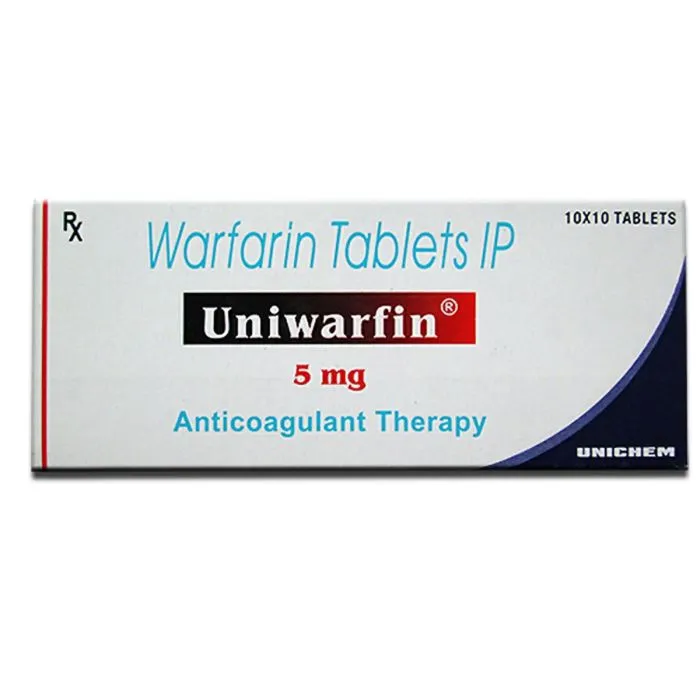
Uniwarfin 5mg (Warfarin)
Previous product
Enapril 2.5mg (Enalapril)
A$14.00 A$28.00Price range: A$14.00 through A$28.00
Next product
Aquazide 25mg (Hydrochlorothiazide)
A$25.20 A$50.40Price range: A$25.20 through A$50.40
A$3.60 A$9.67Price range: A$3.60 through A$9.67
Out of Stock
Out of Stock
Uniwarfin 5mg (Warfarin)
| Pack Size | Price | Quantity | Add To Cart | |
|---|---|---|---|---|
| 30 Tablet/s | A$3.60 | |||
| 60 Tablet/s | A$6.45 | |||
| 90 Tablet/s | A$9.67 | |||
| Want to order in bulk / B2B price? Send Inquiry | ||||
×
Sorry!! Out of Stock
Sorry! Uniwarfin 5mg (Warfarin) is out of stock
Please click below to view other similar medications.
View All Warfarin Products
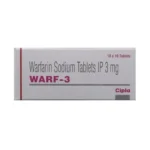
Offer You Can't Resist
Free Shipping
Enjoy Free Shipping on Orders above AUD304 (USD199)
34
Professional customer support
Professional customer support and genuine products. Great experience overall
 Australia
June 12, 2026
Last Updated on June 22, 2026

Description
Introduction
Uniwarfin 5mg can be described as a commonly utilized oral anticoagulant that contains Warfarin as an antagonist of vitamin K, which has a significant role to play in the prevention and treatment of thromboembolic conditions. The most common reason for taking it is to lower the risk of blood clots forming during various medical diseases like atrial fibrillation and deep vein thrombosis (DVT), and an embolism in the lungs, as well as replacing the prosthetic heart valve. Inhibiting the formation of blood clots, Uniwarfin assists in preventing life-threatening incidents such as strokes as well as pulmonary embolism.
What is Uniwarfin 5mg?
Uniwarfin Tablet formula with 5mg of sodium warfarin. Warfarin is an anticoagulant because it blocks the production of vitamin K-dependent factors II, VII, IX, and X, as well as proteins C and S. The inhibition of these factors reduces the blood’s capacity to create blood clots. This helps keep a balance between blood clotting and bleeding.
Mechanism of Action
Warfarin acts by blocking the enzyme vitamin K epoxide reductase complex 1 (VKORC1), which is necessary for the renewal of vitamin K in the liver. The deficiency of vitamin K is vital for carboxylation and the activation of certain factors involved in clotting. Inhibiting VKORC1, Uniwarfin prevents the activation of these factors that cause clotting, consequently slowing the blood clotting process.
Since warfarin alters the synthesis of clotting factors, rather than the clotting factors that are already present in the bloodstream, its anticoagulant effects usually last for a couple of days before they become apparent, with the complete therapeutic effects typically taking 5 to 7 days.
Indications
The Uniwarfin 5mg dosage is suggested to treat and prevent the symptoms of:
- Venous thromboembolism (VTE), including deep vein thrombosis (DVT) and pulmonary embolism (PE).
- Prevention of stroke for patients suffering from atrial fibrillation. This is especially true for those who have risk factors that increase the risk of stroke, such as hypertension and heart failure.
- Preventing thromboembolic complications for patients who have mechanical heart valves.
- The prevention of repeat myocardial infarction, or acute ischemic attack.
- Other situations, as identified by a health specialist, when anticoagulation is necessary.
Dosage and Administration
- Dosing of Warfarin is highly individualized, depending on the response of the patient and continuous monitoring of the International Normalized Ratio (INR).
- A typical dose for starting is 2 to 5 mg every day, and is adjusted based on the results of INR.
- Doses for maintenance vary, but generally range between 2 and 10 mg daily.
- Doses should be taken at the same time throughout the day in order to ensure consistent levels of blood.
- Testing for INR is crucial at the beginning of treatment and also periodically throughout it for ensuring the therapeutic level (usually INR 2.0-3.0 in accordance with the indication).
- Dose adjustments should be made cautiously to avoid under- or over-anticoagulation.
Important Precautions
- Bleeding Risk: Uniwarfin can increase the chance of bleeding that can result in dangerous and fatal hemorrhages. Patients need to be watched closely to detect signs of bleeding.
- Drug and Food Interactions: Numerous supplements, drugs, and foods may be a source of conflict with warfarin, which can affect the anticoagulant effects of warfarin. The patient must inform the healthcare provider regarding all medicines, supplements, and dietary practices.
- Dietary Vitamin K: A consistent intake of vitamin K-rich food items (e.g., leafy green vegetables) is vital; sudden shifts in diet could affect the effectiveness of warfarin.
- Pregnancy: Warfarin is not recommended during pregnancy due to the possibility of bleeding and fetal anomalies.
- Medical Procedures: Patients must inform their doctors and dentists of Warfarin before starting any procedures.
- Genetic Variability: A few patients could be genetically affected by the metabolism of warfarin (e.g., CYP2C9 and VKORC1 polymorphisms), which can affect dosing requirements.
Side Effects
Common side effects include:
- Minor bleeding such as bruising, nosebleeds, bleeding gums.
- Prolonged bleeding from cuts.
- Gastrointestinal discomfort or nausea.
- Hair thinning or loss (rare).
Acute adverse reactions that need urgent medical attention:
- Severe bleeding (vomiting blood, blood in stools or urine, unusual bruising).
- Signs of stroke or thrombosis.
- Allergic reactions (rash, itching, swelling).
- Purple toe syndrome (rare complication involving painful purple discoloration).
Benefits of Uniwarfin 5mg
- Effective Thrombosis Prevention: Uniwarfin is a well-established experience in the prevention of the risk of blood clots.
- Versatile Use: Ideal for all conditions that need prolonged anticoagulation.
- Cost-Effective: When compared to anticoagulants that are newer anticoagulants in general, warfarin is cheaper.
- Extensive Clinical Experience: Years of usage have been able to provide an accurate assessment of the security and effectiveness of the profile.
- Adjustable Dosage: Monitoring and dosing options that are flexible allow an individualized treatment.
Storage Instructions
- Keep Uniwarfin tablets in a cool, dry place away from humidity and direct sunlight.
- Place in the original container until the time of use.
- Be sure to keep away from children.
Who Should Avoid Uniwarfin?
- Patients with active bleeding or bleeding disorders.
- Individuals with severe liver or kidney disease.
- People who are undergoing or planning to undergo a procedure where anticoagulation is a high risk.
- Breastfeeding or pregnant women, not unless absolutely required and under medical surveillance.
- Patients who are unable to adhere to the regular INR monitoring or dietary limitations.
How Uniwarfin Fits Into Anticoagulation Therapy
Warfarin continues to be a major anticoagulant, particularly when it is required for long-term therapy, as well as for those who have mechanical heart valves. These patients are the ones for whom modern direct oral anticoagulants (DOACs) are not recommended. In spite of the necessity for frequent examination and dietary considerations, the flexibility of Uniwarfin and its proven effectiveness make it a must-have in the clinical setting.
Patient Guidance and Lifestyle Tips
- Be sure to adhere strictly to the doses prescribed and schedule follow-up appointments to ensure INR monitoring.
- Avoid any activities that carry a chance of bleeding or injury.
- Make sure you eat a balanced diet, particularly with regard to vitamin K consumption.
- All healthcare professionals should be informed regarding warfarin usage.
- Beware of self-medicating using prescription medications or herbal remedies without consulting a doctor.
- If you notice any abnormal bleeding or swelling, immediately.
Frequently Asked Questions (FAQs)
Q: How often do I need to get my blood tested?
A: In the beginning, INR is monitored frequently (every couple of days up to every week). When INR is stable, the tests may be spread out over 4 to 6 weeks, or according to the advice.
Q: Can I eat green leafy vegetables?
A: Yes, Sure, but ensure a consistent dosage to prevent changes in the effectiveness of warfarin.
Q: What should I do if I miss a dose?
A: You should take the dose you missed immediately on the same day. Don’t double your subsequent dose.
Q: Are there alternatives to warfarin?
A: Yes, Newer anticoagulants are available; however, warfarin is more effective for certain situations and in particular patients.
Conclusion
Uniwarfin 5mg (Warfarin) is the cornerstone anticoagulant that’s essential for managing and stopping thromboembolic conditions. Based on its established mechanism of action, ad-hoc dosage, and demonstrated efficacy, it helps thousands of people decrease the risk of stroke, embolism, and other clot-related issues. Although it needs careful administration and patient education, as well as regular monitoring, it is a valuable medication within the world of anticoagulation therapies.
Following the advice of a healthcare professional by observing lifestyle adjustments, following the guidelines for monitoring, patients can take advantage of Uniwarfin’s healing effects and live longer, more free of clots.
Related products

Recently Viewed

Reviews
There are no reviews yet.