
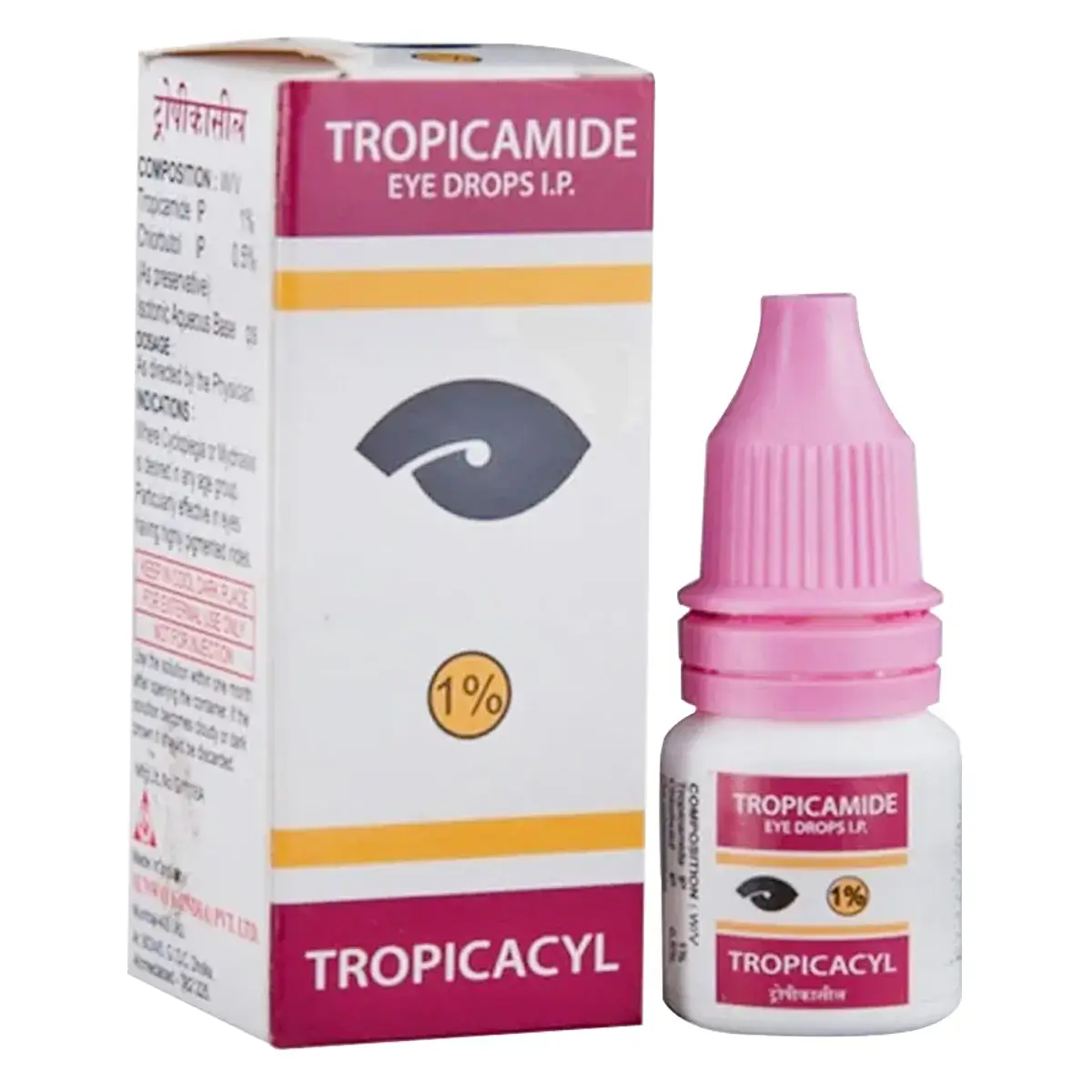
Tropicacyl Eye Drop 1% (Tropicamide)
Previous product
Alphagan eye drop 5ml (Brimonidine)
A$41.88 A$118.41Price range: A$41.88 through A$118.41
Next product
Dorzox Eye Drop 5ml (Dorzolamide)
A$12.85 A$68.95Price range: A$12.85 through A$68.95
A$15.16 A$35.65Price range: A$15.16 through A$35.65
In Stock
In Stock
Tropicacyl Eye Drop 1% (Tropicamide)
| Pack Size | Price | Quantity | Add To Cart | |
|---|---|---|---|---|
| 2 Eye Drop/s | A$15.16 | |||
| 4 Eye Drop/s | A$26.90 | |||
| 6 Eye Drop/s | A$35.65 | |||
| Want to order in bulk / B2B price? Send Inquiry | ||||
×
Sorry!! Out of Stock
Sorry! Tropicacyl Eye Drop 1% (Tropicamide) is out of stock
Please click below to view other similar medications.
View All Tropicamide Products


Offer You Can't Resist
Free Shipping
Enjoy Free Shipping on Orders above AUD304 (USD199)
Estimate Shipping :
21 July - 28 July
22
Last Updated on June 22, 2026

Description
Introduction
Tropicacyl Eye Drop 1% is a prescription ophthalmic solution that contains Tropicamide, a widely used medication in eye care that reduces pupil size (mydriasis) and temporarily relaxes the muscle that focuses your eye (cycloplegia). The drug plays a vital part in the diagnosis process and specific therapeutic uses because it allows eye specialists to assess the inside of the eye with greater precision.
What is Tropicacyl Eye Drop 1%?
Tropicacyl Eye Drop contains Tropicamide 1%, an anticholinergic ingredient specially designed for use in ophthalmology, to cause pupil dilation as well as Cycloplegia. If applied, tropicamide relaxes the smooth muscle in the ciliary body and iris, allowing the pupil to dilate and reducing the eye’s ability to focus on nearby objects.
This characteristic can make Tropicacyl extremely useful during eye exams like retinal assessments and measurement of refractive errors, and glaucoma assessments. Additionally, it is used for therapeutic purposes to treat a variety of inflammatory disorders that affect the eye.
How Does Tropicamide Work?
Tropicamide inhibits the actions of acetylcholine upon the muscarinic receptors of the ciliary and iris sphincter muscle. The result is:
- Mydriasis (pupil dilation): The relaxation of the muscles that surround the eyes causes the pupil to expand.
- Cycloplegia: A weak ciliary muscle that is weak hinders the eye from shifting the focus of its vision, allowing it to determine refractive errors precisely.
The effect usually begins within 15 to 30 minutes following the administration, and lasts for up to six hours based on the patient’s reaction.
Indications and Uses of Tropicacyl Eye Drop 1%
Tropicacyl Eye Drop 1% is primarily used for:
- Diagnostic pupil dilation: It allows for thorough inspection of the retina, optic nerve, and vitreous humor by ophthalmologists.
- Refraction assessment: It helps identify refractive errors by temporarily paralyzing the muscles of the eyes’ focusing.
- Treatment of uveitis: It reduces pain and helps prevent the development of synechiae by making sure the pupil is dilatable.
- Pre- and post-operative procedures: It is used in laser surgery or other treatments that need pupil dilation.
- Cycloplegic refraction in children: Helps to detect accommodative errors as well as latent hyperopia.
How to Use Tropicacyl Eye Drop 1%
Administration Instructions:
- Make sure you wash your hands well before putting in drops for your eyes.
- Turn your head inwards or lie on your back to keep from blinking too much throughout the application.
- Lower the eyelid slowly in order to make a tiny pocket.
- Instill one drop of Tropicacyl Eye Drop at 1% into the eye(s) affected. Be sure to avoid touching the dropper’s tip directly to the eye or on any surface that could cause contamination.
- Shut your eyes slowly and try not to blink or squeeze your eyes tightly.
- The inner part of the eyes (nasolacrimal duct) is gently massaged for 1-2 minutes in order to decrease the absorption of systemic.
- Make sure to wait at minimum 5 minutes prior to applying any other eye drop if it is prescribed.
- Remove the cap from the bottle following the last use.
Important Precautions
- Avoid driving or operating machinery: As tropicamide is known to cause pupils to dilate and blur near vision, people should stay away from tasks that require sharp vision until their effects have subsided.
- Inform your doctor: If you suffer from glaucoma angle-closure or any hypersensitivity to tropicamide or similar chemicals.
- Contact lenses: Disconnect contact lenses prior to applying drops, and wait a minimum of 15 minutes before applying the drops again.
- Avoid eye makeup: Make sure to apply eye makeup as soon as possible following the use of drops.
- Pregnancy and breastfeeding: Only use if necessary and if prescribed by a health expert.
Possible Side Effects
Though generally well-tolerated, Tropicacyl Eye Drop 1% can cause:
- A mild burning or stinging sensation that occurs immediately following application.
- A temporary blurred vision as well as increased sensitivity to light (photophobia).
- Eye dryness or redness.
- Headache or dizziness: Very rare and often temporary.
- Allergic reactions: The symptoms are rare but can include itching and swelling on the face. If it happens, you should stop the treatment and see an eye doctor right away.
Storage Instructions
- The eye drops should be stored at room temperature (15-30°C or 59-86°F).
- Make sure the bottle is tightly shut during times when it is not being used.
- Be safe from heat and light.
- Do not use after the expiry date.
- Make sure that the area is safe for children.
Frequently Asked Questions (FAQs)
Q1: How soon after using Tropicacyl Eye Drop will my pupils dilate?
A: The pupil dilation usually occurs between 15 and 30 minutes following treatment.
Q2: How long will the pupil dilation last?
A: They typically last 4 to 6 hours; however may vary based on one’s individual sensitivity.
Q3: Can I use Tropicacyl Eye Drop for long periods?
A: No, The medication you are taking is for temporary use under medical supervision only.
Q4: Is it safe to use in children?
A: Tropicamide is a common treatment for youngsters for eye exams, but always adhere to the directions of your physician.
Q5: What should I do if I experience severe pain or redness?
A: Take a break from using eye drops immediately and get medical assistance.
Summary
Tropicacyl Eye Drop 1% (Tropicamide) can be described as an important ophthalmic medicine that is used to treat and diagnose pupil dilation. Through relaxing the iris and the ciliary muscles, it aids in comprehensive eye examinations as well as helping treat certain eye inflammation conditions. The correct use of the product and compliance with guidelines ensure maximum efficacy and minimal adverse side effects.
Use Tropicacyl Eye Drop with the supervision of a licensed medical professional. Follow the directions carefully to ensure security and effectiveness.
Related products





Recently Viewed

Reviews
There are no reviews yet.