
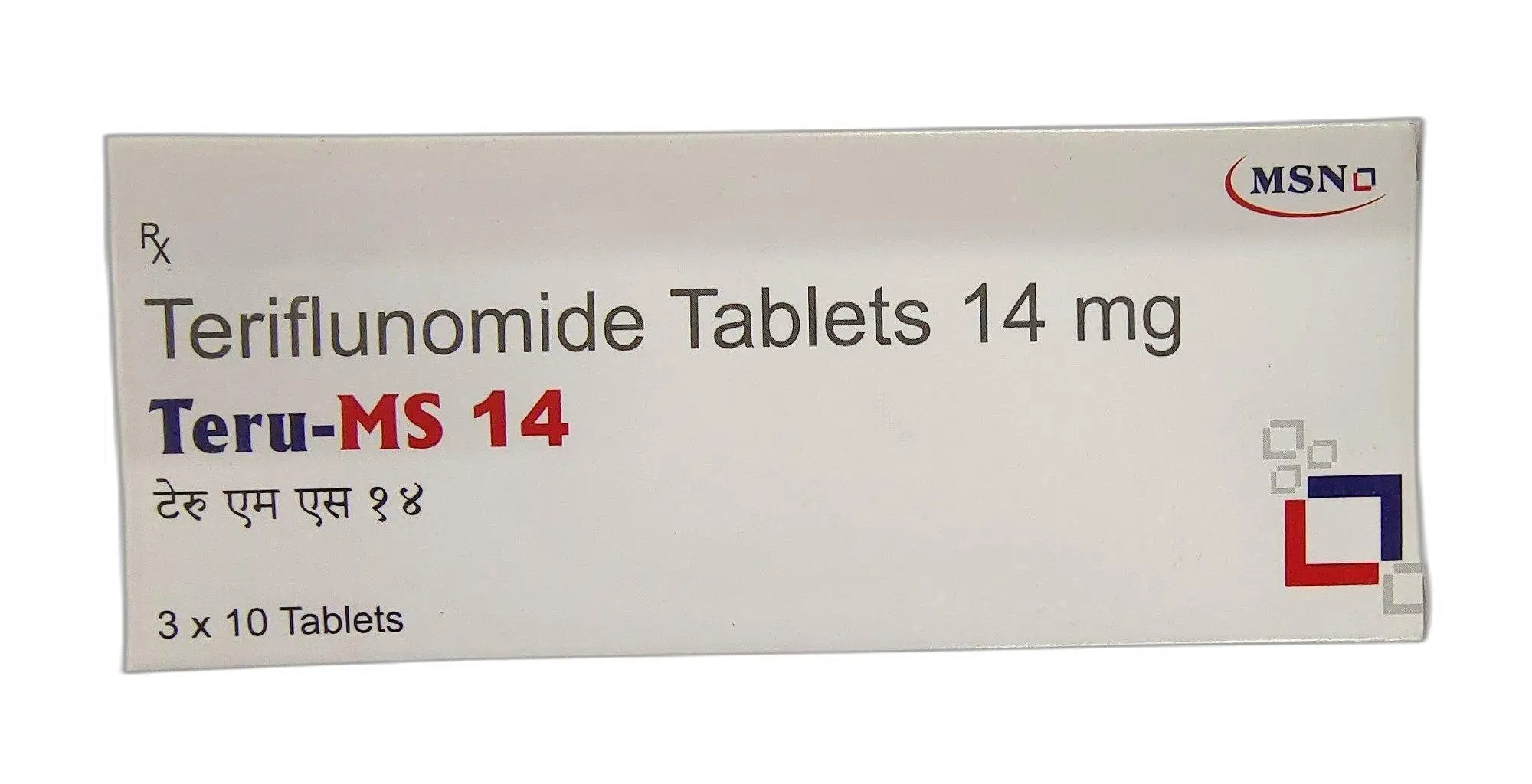
Teru MS 14mg (Teriflunomide)
Previous product

Terbinadoc 500mg (Terbinafine)
A$52.64 A$112.30Price range: A$52.64 through A$112.30
Next product
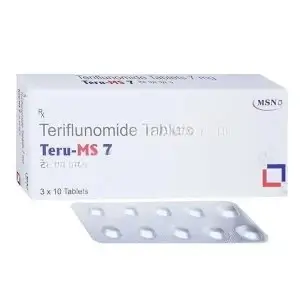
Teru MS 7mg (Teriflunomide)
A$98.27 A$249.88Price range: A$98.27 through A$249.88
A$168.46 A$416.93Price range: A$168.46 through A$416.93
In Stock
In Stock
Teru MS 14mg (Teriflunomide)
| Pack Size | Price | Quantity | Add To Cart | |
|---|---|---|---|---|
| 30 Tablet/s | A$168.46 | |||
| 60 Tablet/s | A$308.84 | |||
| 90 Tablet/s | A$416.93 | |||
| Want to order in bulk / B2B price? Send Inquiry | ||||
×
Sorry!! Out of Stock
Sorry! Teru MS 14mg (Teriflunomide) is out of stock
Please click below to view other similar medications.
View All Teriflunomide Products
Offer You Can't Resist
Free Shipping
Enjoy Free Shipping on Orders above AUD304 (USD199)
Estimate Delivery :
19 October - 26 October
49
Excellent service overall
Smooth checkout, quick dispatch, and secure delivery. Excellent service overall
 Australia
October 1, 2026
Last Updated on June 12, 2026

Description
Overview
Teru MS 14mg includes an active component, Teriflunomide, which is an oral immunomodulatory drug that is primarily utilized in the treatment of chronic forms of Multiple Sclerosis (MS). Multiple sclerosis is a persistent illness that causes the immune system to mistakenly attack the protective myelin sheath, which covers nerve fibers and causes issues between the brain and other parts of your body.
Teriflunomide is a drug that blocks the activity of certain enzymes, which play a role in the growth of activated B and T lymphocytes, which are key participants in the immune system, which is responsible for the destruction of the nervous system during MS. In cutting down the quantity of immune cells, Teriflunomide can reduce the incidence of MS Relapses as well as slow the progression of physical impairment.
Composition
- Active Ingredient: Teriflunomide 14mg
- Dosage Form: Oral tablets
Mechanism of Action
Teriflunomide specifically and irreversibly blocks dihydroorotate-dehydrogenase (DHODH), a mitochondrial enzyme responsible for de novo pyrimidine synthesis that is vital for the creation of DNA as well as the replication of cells in rapidly growing cells, such as activated lymphocytes.
In blocking DHODH’s activity, Teriflunomide reduces the growth of activated B and T cells, thus minimizing the effect of the immune system’s assault against the myelin sheath of the nervous system’s central part. The modulation of the immune system can reduce the incidence of relapses and also slow the development of neurological impairment.
Indications
Teru MS 14mg is indicated for:
- Relapsing types of multiple sclerosis (MS), including chronically isolated syndrome and relapsing-remitting MS, as well as active secondary MS.
- To reduce the number of clinically related exacerbations (relapses).
- To stop the development of physical impairment that is associated with MS.
Dosage and Administration
- The dose recommended for adults is 14 mg twice per day, taken by mouth, and without or with food.
- Tablets must be taken whole, along with water.
- A consistent daily dose is essential for maintaining therapeutic blood levels.
- There is no dosage adjustment required for moderate to mild kidney or liver impairment. But take care of severe liver disease.
- It is crucial to observe the liver function test prior to and after treatment. Teriflunomide could cause liver toxicities.
- The treatment is usually long-term, and should be stopped only with medical supervision.
Contraindications
- The hypersensitivity of Teriflunomide and any other excipients.
- Severe hepatic impairment or active liver disease.
- Pregnancy: Teriflunomide is teratogenic and not recommended in pregnancy because of the risk of harm to the fetus.
- Females with a child-bearing capacity must take effective contraception throughout treatment as well as until the drug has been eliminated from the body.
- Active infections or severe immunodeficiency.
- The use of breastmilk is not suggested for the treatment.
Precautions and Warnings
- Hepatotoxicity: Teriflunomide may cause increased the liver enzymes, as well as damage to the liver. The liver’s function must be regularly monitored.
- Pregnancy: Teriflunomide may cause birth defects. Women should be careful not to become pregnant during therapy and make use of an effective contraceptive. The males should be cautious about fathering children while receiving treatment.
- Infections: In its role as an immunomodulator, Teriflunomide can increase the risk of infection. Be sure to monitor patients for any signs of an infection.
- Hematologic effects: Keep track of blood counts frequently, as Teriflunomide could cause neutropenia or any other blood dyscrasias.
- Peripheral neuropathy: Patients are advised to report any symptoms, such as the sensation of tingling or numbness. Discomfort in the extremities.
- Drug elimination: Teriflunomide’s half-life is long (about 18 – 19 days). When a rapid elimination is necessary (e.g., during pregnancy), the use of cholestyramine or activated charcoal could be employed to speed up the process of drug elimination.
- Vaccinations: Live vaccines must be avoided during the course of treatment.
Side Effects
Common side effects:
- Hair thinning or hair loss (alopecia)
- Diarrhea
- Nausea
- Elevated liver enzymes
- Headache
- Respiratory tract infections
- Fatigue
Serious side effects (seek medical attention immediately):
- Severe liver injury signs: jaundice, severe abdominal pain
- Severe infections
- Allergic reactions: rash, itching, swelling, difficulty breathing
- Peripheral neuropathy symptoms
- Blood abnormalities: unusual bleeding or bruising
Drug Interactions
- Other immunosuppressants: An increase in the risk of getting infections as well as the toxicity.
- Warfarin: Teriflunomide can increase the effect that blood thinners have on the body.
- Rifampicin and other strong inducers of CYP enzymes: May reduce Teriflunomide levels.
- Live vaccines: It is recommended to avoid treatments.
- Cholestyramine and activated charcoal: It is used to speed up the elimination process of Teriflunomide when needed.
Make sure you inform your physician of any medication supplements, herbal, or other items you’re taking.
Use During Pregnancy and Lactation
- Teriflunomide is not advised during the course of pregnancy because of the possibility of teratogenic effects.
- The women who are pregnant should have a positive pregnancy test before starting, using effective contraception.
- The contraceptive pill should be used while they are receiving treatment until Teriflunomide is eliminated.
- The practice of breastfeeding is not suggested while taking medication and during an extended period following the cessation of treatment.
Frequently Asked Questions (FAQs)
Q1: What is Teru MS 14mg used for?
A: Teru MS 14mg is utilized to treat relapsing types of multiple sclerosis by reducing the likelihood of relapses as well as slowing down the progression of disability.
Q2: How do I take Teru MS?
: Consume one tablet of 14 mg every day, either in conjunction with or without food. Take the tablet as a whole, suck it up by drinking water.
Q3: Can Teru MS cure multiple sclerosis?
A: No, The answer is no. Teru MS is not a cure for MS; however, it can help manage the symptoms through slowing the progression of the disease and decreasing the frequency of relapses.
Q4: What should I do if I miss a dose?
A: Make sure to take the dose missed immediately when you can remember it, unless you are close to the date of the next dose. Don’t double your dose.
Q5: What are the common side effects?
A: The most common side effects are hair loss, diarrhea, headaches, nausea, and respiratory illnesses.
Q6: Can I take Teru MS if I am pregnant?
A: No, There is no need to worry; Teru MS is contraindicated in pregnancy because of the potential for birth defects.
Q7: How long does Teru MS stay in my body?
A: Teriflunomide is a drug with a prolonged time-to-live of around 18-19 days. The drug can be in the body for several months after the treatment has ended. Methods to eliminate it can be employed in the event of need.
Q8: What monitoring is needed during treatment?
A: A regular check of the liver’s function, as well as blood count, and monitoring for infection, is vital.
Q9: Can I receive vaccines while on Teru MS?
A: Live vaccines must be avoided while undergoing treatments. The inactivated vaccines can be administered; however, you must consult your physician.
Q10: How soon will I see results?
A: The benefits usually show up after a few weeks or even months because the immune system is controlled.
Summary
Teru MS 14mg (Teriflunomide) is an oral medication for the treatment of chronic forms of MS. Inhibiting a specific enzyme essential to activated cells of the immune system, Teriflunomide reduces immune-mediated damage to the nervous system. It reduces the likelihood of relapses and also slows the progression of disability for MS sufferers.
The medicine is administered each day at a time, with consistent doses to be effective. Teru MS requires the careful observation of the liver’s functioning, blood count, and signs of infection because of the potential for adverse effects. It’s not recommended during pregnancy, and should be utilized at a moderate dose in those suffering from an impairment of the liver.
The most common side effects are hair loss, diarrhea, and nausea. The most serious side effects, such as liver injury or severe infections, necessitate urgent medical treatment.
Teru MS is a beneficial treatment for managing MS to improve your quality of life through controlling the progression and activity of the disease.
Additional Information
| Active Ingredient: | Teriflunomide |
|---|---|
| Indication: | Multiple Sclerosis |
| Manufacturer: | MSN Laboratories |
| Packaging: | 10 Tablets in 1 Strip |
| Strength: | 14mg |
| Delivery Time: | 7 To 15 days |
Related products





Recently Viewed
Reviews
There are no reviews yet.