

Terol LA 2mg (Tolterodine)
Previous product

Foligraf 150iu
A$93.81 A$456.32Price range: A$93.81 through A$456.32
Next product

Roza Gel 30gm (Metronidazole)
A$33.24 A$97.01Price range: A$33.24 through A$97.01
A$33.60 A$78.75Price range: A$33.60 through A$78.75
In Stock
In Stock
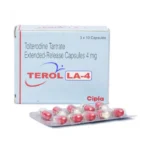
Terol LA 2mg (Tolterodine)
| Pack Size | Price | Quantity | Add To Cart | |
|---|---|---|---|---|
| 30 Capsule/s | A$33.60 | |||
| 60 Capsule/s | A$52.50 | |||
| 90 Capsule/s | A$78.75 | |||
| Want to order in bulk / B2B price? Send Inquiry | ||||
×
Sorry!! Out of Stock
Sorry! Terol LA 2mg (Tolterodine) is out of stock
Please click below to view other similar medications.
View All Tolterodine Products
Offer You Can't Resist
Free Shipping
Enjoy Free Shipping on Orders above AUD304 (USD199)
Estimate Shipping :
20 June - 27 June
29
Last Updated on June 12, 2026

Description
Overview
Terol LA 2mg is a prescribed medication that contains Tolterodine (also known as an antagonist of the muscarinic receptor that is used to treat the symptoms of an overactive bladder (OAB), including frequent and urgent urination as well as urge incontinence. Terol LA is an extended-release drug created to ensure a consistent dose of medication that lasts for up to 24 hours. It allows for daily dosage and better control of symptoms without causing any adverse side effects.
Active Ingredient
- Tolterodine tartrate 2 mg (extended-release formulation)
Indications
Terol LA 2mg is indicated for:
- Overactive bladder syndrome with symptoms such as:
- Urinary urgency (sudden strong need to urinate),
- Urinary frequency (frequent urination),
- Urge urinary incontinence (involuntary loss of urine).
- It can also be used to decrease bladder spasms and enhance quality in those who are experiencing issues with bladder instability.
Mechanism of Action
Tolterodine is a drug that works by blocking muscle receptors within the smooth muscle in the bladder. This is specifically that of M2 and the M3 receptors. The receptors are stimulated by acetylcholine, which causes bladder contractions.
In repressing these receptors, Tolterodine:
- It reduces the involuntary contractions of the detrusor muscles,
- Reduces the frequency and urgency of urine,
- Increases bladder capacity and improves control.
Extended-release formulations ensure the same plasma concentration, which improves quality of life and lessens the impact of peak adverse effects such as dry mouth.
Dosage and Administration
- The dosage recommended should be 2 mg twice per day and administered by mouth.
- Terol LA must be taken by mouth with water. Do not chew, crush, or split the tablet.
- It is a good option to take it either with or without meals.
- Dosage adjustments are often required for patients who are elderly or who suffer from hepatic impairment.
- The duration of treatment is based on how well the patient manages symptoms, as well as their assessment by the physician.
Pharmacokinetics
- Absorption: Tolterodine LA is well absorbed with a bioavailability of around 77%.
- Peak plasma concentration: The time was approximately 6 hours following taking the dose.
- Metabolism: It is extensively transformed by the liver enzyme CYP2D6 and transformed into an active metabolic product.
- Half-life: About 8 hours are typical for large metabolism and more in weak metabolism.
- Excretion: The elimination is done through the use of urine (approx. 60%) and feces.
Contraindications
- A known hypersensitivity reaction to tolterodine or the components of the formula.
- Urinary retention.
- Gastric retention.
- Uncontrolled narrow-angle glaucoma.
- Severe hepatic impairment.
- Patients who suffer from pyloric narrowing or another obstructive digestive disorder.
Warnings and Precautions
- Urinary retention: Check on patients suffering from obstruction of the bladder outlet or those susceptible to urinary retention.
- Glaucoma: Be cautious in patients suffering from no treatment for narrow-angle glaucoma, due to the potential for increased intraocular pressure.
- Gastrointestinal obstruction: Be cautious when using this medication in patients suffering from severe constipation or with gastric retention.
- Hepatic impairment: Adjustments to dosages may be required for severe impairments; however, it is not recommended to usage.
- Elderly patients: Risk of adverse side effects increases. Monitor closely.
- Cognitive effects: Anticholinergic medications like tolterodine can create confusion or impairment in memory, specifically in elderly people.
- QT prolongation: Take care when administering this drug to those with medical conditions that may lead to QT delay.
Side Effects
Common side effects include:
- Dry mouth (most frequent)
- Headache
- Constipation
- Dizziness
- Fatigue
- Blurred vision
- Gastrointestinal discomfort
Less common but serious side effects:
- Urinary retention
- Allergic reactions (rash, itching, swelling)
- Cognitive disturbances, especially in elderly patients
- Tachycardia or palpitations (rare)
Patients are advised to report serious or ongoing adverse reactions to their healthcare provider immediately.
Drug Interactions
- CYP2D6 inhibitors (e.g., fluoxetine, paroxetine): It could increase the levels of plasma tolterodine, which increases the risk of having side effects.
- Other anticholinergic drugs: The effects of anticholinergics can also be additive, which increases the likelihood of constipation, dry mouth, and cognitive impairment.
- Drugs that prolong QT interval: Take care as tolterodine could cause arrhythmias to become more likely.
- Alcohol: It can cause dizziness and sedation.
Make sure you inform your physician about any medication or supplement you take.
Storage
- Maintain at a temperature of room at or below 30°C (86°F).
- Store in original packaging to guard against moisture.
- Make sure that the area is safe for children.
Frequently Asked Questions (FAQs)
Q1: What is Terol LA 2mg used for?
A1: It’s used to treat signs of bladder overactivity, which include frequency, urgency, and urge incontinence.
Q2: How does Terol LA work?
A2: It blocks certain receptors inside the bladder, which reduces involuntary muscle contractions and enhances bladder control.
Q3: Can I take Terol LA with food?
A3: Yes, It is a fact that it can be consumed either with or without food.
Q4: What should I do if I miss a dose?
A4: Do it as quickly as you remember it, unless very close to the time of your next dose. Don’t take two doses.
Q5: What are common side effects?
A5: Dry mouth, headaches, constipation, dizziness, and blurred vision are typical.
Q6: Is Terol LA safe for elderly patients?
A6: Yes, They can, however, be more sensitive to adverse consequences and need to be watched carefully.
Q7: Can I drink alcohol while taking Terol LA?
A7: The effects of alcohol can be exacerbated by dizziness. So it’s advised to reduce your intake and speak with your physician.
Q8: Can Terol LA cause urinary retention?
A8: Yes, Absolutely, particularly for patients suffering from bladder outlet obstruction or prostate enlargement.
Q9: How long does it take for Terol LA to work?
A9: Improvement in symptoms can be observed in as little as 2 weeks after the treatment.
Q10: Can I crush or chew the tablet?
A10: No, The extended-release tablet must be ingested in its entirety.
Summary
Terol LA 2mg (Tolterodine) is an efficient, daily extended-release medicine to treat symptoms of an overactive bladder. It blocks the bladder’s muscarinic receptors, which reduces involuntary contractions, as well as improving control over the flow of urine.
The extended-release formulation offers regular relief of symptoms with increased quality of life and reduces the number of adverse effects, such as dry mouth. The drug is generally tolerated; however, it is recommended to use it cautiously in those who are at risk of recurrent urinary leak, as well as glaucoma or cognitive impairment.
Patients are advised to stick to the dosage regimen, refrain from crushing tablets, and be sure to report any serious side symptoms to their physician. Monitoring regularly and constant contact with healthcare professionals ensures that there is a safe and efficient treatment for urinary symptoms that are overactive.
Related products




Recently Viewed







Reviews
There are no reviews yet.