
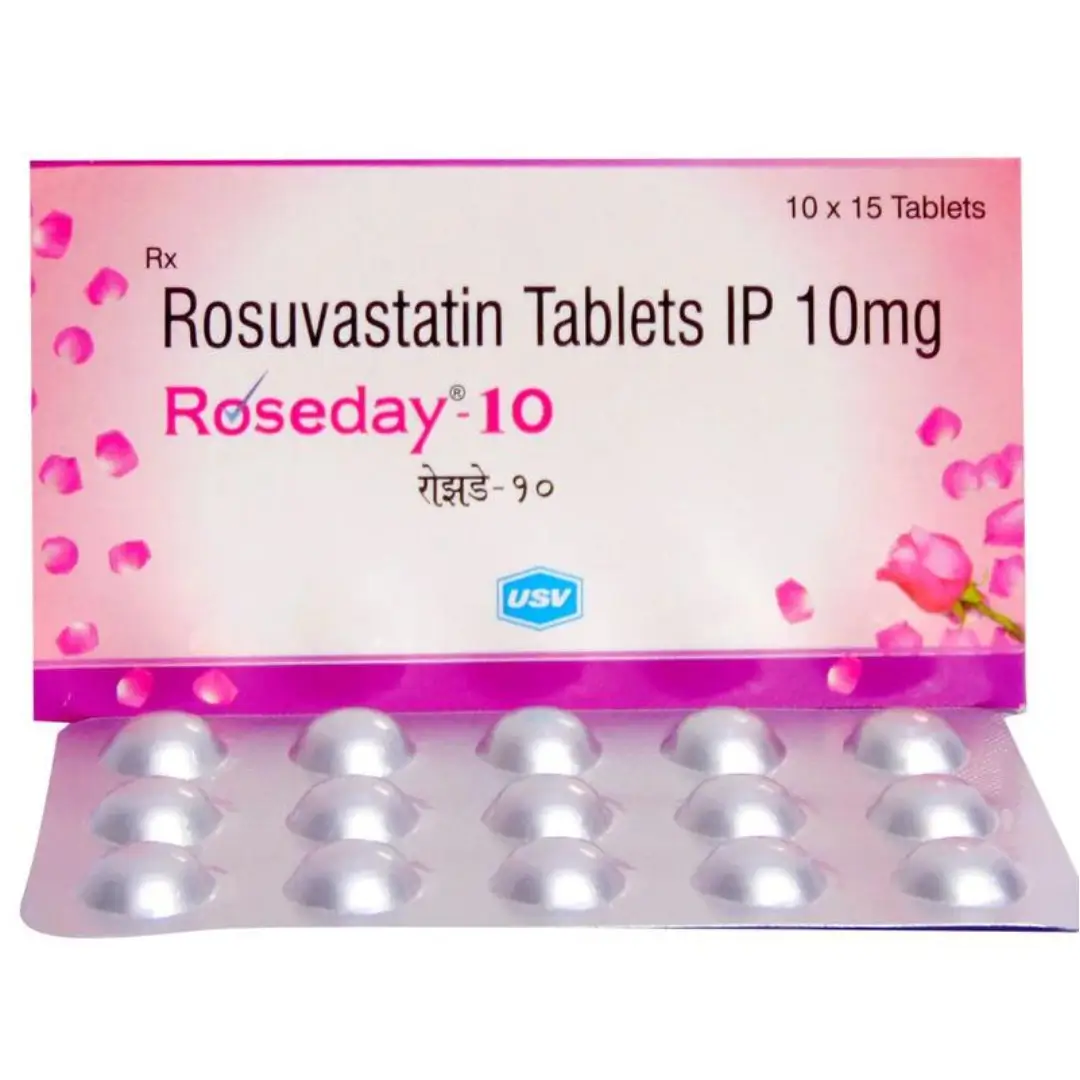
Roseday 10mg (Rosuvastatin)
Previous product
Roseday 5mg (Rosuvastatin)
$12.50 $22.50Price range: $12.50 through $22.50
Next product

Roseday 20mg (Rosuvastatin)
$30.00 $68.75Price range: $30.00 through $68.75
$20.00 $35.00Price range: $20.00 through $35.00
In Stock
In Stock
Roseday 10mg (Rosuvastatin)
| Pack Size | Price | Quantity | Add To Cart | |
|---|---|---|---|---|
| 60 Tablet/s | $20.00 | |||
| 90 Tablet/s | $27.50 | |||
| 120 Tablet/s | $35.00 | |||
| Want to order in bulk / B2B price? Send Inquiry | ||||
×
Sorry!! Out of Stock
Sorry! Roseday 10mg (Rosuvastatin) is out of stock
Please click below to view other similar medications.
View All Rosuvastatin Products

Offer You Can't Resist
Free Shipping
Enjoy Free Shipping on Orders above AUD304 (USD199)
Estimate Shipping :
14 July - 21 July
34
Last Updated on May 18, 2026

Description
Introduction
Roseday 10 mg has rosuvastatin in it, which is a potent statin that helps to reduce cholesterol levels and decrease the likelihood of developing heart disease. It is typically recommended for those with elevated cholesterol levels or with a high risk of heart attack-related problems, such as strokes. In this detailed article, we’ll look at the details of what Roseday 10 mg does and how it functions, its advantages, the proper dosage, as well as rare and common adverse effects, warnings of drug interactions, and helpful tips for patients.
What is Roseday 10 mg and How Does It Work?
Roseday 10 mg is the drug rosuvastatin, which is part of the family of statins. Statins inhibit an enzyme found in the liver called HMG CoA reductase. The enzyme plays an essential function in the manufacture of cholesterol. By blocking it with rosuvastatin, the liver is deprived of its capacity to create cholesterol. This includes reducing amounts of LDL cholesterol (often commonly referred to as “bad cholesterol”) as well as triglycerides and slight increases in HDL cholesterol (“good cholesterol”).
The reduction of LDL cholesterol is crucial because high levels can cause plaque accumulation in the arteries, which can increase the likelihood of having a heart attack, stroke, and various other cardiovascular illnesses.
Primary Uses and Benefits
Roseday 10 mg is typically employed to treat:
- In lowering the high LDL cholesterol levels and Triglyceride levels
- Raising HDL cholesterol
- Lowering the chance of heart conditions like heart attack, stroke, as well as the requirement for interventions that improve blood flow to the heart.
- Controlling family-related hypercholesterolemia (a genetic type that has high cholesterol)
Through a successful management of cholesterol, Roseday helps prevent the development of plaques within blood vessels, thus improving overall heart health and lessening long-term risk.
How to Take Roseday 10 mg
- Dosage: The usual dosage is a 10 mg tablet per day. Based on the individual’s cholesterol level and risk factors, doctors might alter the dose.
- Timing: It can be consumed at any time during the morning, whether or not food is consumed. Certain doctors recommend taking the pill in the evening, since the production of cholesterol is greater during the night.
- Consistency: It is crucial to use the medicine regularly and not to skip dosages. In the event of a missed dose, it must be administered as quickly as you remember, or as close to the time of taking your next dose. Avoid taking double doses.
- Duration: It’s usually an ongoing medication. The levels of cholesterol are monitored often, and doses are adjusted as needed.
When Will You See Results?
Cholesterol levels generally increase after about 2 to 4 weeks of beginning Roseday. However, full benefit may be slower and contingent on adherence to the treatment plan and changes in lifestyle, like diet and exercise.
Common Side Effects
Many patients can enjoy Roseday quite well, but some suffer negative side effects. These include:
- Muscle aches, weakness, or cramps (myalgia)
- Headache or dizziness
- Nausea, stomach pain, constipation, or indigestion
- A slight elevation in liver enzymes during blood tests
- A slight increase in blood sugar levels, particularly when a patient has diabetes
The majority of the side effects are not severe and will improve over time. However, any new or recurring issues should be discussed with a physician.
Serious or Rare Side Effects
While rare, serious reactions can happen and should be treated immediately by a physician:
- Rhabdomyolysis: A severe muscle tear can cause severe muscular weakness, pain, the appearance of dark urine, and kidney damage
- Liver problems: The symptoms include yellowing of the eyes and skin, dark urine, extreme stomach pain, and fatigue
- Allergic reactions: Swelling of the throat, face, or breathing difficulty
- New-onset type 2 diabetes or the worsening of blood sugar control
If any of these signs are present, stop taking the medication and consult a physician immediately.
Who Should Be Careful Using Roseday 10 mg?
Pregnancy and Breastfeeding
Roseday is not recommended during pregnancy since it could harm the baby’s development. Women who are pregnant must use a contraceptive pill that is effective during treatment with this drug. This isn’t recommended for breastfeeding because of the potential risk to the baby.
Children
Rosuvastatin is a prescription medication for youngsters aged 10 and over who suffer from genetic disorders that cause very high cholesterol. It is recommended to take it only under medical supervision.
Elderly
There is no significant difference in the safety or efficiency that has been observed for older people; older adults may be more vulnerable to adverse reactions and must be closely monitored.
Liver and Kidney Disease
Patients with kidney or liver conditions require particular care. The tests for liver function must be performed regularly in order to look for the presence of any injury, and dosage adjustments could be required.
Drug Interactions
Roseday may interact with a variety of drugs, and this could increase the chance of adverse effects or diminish efficiency. A few of the most significant interactions include:
- Fibrates and other cholesterol-lowering drugs: The combination of fibrates, such as gemfibrozil, can increase the chance of developing muscle issues.
- Immunosuppressants: Cyclosporine and other drugs can increase the levels of rosuvastatin and increase the risk of adverse side effects.
- Certain antibiotics and antivirals: A few can boost the concentration of rosuvastatin.
- Blood thinners: Warfarin and other similar medicines might require dosage monitoring.
- Antacids: It can reduce the absorption of rosuvastatin when it is taken at the same time.
- Alcohol: Alcohol intake can raise the chance of damage to your liver.
Be sure to inform your physician of any supplements, medicines, or herbal supplements you’re using.
Monitoring While on Roseday
A regular monitoring program helps guarantee security and efficiency:
- Liver functional tests before starting, and regularly afterward
- Creatine Kinase (CK) test to determine if muscles are weak or painful to rule out injury to muscles
- Testing for Blood Sugar for those who have or are at risk of developing diabetes
- Tests for cholesterol to determine the response to cholesterol and alter the therapy
Patient Experiences
People taking Roseday report varied experiences. A majority report significant improvement in cholesterol and have minimal adverse effects. Some may suffer from muscle pains or fatigue in the beginning, which can be controlled by altering the dosage or shifting to a different statin. Certain patients have found that the use of supplements like Coenzyme Q10 can help ease the symptoms of muscle; however, they must only be used in conjunction with a medical professional.
Tips for Taking Roseday 10 mg
- Eat a heart-healthy and healthy diet that is rich in vegetables, fruits Whole grains, and lean.
- Keep exercising regularly according to the advice of your physician.
- Reduce alcohol consumption to lower the risk of liver damage.
- Inform us of any pain in the muscle or weakness as soon as you notice it.
- Stop taking your medications without consulting your physician.
- Tell your physician about any medications or supplements you are taking.
- Utilize effective birth control when you’re an adult woman.
Summary
| Topic | Key Points |
| Drug Class | Statin (HMG-CoA reductase inhibitor) |
| Purpose | Lowers LDL cholesterol, triglycerides; raises HDL |
| Dosage | 10 mg once daily, adjusted as needed |
| Time to Effect | 2-4 weeks for cholesterol changes |
| Common Side Effects | Muscle aches, headache, GI upset |
| Serious Side Effects | Rhabdomyolysis, liver damage, allergy |
| Special Precautions | Avoid in pregnancy, monitor liver and kidney function |
| Drug Interactions | Fibrates, immunosuppressants, blood thinners, antacids |
| Monitoring | Liver tests, CK for muscle symptoms, blood sugar, lipid profile |
Conclusion
Roseday 10 mg (rosuvastatin) is an extremely efficient medication to manage cholesterol and reduce the risks of heart disease. Although most people can tolerate the medication well, paying attention to the effects of side effects and frequent surveillance is crucial. In conjunction with changes to lifestyles, this can become the cornerstone for cardiovascular disease prevention.
Discuss any issues or issues with your physician in order to receive safe and effective treatments that are tailored to meet your specific needs.
Additional Information
| Manufacturer | USV Pvt Ltd |
|---|---|
| Pharmaceutical | Tablet/s |
| Strength | 10 mg |
| Pack Size | 60 Tablet/s, 90 Tablet/s, 120 Tablet/s |
Related products



Recently Viewed
Reviews
There are no reviews yet.