
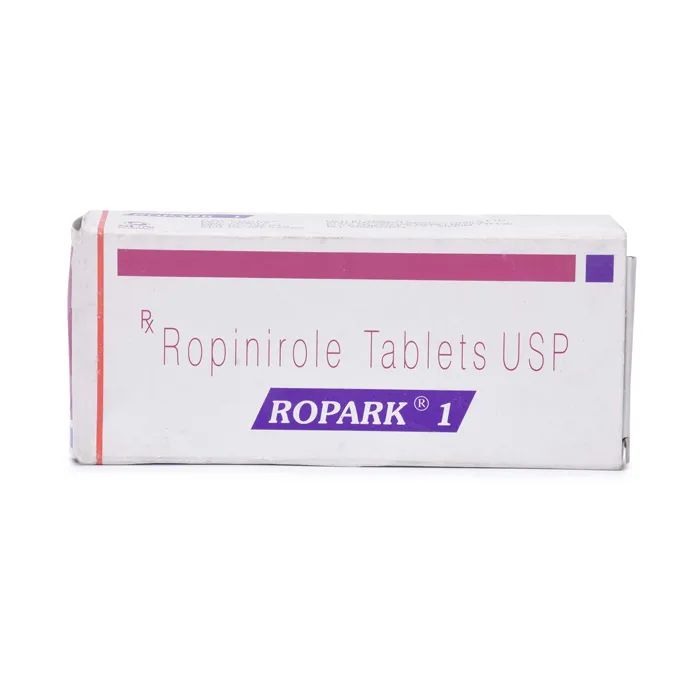
Ropark 1mg (Ropinirole)
Previous product
Ropark 0.5mg (Ropinirole)
$21.25 $38.75Price range: $21.25 through $38.75
Next product
Ropark 0.25mg (Ropinirole)
$15.00 $27.50Price range: $15.00 through $27.50
$23.75 $43.75Price range: $23.75 through $43.75
In Stock
In Stock
Ropark 1mg (Ropinirole)
| Pack Size | Price | Quantity | Add To Cart | |
|---|---|---|---|---|
| 60 Tablet/s | $23.75 | |||
| 90 Tablet/s | $33.75 | |||
| 120 Tablet/s | $43.75 | |||
| Want to order in bulk / B2B price? Send Inquiry | ||||
×
Sorry!! Out of Stock
Sorry! Ropark 1mg (Ropinirole) is out of stock
Please click below to view other similar medications.
View All Ropinirole Products


Offer You Can't Resist
Free Shipping
Enjoy Free Shipping on Orders above AUD304 (USD199)
Estimate Shipping :
07 June - 14 June
35
Last Updated on May 18, 2026

Description
Ropark 1mg (Ropinirole): A Comprehensive Guide
Ropark 1mg, which contains Ropinirole, the active ingredient. Ropinirole is a prescribed medication that is commonly utilized in the treatment of Parkinson’s disease as well as the Restless Legs Syndrome (RLS). A dopamine agonist, it mimics the actions of dopamine within the brain. It helps bring back the balance of dopamine levels, which tend to be reduced in those suffering from these neurologic conditions.
In this comprehensive guide, we’ll go over all you need to learn about Ropark 1mg. This includes its mechanism of action, the medical benefits, and dosage guidelines, as well as side effects, interactions, and safety precautions.
What is Ropark 1mg?
Ropark 1mg is a brand-name variant that is a branded version of Ropinirole HCl, which is a non-ergoline dopamine antagonist. It comes in a variety of strength levels, but the one mg dosage is typically used for the intermediate stage of treatment, especially in the case of adjusting dosages or combining with other drugs for Parkinson’s disease treatment.
Ropinirole can be used to treat two primary circumstances:
- Parkinson’s Disease (PD)
- Restless Legs Syndrome (RLS)
Although the medication is identical, dosing methods differ based on the condition that is being treated.
How Does Ropark (Ropinirole) Work?
Ropinirole operates by activating dopamine receptors within the brain. Dopamine can be described as a neurotransmitter that is responsible for controlling mood, movement, as well as motivation and focus. When conditions such as Parkinson’s disease are present, the dopamine-producing neurons gradually decline, which leads to the development of a deficit in dopamine.
It is a dopamine antagonist. Ropinirole doesn’t replace dopamine by itself, but works on dopamine receptors to replicate the effects of dopamine. It helps alleviate symptoms, such as tremors, stiffness, and slow movement.
When it comes to Restless Legs Syndrome, the causes aren’t completely identified, but dopamine deficiency within the central nervous system is believed to be a factor. Ropinirole eases the discomfort sensations, as well as the need to move legs, particularly at night.
Medical Uses of Ropark 1mg
Parkinson’s Disease
Ropinirole can be used by itself during the initial stages of Parkinson’s disease, or when combined with levodopa at more advanced stages. It assists in smoothing motor responses and decreases “off” intervals that are associated with levodopa usage for a long time.
Benefits include:
- Reduction in tremors and stiffness of muscles
- Better mobility
- There are fewer motor issues when using it for the first time in therapy
- Less need for levodopa at high doses in the initial Phase
Restless Legs Syndrome (RLS)
In the case of severe or moderate RLS, Ropinirole helps:
- Decrease the urge to move the legs
- Reduce leg discomfort
- Improve sleep quality
It’s usually consumed between 1 and 3 hours before going to bed.
Dosage and Administration
The amount of Ropark 1mg is determined by the illness being treated as well as the patient’s individual response. It is crucial to adhere to the instructions of your physician strictly and not alter dosage without medical supervision.
For Parkinson’s Disease:
- Initial dose: 0.25 mg 3 times per day
- Gradual increase: Typically, it is increased to 0.25-1 mg per week
- Usual maintenance dose: 3-9 mg daily Divided into three dosages
- Maximum dose: 24 mg/day
Ropark 1mg could be a in a regimen of titration or maintenance therapy based on the phase of your treatment.
For Restless Legs Syndrome:
- Initial dose: 0.25 mg once a day (1-3 hours before the time of bed)
- Dose can be increased after some days, until 0.5 mg, and then to 1 mg should be taken if required.
- Maximum recommended dose: 4 mg/day
The tablets of Ropinirole should be taken whole, along with water or with or without food. Consuming it in conjunction with food can lower the risk of vomiting.
Side Effects of Ropark 1mg
Similar to all drugs, Ropark 1mg may cause adverse effects. Though many patients take it without issue, some might experience mild or mild symptoms, particularly during the phase of adjustment to the dose.
Common Side Effects:
- Nausea
- Dizziness
- Drowsiness
- Fatigue
- Headache
- Insomnia
- Vomiting
- Orthostatic hypotension (low blood pressure when standing)
Less Common but Serious Side Effects:
- Hallucinations (more common in older patients)
- Impulse control disorders (e.g., compulsive gambling, shopping, eating)
- Sudden sleep attacks during daily activities
- Confusion or agitation
- Swelling of the legs or ankles
- Shortness of breath
- Uncontrolled movements (dyskinesia)
If any of these severe negative side effects develop, medical attention should be sought as soon as possible.
Precautions and Warnings
Sleep Attacks and Drowsiness
Ropinirole could trigger abrupt sleep disturbances, often without prior warning. This can be particularly hazardous when you operate machines that are heavy machines. It is important to inform patients of the risk and to closely monitor them.
Psychiatric Effects
Confusion, hallucinations, and delusions may occur most often in patients who are elderly or people with cognitive impairment. Behavior changes like disturbances in impulse control (e.g., obsessional gambling, hypersexuality, or compulsive gambling) have also been documented.
Cardiovascular Effects
Ropinirole could reduce blood pressure, particularly in standing. This may cause fainting and dizziness. This medication should be utilized at a moderate dose in those suffering from cardiac disease or on antihypertensive medication.
Liver Impairment
The patients with a liver disorder might require dose adjustments since the liver processes ropinirole.
Pregnancy and Breastfeeding
The data available is not extensive on Ropinirole’s use during pregnancy. The drug should be used only in cases where the potential benefits exceed the risks. It can interfere with lactation and, therefore, should be avoided during lactation.
Drug Interactions
Ropark 1mg can cause a drug interaction with other medicines. Make sure you inform your physician about all medications that you’re taking, such as over-the-counter medicines and other supplements.
Notable Interactions:
- Ciprofloxacin and other CYP1A2 inhibitors: Could increase levels of ropinirole
- Smoking: Could reduce the efficacy of ropinirole because it stimulates liver enzymes
- Antipsychotics (e.g., haloperidol, risperidone): Can counteract the effects of the drug ropinirole
- Levodopa: The combination of use could produce hallucinations and dyskinesia for some patients
Monitoring is required regularly in the event of stopping or starting the use of any drug that interacts with it.
Use in Special Populations
Elderly:
Older adults may be more susceptible to the side effects of Ropark, including hallucinations as well as orthostatic hypotension. The dosage should be regulated carefully.
Children:
Ropinirole is not usually recommended for use in children because it has not been proven to be safe and effective. Been confirmed in children.
Renal Impairment:
Patients suffering from kidney disease might require close surveillance or dose changes.
Withdrawal and Discontinuation
Ropinirole must not be discontinued abruptly, especially when it is associated with Parkinson’s disease. The abrupt discontinuation could cause the neuroleptic malignant disorder (NMS), an extremely rare and serious disorder that is characterised by muscle stiffness as well as fever, altered cognition, and autonomic malfunction.
In RLS withdrawal, it can cause a rebound impact which can cause symptoms to worsen in the short term after quitting the drug.
To limit the risks associated with these to reduce the risk, gradually tapering off the dosage under the supervision of a medical professional is recommended.
Ropark vs Other Dopamine Agonists
Ropinirole, for instance, is one of the dopamine agonists utilized in neurological training. Other examples are:
- Pramipexole
- Rotigotine (patch form)
- Apomorphine (injection)
Compared to other agonists:
- Ropinirole is a drug with a beneficial adverse effect profile
- The product is offered as immediate-release as well as Extended-release formulations
- A lot of times, patients can’t tolerate the levodopa they are taking early in Parkinson’s disease
- There is a particular FDA-approved indication for RLS that is FDA-approved and is not like other alternatives
The choice of agent is often based on the individual’s requirements, responses, costs, and tolerance to side effects.
Storage and Handling
Ropark 1mg tablets must be kept:
- At room temperature (15–30°C)
- Keep clear of moisture, heat, and light
- Keep children out of reach
Don’t use the medicine after the expiration date. Remove any remaining medicine as per local pharmaceutical waste rules.
Patient Tips and Lifestyle Considerations
- Consistency: Do your dosages every day in order to ensure stable blood sugar levels.
- Monitor for side effects: In particular, it is the change in the way you behave, your mood, or your sleeping habits.
- Stay hydrated: Particularly if you are experiencing dizziness or lower blood pressure.
- Limit alcohol: The medication can cause adverse effects such as drowsiness and dizziness.
- Diet: Certain patients report that using ropinirole in conjunction with a light meal helps lessen nausea.
- Activity: Parkinson’s patients must combine their medications along with regular physical therapy, as well as activities to help maintain mobility.
Related products









Recently Viewed





Reviews
There are no reviews yet.