
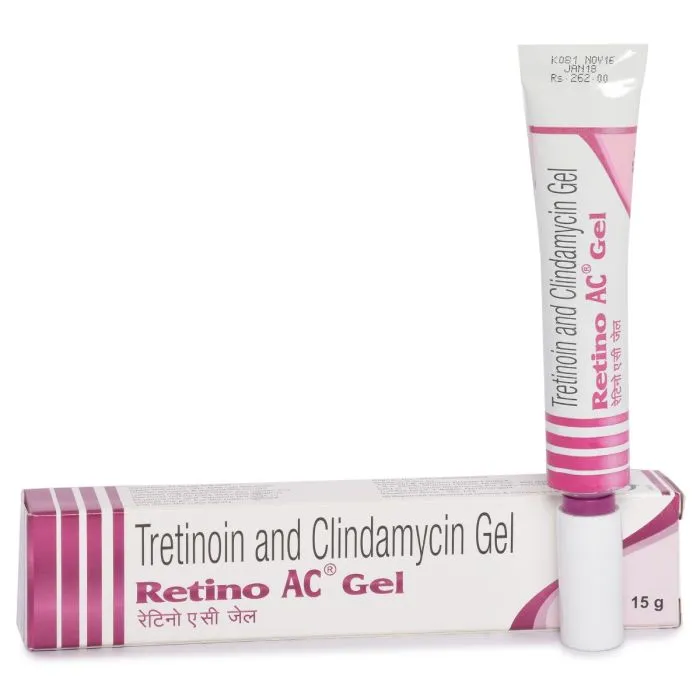
Retino AC Gel (Clindamycin/Tretinoin)
Previous product

Retino A Micro 0.04% (Tretinoin)
A$45.00 A$117.00Price range: A$45.00 through A$117.00
Next product
Salicylix SF 6% Cream (Salicylic Acid)
A$11.00 A$27.00Price range: A$11.00 through A$27.00
A$45.00 A$121.00Price range: A$45.00 through A$121.00
Out of Stock
Out of Stock
Retino AC Gel (Clindamycin/Tretinoin)
| Pack Size | Price | Quantity | Add To Cart | |
|---|---|---|---|---|
| 3 Gel/s | A$45.00 | |||
| 6 Gel/s | A$84.00 | |||
| 9 Gel/s | A$121.00 | |||
| Want to order in bulk / B2B price? Send Inquiry | ||||
×
Sorry!! Out of Stock
Sorry! Retino AC Gel (Clindamycin/Tretinoin) is out of stock
Please click below to view other similar medications.
View All Clindamycin/Tretinoin Products
Offer You Can't Resist
Free Shipping
Enjoy Free Shipping on Orders above AUD304 (USD199)
32
Secure Packaging
My order was packaged carefully and arrived in good condition. The whole process was handled professionally, and communication was excellent. Thank you for the great service
 Australia
August 18, 2026
Last Updated on May 18, 2026

Description
Retino AC Gel is a topical medicine with two active ingredients: Clindamycin and Tretinoin. The combination is typically used to treat skin conditions such as acne vulgaris, particularly the inflammatory type of acne, with comedones (blackheads as well as whiteheads).
Active Ingredients
- Clindamycin: An antibiotic that combats acne-causing bacteria and also reduces inflammation.
- Tretinoin: Vitamin A is a derivative (retinoid) that helps regulate cell turnover in the skin, stopping the formation of pores that are blocked and encouraging the renewal of skin.
How Does Retino AC Gel Work?
Clindamycin targets Propionibacterium acnes (now also known as Cutibacterium acnes), which is the bacterium that causes acne inflammation. In limiting the growth of bacteria and inflammation, Clindamycin assists in preventing new pimples from growing.
Tretinoin helps in the elimination of dead skin cells. It stops their accumulation within hair follicles. This reduces the growth of comedones. Additionally, it promotes collagen production, which improves appearance and texture.
Together, the two ingredients combine to help clear acne-related lesions as well as improve the overall health of the skin.
Indications and Uses
Retino AC Gel is primarily utilized to:
- Treatment for moderate to light skin vulgaris.
- Reduces inflammation of acne spots (papules and pustules).
- The prevention of the development of comedones (blackheads and whiteheads).
- Enhancing the skin’s texture and encouraging the healing process of acne marks.
How to Use Retino AC Gel
- Application: Place a thin coating of gel on the areas affected each day, preferring to do this in the evening before going to bed.
- Skin Preparation: The face is gently cleansed and dried before applying.
- Avoid Sensitive Areas: Beware of contact with the nostrils, eyes, lips, or mucous membranes.
- Sun Protection: Tretinoin causes the skin to be more sensitive to the sun. Apply sunscreen, and limit sun exposure while you are treating.
- Consistency: A regular use schedule is required to achieve the best results. Observable changes may require up to a few weeks.
Side Effects
Certain side effects can occur, especially in the initial couple of weeks after treatment:
- Skin irritation or redness
- Dryness and peeling
- Burning or stinging sensation
- Increased sensitivity to sunlight
- Mild itching or rash
The majority of side effects are minor and decrease with time when the skin is adjusted. The presence of severe irritation should trigger discontinuation and an appointment with a medical physician.
Precautions and Warnings
- Use with caution during pregnancy or nursing unless it is specifically recommended by a physician, since Tretinoin is known to be a teratogen.
- Do not mix it with other products for your skin that are harsh, including exfoliants or harsh cleansers.
- Discuss with your physician any allergy to Clindamycin, Tretinoin, or similar chemicals.
- Stop use in the event of an allergic or severe irritation develops.
- Make sure you apply sunscreen every day, as Tretinoin may cause photosensitivity.
- Beware of harsh or invasive removal techniques for hair in the areas of treatment during therapy.
Storage
- The gel should be kept in a dry and cool area out of direct light.
- Make sure the container is tightly sealed during times of non-use.
- Be sure to keep away from young children.
Summary
Retino AC Gel (Clindamycin/Tretinoin) is an effective topical treatment for acne that combines an antibiotic with a retinoid to reduce inflammation, clear acne-causing bacteria, and normalize skin renewal. It’s commonly used for moderate to light acne. It needs consistent application as well as sun protection to get the most effective results.
Additional Information
| Manufacturer | Janssen Pharmaceuticals, India |
|---|---|
| Pharmaceutical | Gel |
| Strength | 0.10% |
| Pack Size | 3 Gel/s, 6 Gel/s, 9 Gel/s |
Related products



Reviews
There are no reviews yet.