
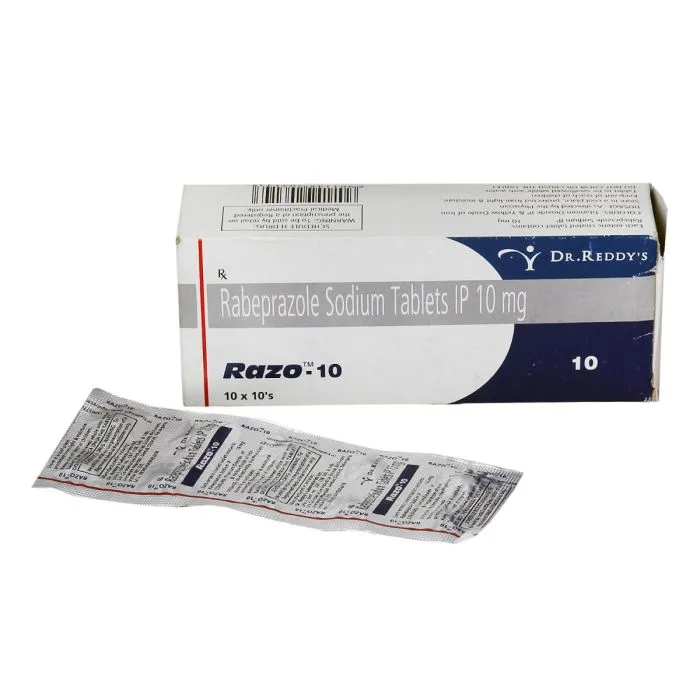
Razo 10mg (Rabeprazole)
Previous product
Razo 20mg (Rabeprazole)
$8.35 $21.38Price range: $8.35 through $21.38
Next product
Hair 4U 10% Spray/Solution (Minoxidil/Aminexil)
$39.00 $168.75Price range: $39.00 through $168.75
$6.34 $15.39Price range: $6.34 through $15.39
In Stock
In Stock
Razo 10mg (Rabeprazole)
| Pack Size | Price | Quantity | Add To Cart | |
|---|---|---|---|---|
| 30 Tablet/s | $6.34 | |||
| 60 Tablet/s | $11.64 | |||
| 90 Tablet/s | $15.39 | |||
| Want to order in bulk / B2B price? Send Inquiry | ||||
×
Sorry!! Out of Stock
Sorry! Razo 10mg (Rabeprazole) is out of stock
Please click below to view other similar medications.
View All Rabeprazole Products
Offer You Can't Resist
Free Shipping
Enjoy Free Shipping on Orders above AUD304 (USD199)
Estimate Shipping :
08 June - 15 June
37
Customer service
Customer service was responsive and medicines arrived in perfect condition
 Australia
May 19, 2026
Last Updated on May 16, 2026

Description
Introduction
Razo 10mg is a prescription medication containing Rabeprazole, a medicine that belongs to the class of drugs called Proton Pump Inhibitors (PPIs). It is widely prescribed to treat acid-related stomach and digestive disorders by reducing the amount of acid produced in the stomach. Razo 10mg is commonly recommended for conditions such as acid reflux, heartburn, gastroesophageal reflux disease (GERD), stomach ulcers, and other gastrointestinal conditions caused by excessive acid secretion.
Excess stomach acid can irritate the stomach lining and esophagus, leading to discomfort, pain, bloating, and long-term complications if left untreated. Razo 10mg works effectively to reduce acid production, promote healing, and provide long-lasting symptom relief.
This detailed guide covers everything about Razo 10mg (Rabeprazole), including its uses, mechanism of action, dosage, benefits, side effects, precautions, interactions, and frequently asked questions.
What is Razo 10mg?
Razo 10mg contains Rabeprazole Sodium, a proton pump inhibitor used to decrease stomach acid production. It blocks the acid-producing pumps present in the stomach lining, helping reduce irritation and allowing damaged tissues to heal.
Rabeprazole is considered one of the most effective medications for controlling excessive gastric acid secretion. It starts working within a few hours after administration, while maximum effectiveness is usually achieved after a few days of regular use.
Doctors often prescribe Razo 10mg to relieve symptoms such as:
- Persistent heartburn
- Acid reflux
- Chest discomfort caused by stomach acid
- Sour taste in the mouth
- Stomach pain due to ulcers
- Indigestion and bloating
Composition of Razo 10mg
| Ingredient | Strength | Category |
|---|---|---|
| Rabeprazole Sodium | 10 mg | Proton Pump Inhibitor (PPI) |
Rabeprazole helps reduce stomach acidity and protects the digestive lining from acid damage.
How Does Razo 10mg Work?
Razo 10mg works by blocking the gastric proton pump (H+/K+ ATPase enzyme) located in the stomach lining.
Normally, this enzyme is responsible for producing hydrochloric acid inside the stomach. Excess acid can damage tissues and worsen digestive conditions.
Rabeprazole stops this process by:
- Reducing acid secretion in the stomach
- Decreasing irritation in the stomach lining and esophagus
- Promoting healing of ulcers and inflammation
- Preventing acid-related discomfort and recurrence
Because it targets the final stage of acid production, Rabeprazole offers stronger and longer-lasting relief than ordinary antacids.
Medical Uses of Razo 10mg
1. Gastroesophageal Reflux Disease (GERD)
GERD occurs when stomach acid moves backward into the esophagus, causing symptoms such as:
- Heartburn
- Burning sensation in chest
- Sour taste in mouth
- Difficulty swallowing
Razo 10mg helps reduce acid reflux and heals esophageal irritation.
2. Peptic Ulcers
Peptic ulcers are sores in the stomach or upper intestine caused by acid damage or bacterial infection.
Rabeprazole helps ulcers heal by reducing stomach acidity and preventing further irritation.
3. Gastritis
Gastritis refers to inflammation of the stomach lining. Razo 10mg reduces irritation and helps relieve symptoms like:
- Stomach pain
- Nausea
- Indigestion
- Bloating
4. Zollinger-Ellison Syndrome
This rare condition causes excessive acid production in the stomach.
Razo helps control severe acid secretion and prevents complications.
5. Helicobacter pylori (H. pylori) Infection
Rabeprazole is commonly combined with antibiotics to treat H. pylori infections, which are linked to ulcers and gastritis.
6. Acid-Related Dyspepsia
People suffering from indigestion, bloating, or excessive acidity may benefit from Razo 10mg.
Dosage and Administration
The dosage depends on the medical condition and doctor’s recommendation.
Recommended Dosage
| Condition | Recommended Dose |
|---|---|
| GERD / Acid Reflux | 10 mg once daily |
| Peptic Ulcers | 10–20 mg daily |
| Gastritis | 10 mg once daily |
| H. pylori Infection | With antibiotics for 7–14 days |
| Zollinger-Ellison Syndrome | Higher doses as prescribed |
How to Take Razo 10mg
- Take the tablet 30–60 minutes before meals, preferably before breakfast.
- Swallow the tablet whole with water.
- Do not crush, chew, or break the tablet.
- Take it at the same time every day for best results.
Benefits of Razo 10mg
Razo 10mg offers multiple advantages for digestive health:
Fast Relief from Acid Symptoms
Helps reduce heartburn, acidity, and stomach discomfort quickly.
Long-Lasting Acid Control
One dose can provide acid suppression for up to 24 hours.
Healing of Stomach Damage
Supports healing of ulcers and esophageal inflammation.
Prevention of Complications
Prevents worsening of acid-related conditions such as erosive esophagitis.
Better Quality of Life
Improves eating comfort and reduces digestive pain.
Side Effects of Razo 10mg
Like all medicines, Razo 10mg may cause side effects, although many people tolerate it well.
Common Side Effects
- Headache
- Nausea
- Vomiting
- Diarrhea
- Constipation
- Stomach pain
- Gas or bloating
- Dizziness
Serious Side Effects
Seek medical attention immediately if you experience:
- Severe allergic reactions
- Persistent diarrhea
- Severe stomach pain
- Difficulty breathing
- Muscle weakness or cramps
- Unusual tiredness
Long-term use may sometimes increase the risk of:
- Vitamin B12 deficiency
- Magnesium deficiency
- Bone fractures
- Kidney problems
Precautions and Warnings
Before taking Razo 10mg, consider these precautions:
Allergy
Avoid using if allergic to Rabeprazole or other proton pump inhibitors.
Pregnancy and Breastfeeding
Consult a doctor before use during pregnancy or breastfeeding.
Liver Problems
People with liver disease may require dosage adjustments.
Long-Term Use
Using PPIs for prolonged periods should be medically supervised due to possible nutrient deficiencies.
Hidden Medical Conditions
Persistent symptoms like unexplained weight loss, difficulty swallowing, or bleeding require immediate medical attention.
Drug Interactions
Razo 10mg may interact with several medicines.
Common Drug Interactions
Antifungal Medicines
Drugs like ketoconazole may become less effective.
Blood Thinners
Warfarin interaction may increase bleeding risk.
Methotrexate
Higher toxicity risk when used together.
Iron Supplements
Reduced absorption may occur.
Anti-HIV Medicines
Certain medicines may work less effectively.
Always inform your doctor about all medicines, supplements, or herbal products you are taking.
Lifestyle Tips for Better Results
To improve treatment effectiveness:
- Avoid spicy and oily foods
- Limit caffeine and alcohol intake
- Stop smoking
- Eat smaller meals
- Avoid lying down immediately after eating
- Maintain a healthy body weight
These changes can significantly reduce acid reflux symptoms.
Frequently Asked Questions (FAQs)
1. What is Razo 10mg used for?
It is used to treat acid reflux, GERD, stomach ulcers, gastritis, and excessive stomach acid conditions.
2. How long does Razo 10mg take to work?
It may start working within a few hours, but full effects are usually seen after 2–3 days.
3. Can I take Razo 10mg daily?
Yes, but only according to your doctor’s advice.
4. Should Razo be taken before or after food?
It is best taken before meals, preferably before breakfast.
5. Is Razo 10mg safe for long-term use?
Long-term use should be monitored by a healthcare provider.
6. Can Razo treat heartburn?
Yes, it effectively relieves heartburn caused by excess stomach acid.
7. What happens if I miss a dose?
Take it when remembered unless it is close to the next dose. Do not double the dose.
8. Can alcohol be consumed while taking Razo?
Avoid alcohol because it may worsen acidity symptoms.
9. Does Razo cause constipation?
Yes, constipation may occur in some people.
10. Can children take Razo 10mg?
Only if prescribed by a pediatric doctor.
Conclusion
Razo 10mg (Rabeprazole) is a highly effective medication for managing acid-related stomach disorders such as GERD, gastritis, ulcers, and acid reflux. By reducing stomach acid production, it provides long-lasting symptom relief, supports healing of damaged tissues, and improves digestive comfort.
Although generally safe and well tolerated, it should always be taken according to medical advice. Proper dosage, healthy eating habits, and regular monitoring can help maximize benefits while minimizing risks. If symptoms persist or worsen, consult a healthcare professional for proper evaluation and treatment.
Related products




Recently Viewed

Reviews
There are no reviews yet.