
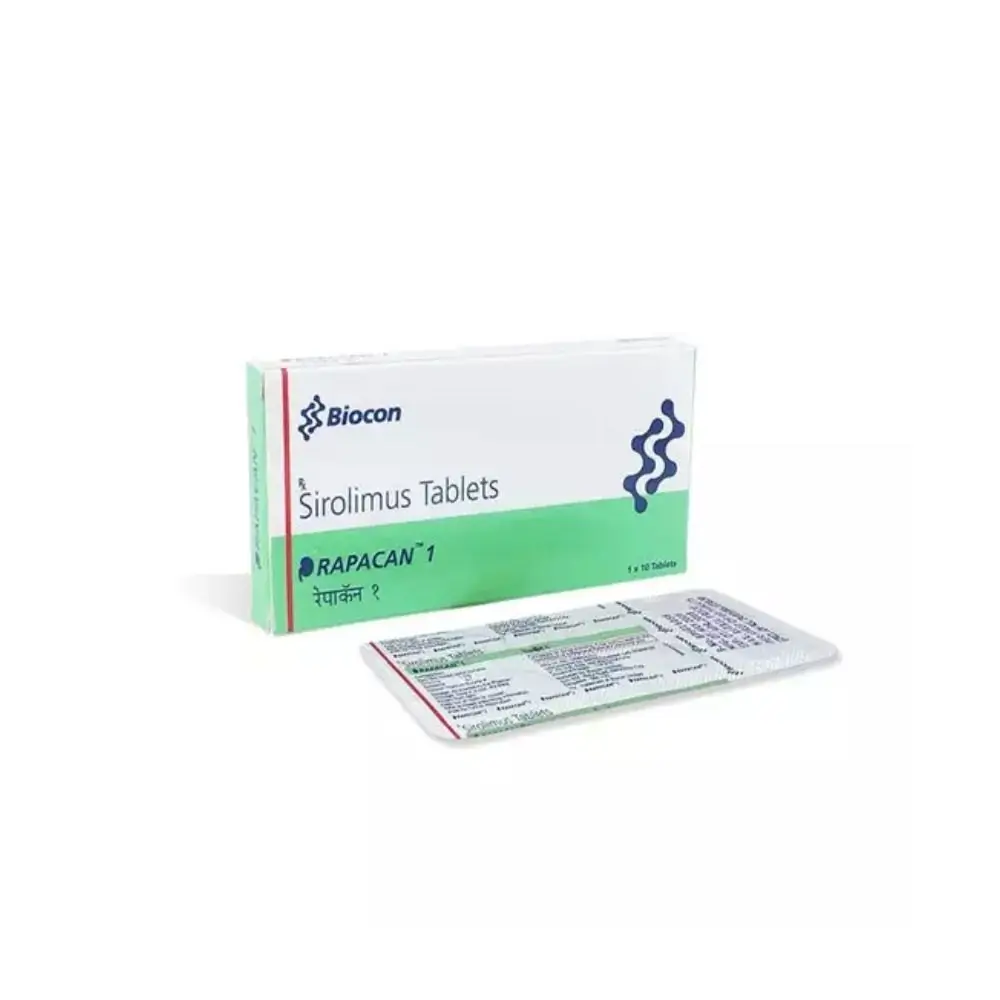
Rapacan 2mg (Sirolimus)
Previous product
Rapacan 1mg (Sirolimus)
$155.00 $425.00Price range: $155.00 through $425.00
Next product
Augmentin Syrup DUO 3.3g (Amoxicillin/Clavulanic Acid)
$4.00 $20.00Price range: $4.00 through $20.00
$300.00 $840.00Price range: $300.00 through $840.00
In Stock
In Stock
Rapacan 2mg (Sirolimus)
| Pack Size | Price | Quantity | Add To Cart | |
|---|---|---|---|---|
| 30 Tablet/s | $300.00 | |||
| 60 Tablet/s | $590.00 | |||
| 90 Tablet/s | $840.00 | |||
| Want to order in bulk / B2B price? Send Inquiry | ||||
×
Sorry!! Out of Stock
Sorry! Rapacan 2mg (Sirolimus) is out of stock
Please click below to view other similar medications.
View All Sirolimus Products
Offer You Can't Resist
Free Shipping
Enjoy Free Shipping on Orders above AUD304 (USD199)
Estimate Shipping :
18 July - 25 July
31
Last Updated on May 15, 2026

Description
Introduction
Rapacan 2mg contains Sirolimus as its active ingredient. Sirolimus, also known as Rapamycin, is a powerful immunosuppressant medication primarily used to prevent organ rejection after transplantation.
Its unique mechanism of action makes it an important medicine in transplant medicine and immunology. This overview explains the drug’s background, mechanism of action, pharmacology, clinical uses, dosage, side effects, precautions, and monitoring requirements.
Background and Origin
Sirolimus was first discovered in the 1970s from the bacterium Streptomyces hygroscopicus, found in soil samples from Easter Island (Rapa Nui). The name “Rapamycin” originates from Rapa Nui.
Initially studied for its antifungal properties, researchers later discovered its strong immunosuppressive and antiproliferative effects, leading to its use in organ transplantation and other medical conditions.
Mechanism of Action
Sirolimus works by inhibiting the mammalian target of rapamycin (mTOR) pathway, which plays an important role in:
- Cell growth
- Cell proliferation
- Metabolism
- Immune system activation
Sirolimus binds to an intracellular protein called FK-binding protein-12 (FKBP-12). This complex inhibits mTOR Complex 1 (mTORC1), blocking the transition of immune cells from the G1 phase to the S phase of the cell cycle.
As a result:
- T-cell and B-cell proliferation decreases
- Immune response becomes suppressed
- Organ rejection risk reduces
Unlike calcineurin inhibitors such as tacrolimus and cyclosporine, Sirolimus does not block early T-cell activation but prevents their expansion after activation.
Pharmacology
Absorption
Sirolimus is taken orally and has variable bioavailability, usually around 15%. High-fat meals may affect its absorption.
Distribution
It is highly lipophilic and widely distributed throughout body tissues. More than 90% of the drug binds to plasma proteins.
Metabolism
Sirolimus is mainly metabolized in the liver by the CYP3A4 enzyme and transported by P-glycoprotein.
Elimination
It has a long half-life of approximately 60 hours, allowing once-daily dosing. Most of the drug is eliminated through feces.
Clinical Uses of Rapacan 2mg
1. Organ Transplantation
Rapacan is widely used to prevent organ rejection, especially after:
- Kidney transplantation
- Heart transplantation
- Liver transplantation
It is often used:
- Alongside corticosteroids
- With calcineurin inhibitors
- As an alternative in patients who cannot tolerate other immunosuppressants
Kidney Transplantation
Sirolimus helps:
- Reduce acute rejection episodes
- Improve graft survival
- Support long-term transplant success
2. Drug-Eluting Coronary Stents
Sirolimus is used in certain cardiac stents to prevent restenosis (re-narrowing of blood vessels) by reducing smooth muscle cell growth.
3. Other Potential Uses
Research continues into its use for:
- Certain cancers
- Lymphangioleiomyomatosis (LAM)
- Tuberous Sclerosis Complex
because of its antiproliferative effects.
Dosage and Administration
The dosage of Rapacan 2mg depends on:
- Type of transplant
- Body weight
- Other medications
- Blood Sirolimus levels
Typical Starting Dose
For kidney transplant patients:
- Initial dosing commonly begins at 2mg daily
Dose Adjustment
Blood Sirolimus levels are monitored regularly to maintain therapeutic levels, generally between:
- 5–15 ng/mL
Administration Tips
- Take the medicine consistently at the same time every day
- It may be taken with or without food
- Avoid high-fat meals if advised
- Swallow tablets whole with water
Side Effects of Rapacan 2mg
Like other immunosuppressive medicines, Sirolimus may cause side effects.
Common Side Effects
- Mouth ulcers (stomatitis)
- High cholesterol and triglycerides
- Anemia
- Low platelet count (thrombocytopenia)
- Acne or skin rash
- Nausea and diarrhea
- Delayed wound healing
Serious Side Effects
- Increased infection risk
- Interstitial lung disease
- Kidney damage or proteinuria
- Liver impairment
- Increased risk of cancers due to long-term immune suppression
Seek immediate medical care if severe symptoms occur.
Drug Interactions
Sirolimus interacts with many medications because it is metabolized by CYP3A4.
CYP3A4 Inhibitors
Medicines such as:
- Ketoconazole
- Erythromycin
- Grapefruit juice
may increase Sirolimus levels and toxicity risk.
CYP3A4 Inducers
Medicines such as:
- Rifampin
- Phenytoin
may lower Sirolimus levels and increase rejection risk.
Other Interactions
- Other immunosuppressants require close monitoring
- Statins may increase muscle injury risk when combined with Sirolimus
Precautions and Contraindications
Pregnancy and Breastfeeding
Sirolimus is generally not recommended during pregnancy or breastfeeding because it may harm the fetus or infant.
Infections
Patients should be monitored closely for signs of infection due to immune suppression.
Wound Healing
Sirolimus may delay wound healing, especially after surgery.
Kidney and Liver Impairment
Dose adjustments may be necessary in patients with organ dysfunction.
Vaccinations
Live vaccines should be avoided during treatment.
Monitoring During Treatment
Patients taking Rapacan 2mg usually require regular monitoring, including:
- Blood Sirolimus levels
- Complete blood count (CBC)
- Liver function tests
- Kidney function tests
- Lipid profile
- Signs of infection or malignancy
Patient Counseling and Lifestyle Advice
Medication Adherence
Take Rapacan exactly as prescribed and attend all scheduled medical appointments.
Avoid Grapefruit
Do not consume grapefruit or grapefruit juice because it can increase drug levels.
Prevent Infections
- Maintain good hygiene
- Avoid close contact with sick individuals
- Report fever or unusual symptoms immediately
Sun Protection
Use sunscreen and protective clothing because immunosuppressants may increase skin cancer risk.
Report Side Effects
Seek medical advice if you experience:
- Persistent cough
- Breathing difficulty
- Severe mouth sores
- Unusual bleeding or bruising
- Signs of infection
Conclusion
Rapacan 2mg (Sirolimus) is an important immunosuppressive medication with a unique mechanism targeting the mTOR pathway. It plays a major role in organ transplantation by helping prevent organ rejection and improving graft survival.
Although highly effective, Rapacan requires careful dosing, monitoring, and management because of potential side effects and drug interactions. Regular medical supervision and patient adherence are essential for safe and successful long-term treatment.
Ongoing research into additional medical uses further highlights the importance of Sirolimus in modern medicine.
Additional Information
| Manufacturer | Biocon Limited |
|---|---|
| Pharmaceutical | Tablet/s |
| Strength | 2 Mg |
| Pack Size | 30 Tablet/s, 60 Tablet/s, 90 Tablet/s |
Related products



Reviews
There are no reviews yet.