
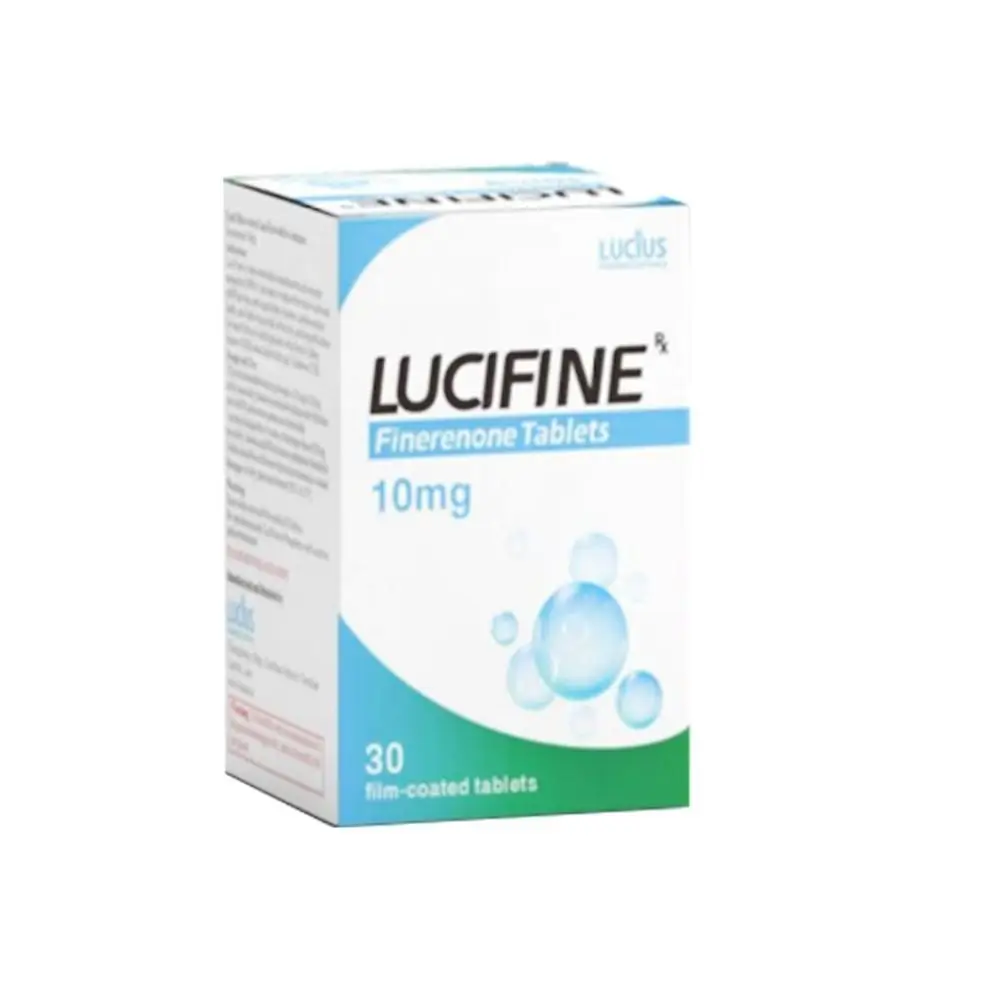
LuciFine 10mg (Finerenone)
Previous product

Lucicyp 50mg (Cyproterone Acetate)
A$130.00 A$337.45Price range: A$130.00 through A$337.45
Next product
Lupirtin 100mg (Flupirtine)
A$63.00 A$143.75Price range: A$63.00 through A$143.75
A$28.00 A$71.40Price range: A$28.00 through A$71.40
In Stock
In Stock
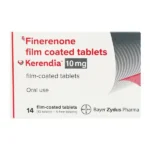
LuciFine 10mg (Finerenone)
| Pack Size | Price | Quantity | Add To Cart | |
|---|---|---|---|---|
| 30 Tablet/s | A$28.00 | |||
| 60 Tablet/s | A$50.40 | |||
| 90 Tablet/s | A$71.40 | |||
| Want to order in bulk / B2B price? Send Inquiry | ||||
×
Sorry!! Out of Stock
Sorry! LuciFine 10mg (Finerenone) is out of stock
Please click below to view other similar medications.
View All Finerenone Products
Offer You Can't Resist
Free Shipping
Enjoy Free Shipping on Orders above AUD304 (USD199)
Estimate Delivery :
13 October - 20 October
27
Excellent service overall
Smooth checkout, quick dispatch, and secure delivery. Excellent service overall
 Australia
October 1, 2026
Last Updated on April 19, 2026

Description
Introduction
LuciFine 10mg is a medicine that has its active ingredient Finerenone, which is a new non-steroidal antagonist of the mineralocorticoid receptor (MRA). It’s utilized to treat people suffering from chronic kidney damage (CKD) that is associated with the type 2 form of diabetes. Finerenone can help reduce damage to the kidneys as well as cardiovascular risk by reducing negative effects caused by excessive mineralocorticoid receptor stimulation.
What is Finerenone?
Finerenone is a specific non-steroidal antagonist of the mineralocorticoid receptor (MR). In contrast to older MR antagonists, such as eplerenone and spironolactone, which are steroidal with broader effects, Finerenone offers a much more focused action and may help reduce adverse effects such as hormone imbalances.
When they are activated too much, the mineralocorticoid receptors are responsible for inflammation and the process of fibrosis (scarring) within the heart and kidneys, increasing kidney function as well as heart health outcomes. Finerenone interferes with this receptor to protect against damage.
Indications
LuciFine 10 mg has been certified for use in:
- The treatment of chronic kidney disease (CKD) in people suffering from Type 2 Diabetes aims to decrease the chance of a sustained decrease in kidney function and kidney function heart failure, death from cardiovascular causes, non-fatal myocardial ischemia, as well as hospitalization in case of heart failure.
Mechanism of Action
Finerenone inhibits the mineralocorticoid receptor that can be activated by hormones, like aldosterone. If these receptors are activated too much, they encourage:
- Inflammation
- Fibrosis (scarring)
- Hypertrophy (thickening) of heart and kidney tissue
Through antagonizing MR by admonishing Finerenone:
- Reducing inflammation and fibrosis in the heart and kidney tissue.
- Improves kidney function and lowers the risk of cardiovascular disease.
Dosage and Administration
- The dose that is recommended for starting off should be 10 mg every day.
- Based on the patient’s reaction as well as kidney functioning, the dosage could be increased by 20 mg per day after four weeks.
- Adjustments to dosages may be needed depending on the levels of potassium in serum and kidney function.
- It is recommended to take it orally either with or without food.
Pharmacokinetics
- Absorption: Finerenone can be absorbed easily orally.
- Metabolism: A lot of it is metabolized through CYP3A4 enzymes.
- Half-life: Between 2 and 3 hours.
- Excretion: Most commonly through urine and feces.
Side Effects
LuciFine 10mg is typically very well-tolerated, but it can produce side effects such as:
Common Side Effects
- Hyperkalemia (elevated potassium levels in blood)
- In mild gastrointestinal conditions, for example, diarrhea and nausea
- Fatigue or weakness
Serious Side Effects
- Severe hyperkalemia could be fatal if not treated
- Kidney function worsening
- Hypotension (low blood pressure)
Patients must be monitored regularly for levels of potassium and kidney function in order to identify adverse effects in the early stages.
Contraindications
- Hyperkalemia (serum potassium >5.0 mmol/L)
- Severe kidney impairment (eGFR <25 mL/min/1.73 m²)
- A known hypersensitivity reaction in the face of Finerenone or any of the ingredients found that are in LuciFine
- Utilization in combination with diuretics with potassium-sparing properties or potassium supplements, without strict surveillance
Precautions and Warnings
- Examine kidney and serum potassium function before starting treatment, every 4 weeks, and then every month thereafter.
- Do not take other medications that can increase potassium levels, unless you are under close supervision.
- Take care when using this medication in patients who have moderate to mild renal impairment.
- It is not recommended to take part in the course of pregnancy or while breastfeeding.
- Tell your doctor about the medications you take to ensure that there are no interactions.
Drug Interactions
- CYP3A4 inhibitors (e.g., ketoconazole, clarithromycin) could cause an increase in Finerenone levels.
- CYP3A4 inducers (e.g., rifampin, carbamazepine) It could decrease its effectiveness.
- Drugs that increase potassium (e.g., ACE inhibitors, ARBs, potassium supplements) could increase the risk of developing hyperkalemia.
Use in Special Populations
- Elderly: Adjusting dosages may be necessary to monitor kidney and potassium performance very closely.
- Renal impairment: Be cautious; adjust dose according to renal functioning.
- Hepatic impairment: Limitations on data. Use with caution.
Patient Counseling Information
- Use LuciFine 10 mg as prescribed.
- Don’t begin sodium supplements or substitutes for salt that contain potassium without consulting your health care doctor.
- Regularly test your blood to monitor potassium levels and kidney performance.
- Tell the doctor about symptoms like weak muscles, irregular heartbeat, or severe dizziness as soon as you notice them.
- Eat a well-balanced diet and stay clear of excessive potassium intake.
Benefits of LuciFine 10 mg
- Reverses the progression of kidney damage in patients with diabetes.
- Lowers the chance of cardiovascular problems, including heart attacks and heart failure.
- It is more palatable than the older MR antagonists. They have fewer hormone-related side effects.
- Dosing once a day is convenient and has a better chance of conformity.
Conclusion
LuciFine 10mg (Finerenone) is an important breakthrough in treating kidney problems in patients who suffer from type 2 diabetes, through targeted mineralocorticoid receptors. It results in a reduction of kidney inflammation and damage to the kidneys, as well as cardiovascular risk. Monitoring and compliance with dosages prescribed by your doctor can allow patients to reap the maximum benefits and minimize risks, including hyperkalemia. Always seek out healthcare professionals to get personalized guidance on LuciFine’s function within your treatment regimen.
Additional Information
| Active Ingredient: | Finerenone |
|---|---|
| Indication: | To Lower the Risk of Serious Kidney and Heart Problems |
| Manufacturer: | Lucius Pharmaceuticals, Laos |
| Strength: | 50mg |
| Packaging: | 50 Tablets per Box |
| Delivery Time: | 7 To 15 days |
Related products



Reviews
There are no reviews yet.