
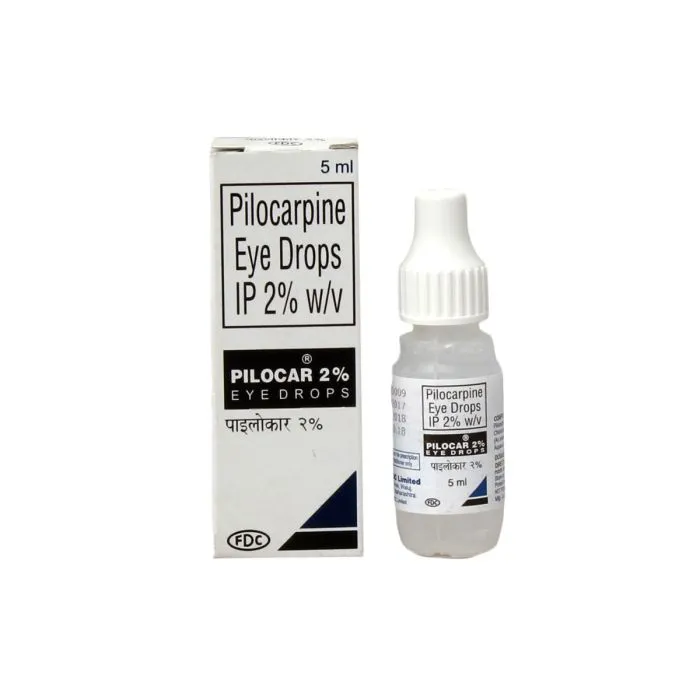
Pilocar Eye drop 5ml (Pilocarpine)
Previous product

Actavis Eye Drop with Brush (Bimatoprost)
A$21.27 A$118.62Price range: A$21.27 through A$118.62
Next product

Tafero EM 200/25mg (Emtricitabine/Tenofovir Alafenamide)
A$147.40 A$324.63Price range: A$147.40 through A$324.63
A$19.48 A$45.99Price range: A$19.48 through A$45.99
In Stock
In Stock
Pilocar Eye drop 5ml (Pilocarpine)
| Pack Size | Price | Quantity | Add To Cart | |
|---|---|---|---|---|
| 2 Eye Drop/s | A$19.48 | |||
| 4 Eye Drop/s | A$35.87 | |||
| 6 Eye Drop/s | A$45.99 | |||
| Want to order in bulk / B2B price? Send Inquiry | ||||
×
Sorry!! Out of Stock
Sorry! Pilocar Eye drop 5ml (Pilocarpine) is out of stock
Please click below to view other similar medications.
View All Pilocarpine Products
Offer You Can't Resist
Free Shipping
Enjoy Free Shipping on Orders above AUD304 (USD199)
Estimate Delivery :
22 October - 29 October
31
Excellent service overall
Smooth checkout, quick dispatch, and secure delivery. Excellent service overall
 Australia
October 1, 2026
Last Updated on May 13, 2026

Description
Pilocar Eye Drop 5ml (Pilocarpine): Uses, Benefits, and Important Information
Pilocar Eye Drop 5ml has its active ingredient, Pilocarpine, which is an eye medication that is widely utilized in the field of ophthalmology for treating various eye diseases. It’s particularly well-known as a treatment for Glaucoma, as well as other eye disorders. This article offers a thorough description of Pilocar Eye Drop. This includes its functions, mechanisms of action, possible side reactions, warnings, and responses to commonly asked questions.
What is Pilocar Eye Drop?
Pilocar Eye Drop contains Pilocarpine, which is a parasympathomimetic drug. It functions by stimulating muscles in the eye, causing an increase in the ciliary muscle as well as the pupillary muscle. It results in Miosis (constriction of the pupil) and an increased exudation of the aqueous fluid through the network called the trabecular. In the end, there is the reduction of IOP (IOP) that is essential in the treatment of glaucoma.
Uses of Pilocar Eye Drop
The main uses for Pilocar Eye Drops are:
- Open-Angle Glaucoma: Pilocar aids in decreasing intraocular pressure. It also prevents injury to the optic nerve and preserves vision.
- Angle-Closure Glaucoma: In cases of acute onset, Pilocar can be used to enlarge the pupil, thus opening up the drainage angle while reducing the pressure.
- Ocular Hypertension: Patients with a hyperocular pressure, but not signs of glaucoma, may opt for Pilocar to stop the development.
- Diagnostic Uses: Pilocarpine can be used as a test to determine the performance of the pupils and eye muscles.
- Reversal of Mydriasis: Pilocar is a drug that can reduce pupil dilation that is caused by various other medications or examinations.
How Does Pilocar Eye Drop Work?
Pilocarpine is classified as a cholinergic agonist, which means it replicates the actions of acetylcholine, one of the neurotransmitters in the nervous system of parasympathetic stimulation. When it is applied to the eye as drops, it activates muscle receptors within the eye, specifically located in the iris muscle as well as the ciliary body.
This stimulation causes:
- Pupil constriction (miosis): The reduction in pupil size opens the drainage angle of the eye, which allows liquid to flow more freely.
- Increased aqueous humor outflow: Improved drainage lowers the pressure inside the eye.
- Accommodation for near vision: The muscle contracture of the ciliary assists in the focus of attention on nearby objects; however, this can be an effect of the process rather than the goal of therapy.
In decreasing IOP, Pilocar helps prevent damage to the optic nerve that could result in loss of vision.
How to Use Pilocar Eye Drop
The correct use of the product is crucial to its security and effectiveness:
- Dosage: In most cases, typically, 1 or 2 drops are injected into the afflicted eye(s) according to the prescription by a doctor.
- Frequency: The usual dose is between 2 and 4 times per day on average, based on how severe the illness is, as well as the doctor’s prescription.
- Application steps:
- Cleanse your hands well.
- Reverse your head and draw down your lower eyelid to make a tiny pocket.
- The prescribed number of drops should be administered without touching the dropper’s tip with the eye or any other surfaces.
- Keep your eyes closed for about a minute and refrain from eye contact or blinking.
- Gently press on the outer part of your eye (near the nostrils) to decrease the absorption into your system.
Don’t exceed the suggested dosage, and refrain from using the drops longer than the recommended time.
Side Effects of Pilocar Eye Drop
Like other medications, Pilocar Eye Drop may produce some adverse side effects, although not everyone is affected. Some of the most frequent side effects are:
- Vision blurred, particularly when the light is dim, because of pupil constriction.
- The eye may be irritated, burns or experience burning immediately following the application.
- The brow or headache is a result of muscle spasms in the ciliary region.
- Redness or irritation of the eyes.
- Trouble seeing temporarily in dim lighting because of the smaller size of pupils.
More serious, but less common, possible side effects are:
- Eye pain or severe redness.
- The signs of an allergic reaction are like rashes or swelling on the face.
- Rapidly changing vision or aggravation of eye conditions.
If persistent or severe symptoms develop, you should consult your physician immediately.
Precautions and Warnings
Before you use Pilocar Eye Drop, take into consideration these precautions:
- Medical history: Tell your physician if you are suffering from asthma, heart disease, retinal detachment, or any eye infection.
- Pregnancy and breastfeeding: Make use of only when clearly required or prescribed by a medical specialist.
- Contact lenses: Discard the lenses before applying drops. Allow a minimum of 15 minutes before inserting them again.
- Driving and operating machinery: Do not do these things if your vision blurs or if you experience difficulty in seeing at night after using drops.
Beware of contamination of the eye dropper by not getting the dropper tip in contact with the surface or your eye.
Storage Instructions
Store Pilocar Eye Drop in a cool, dry place and away from any direct sunlight or moisture. Be sure to keep it out of the access of young children. Do not use it after the expiry date on the bottle.
Frequently Asked Questions (FAQs)
Can Pilocar Eye Drop cure glaucoma?
Pilocar Eye Drop is not able to treat glaucoma, but it can help treat and manage the disease by reducing intraocular pressure. This helps help prevent damage to the eye from happening again.
How long does it take for Pilocar to work?
Pilocarpine generally begins working within 15-30 mins of being applied, and the effects last for hours.
Is it safe to use Pilocar Eye Drop daily?
Yes, when recommended by a medical professional. It is recommended to be continuously checked to prevent any adverse effects or adverse effects.
Can Pilocar Eye Drop cause headaches?
Yes, headaches and discomfort in the brow can result from the ciliary muscle contraction caused by medication. They usually diminish after use.
Can I use Pilocar Eye Drop if I wear contact lenses?
Contact lenses must be removed before using drops. They may be replaced within 15 minutes to prevent irritation.
What should I do if I miss a dose?
Take the dose missed immediately after you recall it or if it’s close to the date of your next dose. Avoid double doses to catch up.
Are there any interactions with other medications?
Tell your physician about any medication you are taking. Certain medications can be incompatible with Pilocar and beta-blockers and other glaucoma drugs or anticholinergic medicines.
Can Pilocar cause blurry vision?
Yes, it is true that blurred vision could happen temporarily as a result of pupil constriction or focusing adjustments.
What if I experience severe eye pain or redness?
Get medical attention right away for these signs, which may be indicators of more significant problems or allergies.
Can children use Pilocar Eye Drop?
The use of children’s toys should be strictly monitored by a medical professional and in accordance with the doctor’s advice.
Conclusion
Pilocar Eye Drop 5ml (Pilocarpine) is an efficient eye medication that is employed to treat glaucoma by decreasing the intraocular pressure. The ability of the medication to reduce pupil size and improve fluid circulation can be a useful instrument to prevent loss of vision due to glaucoma, as well as the condition of ocular hypertension. Although generally safe when utilized in the manner prescribed, you must follow the advice of your doctor to avoid adverse consequences and to monitor your eye health frequently.
If you or someone else you know was given Pilocar Eye Drop making yourself aware of the proper usage, possible adverse effects, and the measures to ensure the most effective outcome for your eye health. Consult your eye doctor or other healthcare professional if you have any queries or concerns about the treatment you are receiving.
Related products







Recently Viewed

Reviews
There are no reviews yet.