
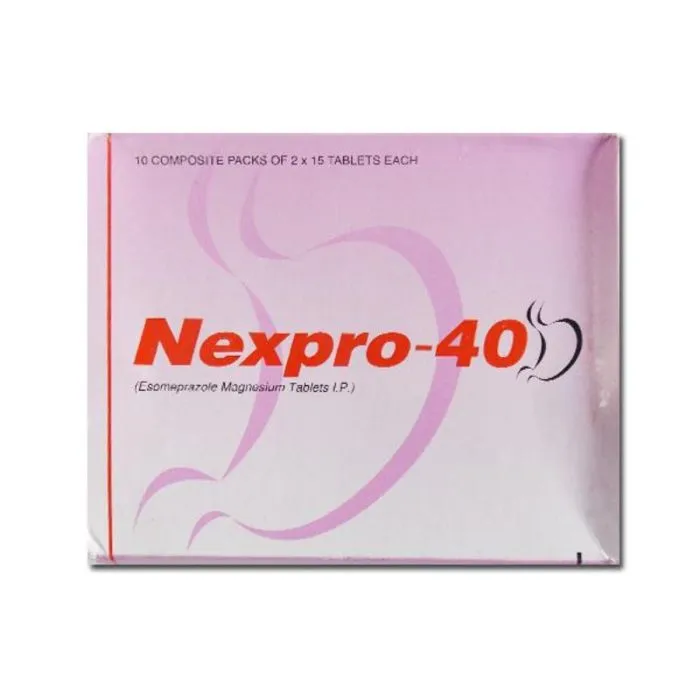
Nexpro 40mg (Esomeprazole)
Previous product

Adiza 10mg (Ilaprazole)
$37.50 $73.75Price range: $37.50 through $73.75
Next product
Novonorm 0.5mg (Repaglinide)
$23.00 $41.00Price range: $23.00 through $41.00
$18.00 $38.00Price range: $18.00 through $38.00
In Stock
In Stock
Nexpro 40mg (Esomeprazole)
| Pack Size | Price | Quantity | Add To Cart | |
|---|---|---|---|---|
| 30 Tablet/s | $18.00 | |||
| 60 Tablet/s | $28.00 | |||
| 90 Tablet/s | $38.00 | |||
| Want to order in bulk / B2B price? Send Inquiry | ||||
×
Sorry!! Out of Stock
Sorry! Nexpro 40mg (Esomeprazole) is out of stock
Please click below to view other similar medications.
View All Esomeprazole Products


Offer You Can't Resist
Free Shipping
Enjoy Free Shipping on Orders above AUD304 (USD199)
Estimate Shipping :
06 June - 13 June
43
Last Updated on April 30, 2026

Description
Nexpro 40mg (Esomeprazole) Overview:
Esomeprazole, is marketed under the brand trademark Nexpro (as well as various brand names, such as Nexium). It is a drug that belongs to the category of Proton pump inhibitors (PPIs). It is used primarily for treating gastroesophageal reflux disorder (GERD), Peptic ulcers, gastritis, and other conditions in which the stomach creates an excess amount of acid. Nexpro 40mg refers to a certain dosage of esomeprazole, one of the doses that is higher than standard.
Mechanism of Action
Esomeprazole is a drug that blocks it by blocking the proton pump within the stomach lining. Proton pumps are responsible for releasing Hydrochloric Acid (HCl) in the stomach. It plays an important role in digestion. In blocking this mechanism, esomeprazole can reduce the amount of stomach acid that is produced, aiding in the relief of symptoms that are related to acid reflux, gastric ulcers, and heartburn.
Through reducing stomach acid production and promoting healing, esomeprazole can help heal the stomach’s lining as well as the stomach, particularly in situations such as GERD and ulcers, where acid can cause irritation or damage. It also assists in preventing an increase in ulcers or problems related to reflux.
Indications and Uses
Esomeprazole is usually prescribed to treat these conditions:
- Gastroesophageal Reflux Disease (GERD):
- A condition that is chronic in nature. Stomach acid is often recirculated back into the esophagus, creating symptoms such as regurgitation, heartburn, and discomfort.
- Nexpro aids in reducing acid production, easing symptoms, and aiding in the healing of the esophagus’s lining.
- Peptic Ulcers:
- Esomeprazole is employed to treat and prevent the recurrence of peptic stomach ulcers, which are sores with an open surface that develop within the linings of the stomach, small intestine, or the esophagus.
- It is particularly beneficial in cases of ulcers caused by an infection caused by Helicobacter Pylori (H. Pylori) and is used with antibiotics.
- Zollinger-Ellison Syndrome:
- A rare condition in which the stomach can produce excess acid due to tumors of the duodenum and pancreas. Nexpro assists in reducing acid production when there are cases of this.
- Helicobacter pylori Eradication:
- In conjunction with antibiotics, esomeprazole may help eliminate H. Pylori-related infections, which are typically related to ulcers.
- Prevention of NSAID-induced Ulcers:
- Nonsteroidal anti-inflammatory medicines (NSAIDs) such as ibuprofen may cause gastric ulcers. Nexpro is prescribed to help prevent or heal gastric ulcers that are caused by NSAIDs.
Dosage and Administration
- Standard Dosage:
- The usual starting dose to treat an ailment known as GERD can range from 20 to 40 mg every day. This can be altered based on the severity of the symptoms.
- The treatment for peptic ulcers could need a similar dose, as does the treatment for patients with H. Pylori elimination. A mixture of esomeprazole, as well as antibiotics such as clarithromycin or amoxicillin, is usually used over a 7-14-day treatment.
- For Zollinger-Ellison syndrome: More doses could be needed in some cases, as high as 80 mg two times daily.
- Duration: The length of treatment depends upon the severity of the problem. In the case of GERD and ulcers, treatment generally takes between 4 and 8 weeks, and for preventative or long-term usage in diseases such as Zollinger-Ellison syndrome could be more.
- Administration: Esomeprazole is generally consumed at least once a day (or twice in the case of a medical condition) and is consumed in the early morning, 30-60 minutes prior to meals to ensure optimal absorption. It can be taken either with or without meals.
Side Effects
While esomeprazole can generally be tolerated, it could cause negative side effects. Some of the most frequent side effects are:
A few less well-known but grave side effects can be:
- Kidney issues: Long-term use of PPIs such as esomeprazole may raise the risk of developing kidney diseases, especially interstitial nephritis.
- Bone fractures: The long-term usage of esomeprazole has been associated with an increase in the likelihood of fractures, and this is especially true for older people..
- Vitamin B12 deficiency: In the long run, it could reduce the absorption rate of vitamin B12, which could lead to deficits and neurological disorders.
- Infections: The lower acidity of the stomach may increase the likelihood of getting certain infections, including Clostridium difficile-associated diarrhea, as well as pneumonia.
- Liver problems: In rare circumstances, the drug can alter the function of the liver, leading to an increase in jaundice and damage to the liver.
- Hypomagnesemia: The long-term usage of medications can result in lower levels of magnesium, which may cause muscle spasms and abnormal heartbeats, seizures, or even death.
If any of these severe side effects are observed, medical attention must be sought out immediately.
Drug Interactions
Esomeprazole is a drug that interacts with a variety of medicines, such as:
- Clopidogrel: Esomeprazole may hinder the efficacy of clopidogrel, which is a blood thinner. This could decrease its capacity to stop blood clots.
- Warfarin: Nexpro could increase the impact of warfarin. This can lead to the risk of bleeding.
- Antifungals: Itraconazole, ketoconazole, and posaconazole, which require an acidic atmosphere for absorption, might not be well absorbed when used in conjunction with PPIs.
- Methotrexate: Methotrexate, in high doses, is a chemotherapy drug reacts with esomeprazole, creating dangerous levels in the blood.
- HIV drugs: Certain HIV medications, like atazanavir, could not be as effective when taken together with PPIs, such as esomeprazole.
Patients are advised to discuss with their doctor any medications they’re using, which include prescription drugs as well as supplements.
Precautions and Warnings
- Pregnancy and Breastfeeding: Esomeprazole is typically considered to be safe in pregnancy, especially at lower doses. But it is recommended to only be administered when required. The drug does get into breast milk, but it’s generally considered safe for mothers who are breastfeeding when it is used in the standard dosage.
- Long-term Use: Esomeprazole’s long-term use, especially after 8 weeks of use, is recommended to be watched closely in light of the risk of deficiency in nutrients bones fractures, kidney disorders.
- Kidney Disease: People with kidney problems are advised to avoid esomeprazole since it could aggravate kidney issues, particularly in people at risk.
- Allergies: Individuals who have an allergy to esomeprazole and other PPIs (such as omeprazole or lansoprazole) are not recommended to take Nexpro.
- C. difficile Infection: PPIs, such as esomeprazole, can raise the chance of Clostridium difficile-related diarrhea, especially in those in hospitals. A proper hygiene regimen and caution must be maintained.
Efficacy and Clinical Studies
Many clinical studies have demonstrated the effectiveness of esomeprazole when managing conditions such as GERD, as well as peptic ulcers and Zollinger-Ellison disorder. Particularly, it is proven to offer greater and longer-lasting acid suppression than other PPIs, probably because of its pharmacological characteristics as well as its longer half-life.
Research has also shown that esomeprazole has a positive effect on the healing process of erosive esophagitis (inflammation or damage to the stomach) and reduces symptoms of acid reflux in people who suffer from GERD. Patients who suffer from H. Pylori-associated ulcers. The drug esomeprazole has shown to reduce the severity of infection when it is used with antibiotics. It can lead to a lower chance of repeat infections.
Conclusion
Nexpro 40mg (Esomeprazole) is a commonly used proton pump inhibitor, which is useful in the treatment of a variety of stomach disorders caused by acid. Reducing the production of stomach acid as well as reducing the amount of stomach acid produced, it can help manage diseases such as GERD, peptic ulcers, and Zollinger-Ellison Syndrome. Though generally safe and tolerated, prolonged use should be monitored because of the potential for adverse effects, including nutritional deficiency, kidney issues, and an increased chance of contracting infections.
Patients who are prescribed Nexpro must follow the instructions of their doctor attentively, ensuring that they don’t have any medical conditions that are contraindicated, and also be aware of any unusual signs or reactions. It’s also important to inform your doctor about all the medications that are being prescribed to ensure that there are no adverse drug interactions.
Related products



Recently Viewed


Reviews
There are no reviews yet.