
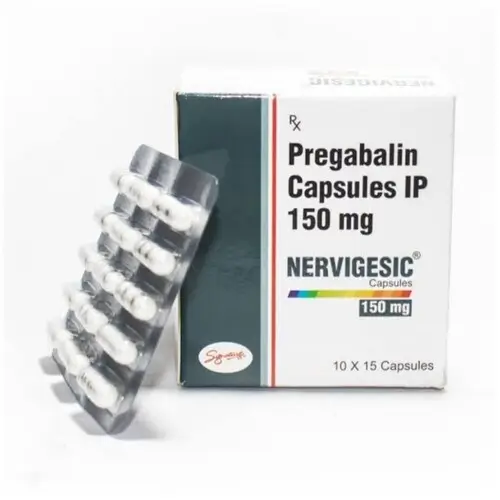
Nervigesic 150 Mg Capsule (Pregabalin)
Previous product

Lyrikare 500mg (Pregabalin)
$140.00 $305.00Price range: $140.00 through $305.00
Next product

Nervigesic 300mg (Pregabalin)
$55.00 $160.00Price range: $55.00 through $160.00
$50.00 $100.00Price range: $50.00 through $100.00
In Stock
| Manufacturer | Signature Phytochemical Industries |
In Stock
Nervigesic 150 Mg Capsule (Pregabalin)
| Pack Size | Price | Quantity | Add To Cart | |
|---|---|---|---|---|
| 50 Capsule/s | $50.00 | |||
| 100 Capsule/s | $75.00 | |||
| 200 Capsule/s | $90.00 | |||
| 300 Capsule/s | $100.00 | |||
| Want to order in bulk / B2B price? Send Inquiry | ||||
×
Sorry!! Out of Stock
Sorry! Nervigesic 150 Mg Capsule (Pregabalin) is out of stock
Please click below to view other similar medications.
View All Pregabalin Products

Offer You Can't Resist
Free Shipping
Enjoy Free Shipping on Orders above AUD304 (USD199)
Estimate Shipping :
12 July - 19 July
37
Last Updated on April 30, 2026

Description
Introduction
Nervigesic 150 mg, contains the active ingredient Pregabalin. It is a drug that is employed to treat a range of psychological and neurological conditions, which include Neuropathy pain, epilepsy, Generalized Anxiety Disorder (GAD), and fibromyalgia. Pregabalin, the active ingredient in Nervigesic, is a class of medications known as anticonvulsants or Neuropathic pain drugs. Although it was originally developed for treating epilepsy, Pregabalin is now widely used to treat chronic pain and anxiety disorders because of its effectiveness and beneficial side effects.
Mechanism of Action
Pregabalin functions by binding to one of the calcium channels that are voltage-gated within the nervous system of the central nerves, specifically the subunit a2-d. The binding decreases the release of neurotransmitters that stimulate the brain, such as glutamate, norepinephrine, substance P, and calcitonin gene-related protein. Neurotransmitters are essential to play a part in transmitting the pain signal and also other forms of excitability within the spinal cord, as well as in the brain.
Through preventing their release, Pregabalin assists in decreasing the amount of electrical activity which is unusual. Of the brain (which is especially beneficial in epilepsy-related conditions) as well as reduce communication of signals for pain (helpful to treat (helpful for neuropathic pain). Additionally, it can have anxiolytic (anxiety-reducing) results and is the reason it is recommended for people with generalized anxiety disorders.
Indications
Nervigesic 150mg (Pregabalin) can be utilized to treat a variety of diseases, which include:
- Neuropathic Pain: It can be caused by peripheral neuropathy caused by diabetes, post-herpetic neuralgia (pain due to the shingles), and injuries to the spinal cord. Pregabalin is effective for treating this kind of pain because it alters how the body perceives and interprets pain signals inside the nervous system.
- Fibromyalgia: Chronic condition that is that is characterized by widespread pain in the muscles, along with fatigue, as well as other signs. Pregabalin aids in managing the discomfort and pain that come with fibromyalgia by decreasing the overactivity of the nerve signal.
- Epilepsy: Pregabalin can be used as an adjunctive treatment for seizures that start in partial-onset in both children and adults who are older than 1 month. It is not a substitute for any other medication to prevent seizures, but may be added to help improve the control of seizures.
- Generalized Anxiety Disorder (GAD): Pregabalin helps to decrease stress, anxiety, and tension. It’s thought to act on brain chemistry and decrease feelings of anxiety and anxiety among people who suffer from GAD.
Dosage and Administration
The dosage for Nervigesic 150mg (Pregabalin) varies depending on the disease being treated:
- Neuropathic Pain and Fibromyalgia: The recommended starting dosage for adults is 150mg each day, which is divided into two doses. It is possible to increase this dose according to the response of patients, generally at 300mg or 600mg per day, with divided doses.
- Epilepsy: Pregabalin is usually used as an add-on treatment. It is typically used in doses of 150mg-600mg daily, split into two or three doses.
- Generalized Anxiety Disorder: A typical dose for a start is 150 mg per day and could be increased to 600mg daily according to the response of the patient and their tolerance.
Pregabalin can be taken by mouth in combination with or without food. It is recommended to swallow the capsules by mouth with a glass of water. The dose regimen must be individualized, by gradual increase to limit negative effects and increase the therapeutic effects.
Contraindications and Precautions
Nervigesic (Pregabalin) is not to be employed for the following reasons:
- Hypersensitivity to Pregabalin or other constituents that make up the formulation. The signs that indicate an allergic reaction can be an allergic reaction, as well as itching and swelling (especially of the mouth, tongue, and face), as well as difficulties breathing.
- Severe renal impairment: Because Pregabalin is mostly excreted via the kidneys, it must be taken with care or avoided for those suffering from chronic kidney disease. Adjustments to dosages are usually required when a person has weakened kidney function.
- Pregnancy and Breastfeeding: Pregabalin is only to be taken in pregnancy if absolutely required and with medical surveillance. It is able to traverse the placenta, and the safety of pregnancies isn’t fully proven. Pregabalin can be excreted from the breastmilk, therefore it is recommended to avoid it by nursing mothers, unless it is clearly required.
- Heart Failure: Patients with heart disease might be susceptible to developing edema and the retention of fluid in the course of taking Pregabalin; therefore, it is recommended to use the drug with caution.
Side Effects
As with all medications, Pregabalin can cause side effects. However, not all are likely to experience them. Common side effects are:
- Dizziness or drowsiness: Pregabalin has sedative properties, particularly in higher doses. Patients are advised to avoid any activities that require 100% alertness, for example, using machinery when they are experiencing these symptoms.
- Weight gain: Pregabalin is known to cause slight weight gain for some patients. This could be due to excess fluid or an increase in appetite.
- Peripheral edema (swelling of the hands and feet): This is a frequent condition, and it is more common when patients are taking larger dosages. Monitoring for edema regularly is advised.
- Blurred vision or dry mouth may also be a possibility, although they’re not as often.
- Cognitive effects: Certain individuals, Pregabalin could cause memory loss and difficulty in concentrating, or even confusion.
Serious side effects, though rare, include:
- Suicidal thoughts or behavior: Similar to other anticonvulsants, there’s an increased possibility of suicidal ideas and actions. Patients need to be watched closely to detect signs of depression and suicidal tendencies in the early stage of treatment.
- Allergic reactions: Extreme allergic reactions are not common; however, they do occur. They can manifest as swelling on the lips, face, or tongue or difficulties breathing, and should be treated with urgent medical attention.
- Heart issues: Pregabalin is associated with several adverse cardiovascular consequences that include the condition known as heart failure for those who are at risk, such as those who have pre-existing cardiovascular conditions.
Drug Interactions
Pregabalin is a drug that interacts with various drugs, including:
- Central nervous system depressants: The concurrent use of other CNS depressants, such as benzodiazepines, alcohol, and opioids, can raise the risk of breathing depression, sedation, and CNS depression.
- Angiotensin-converting enzyme (ACE) inhibitors and diuretics: The use of these medications may increase the chance of the development of peripheral edema when used in conjunction with Pregabalin.
- Other antiepileptic drugs: Although Pregabalin is a drug that can be combined alongside other anticonvulsants; care is advised when mixing the two medications since it could increase the chance of dizziness as well as fainting.
Patients are advised to be sure to inform their doctor of any medications they’re using, which includes prescription drugs as well as supplements, to prevent adverse interactions with drugs.
Benefits of Pregabalin
Pregabalin has a range of advantages, which make it a valuable treatment for those suffering from chronic illnesses. Its numerous effects–helping by providing the relief of pain, seizure control, and anxiety control–make it an ideal choice for patients with multiple ailments.
In the case of neuropathopathic painful, Pregabalin provides effective relief, specifically for disorders such as diabetic neuropathy or post-herpetic neuralgia. It is more rapid in the time to action than other medications for neuropathic pain and can provide patients with significant relief after a couple of weeks.
For individuals who suffer from generalized anxiety disorder (GAD), Pregabalin can be a useful alternative to conventional anxiolytics. They provide effective symptom control without the addictive qualities that are associated with the benzodiazepines.
Conclusion
Nervigesic 150mg (Pregabalin) is a widely prescribed and highly effective drug for managing a range of ailments that include neuropathic pain, epilepsy, fibromyalgia, and generalized anxiety disorders. The ability of Pregabalin to affect your central nervous system’s ability to excite is a plethora of treatment options to treat seizures and chronic pain. Although Pregabalin is usually well-tolerated, potential negative effects, such as dizziness, weight increase, and peripheral edema, should be observed in particular at higher doses. Patients must exercise caution in combining Pregabalin with other CNS depressants and medications. These could cause or exacerbate adverse effects, and adjustments might be required for those suffering from kidney impairment. Similar to any other medication, controlled with care and in conjunction with a medical professional is crucial to maximize benefits while minimizing risk.
Additional Information
| Pack Size | 50 Capsule/s, 100 Capsule/s, 200 Capsule/s, 300 Capsule/s |
|---|
Related products












Recently Viewed

Reviews
There are no reviews yet.