
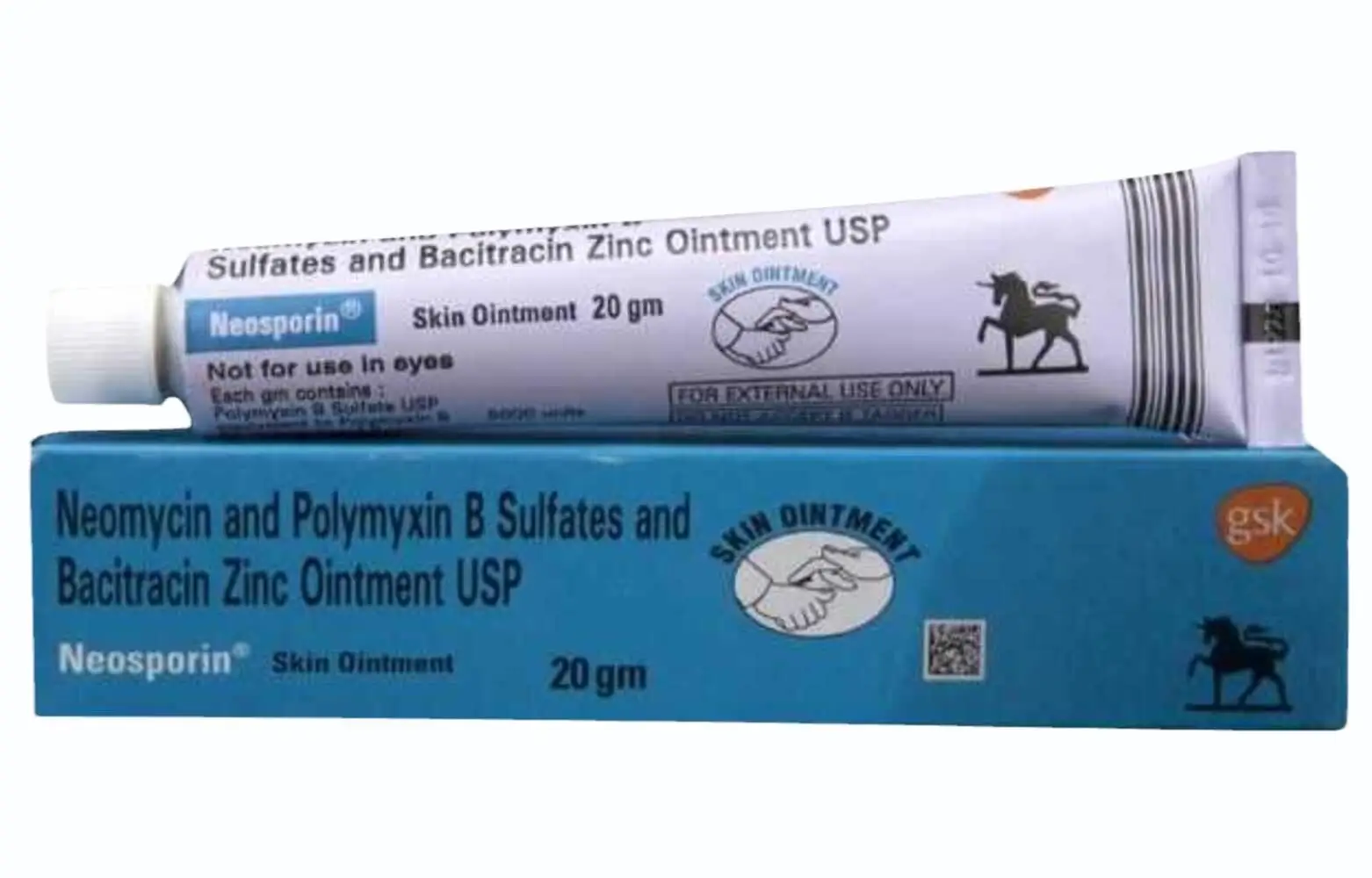
Neosporin 20g (Bacitracin/Neomycin/Polymyxin B)
Previous product
Moisturex Soft Cream 100g (White Soft Paraffin)
A$27.50 A$102.50Price range: A$27.50 through A$102.50
Next product

Nailrox Nail Lacquer 5ml (Ciclopirox)
A$15.30 A$65.63Price range: A$15.30 through A$65.63
A$31.25 A$106.25Price range: A$31.25 through A$106.25
In Stock
In Stock
Neosporin 20g (Bacitracin/Neomycin/Polymyxin B)
| Pack Size | Price | Quantity | Add To Cart | |
|---|---|---|---|---|
| 3 Cream/s | A$31.25 | |||
| 6 Cream/s | A$56.25 | |||
| 12 Cream/s | A$106.25 | |||
| Want to order in bulk / B2B price? Send Inquiry | ||||
×
Sorry!! Out of Stock
Sorry! Neosporin 20g (Bacitracin/Neomycin/Polymyxin B) is out of stock
Please click below to view other similar medications.
View All Bacitracin/Neomycin/Polymyxin B Products
Offer You Can't Resist
Free Shipping
Enjoy Free Shipping on Orders above AUD304 (USD199)
Estimate Shipping :
24 July - 31 July
47
Very quick and easy Services & Packaging
The quality of Armod 150 Mg medicine in your store, fast delivery service and their low price attract me to buy this medicine again and again.
 Australia
September 11, 2024
Response from Modalertaustralia
Thanks for the great review! Happy you liked the product quality and fast service. We appreciate your support!
Last Updated on April 30, 2026

Description
Introduction
Neosporin is a widely used over-the-counter topical antibiotic ointment that combines three active ingredients–bacitracin, neomycin, and polymyxin B–into a single formulation. They work together to treat or prevent infections from minor scrapes, cuts, or burns. Neosporin is often used in homes to treat minor skin wounds, since it promotes healing while reducing the chance of developing bacterial infections. It is available in various sizes, like the 20g tubular, which is popularly used for general use in general.
In this piece, we’ll look at the components that make up Neosporin as well as its uses, dose recommendations, potential negative effects, and possible contraindications. Knowing how the product functions and the potential dangers it could pose is crucial to ensure its safe usage and efficient results.
Active Ingredients and Their Functions
Neosporin includes three antibiotics that have different functions in fighting bacteria:
Bacitracin
Bacitracin is a polypeptide-based antibiotic that works by interfering with the process of making cells of bacteria. In particular, it blocks the enzymes that are responsible for the formation of the bacterial cell wall, which is vital to the structure of the bacteria and their survival. Bacitracin works best against bacteria that are gram positive that include Staphylococcus aureus and Streptococcus species, both of which cause a lot of problems for skin infections.
- Spectrum of Activity: Primarily gram-positive bacteria.
- Mechanism of Action: Blocks the synthesis of bacterial cell walls.
Neomycin
Neomycin is an aminoglycoside-based antibiotic that is a wide variety of bacteria, which includes both gram-positive and negative organisms. It acts by binding bacteria’s ribosomes and inhibiting the synthesis of proteins, ultimately resulting in the death of the bacteria. Neomycin has been proven effective against several skin diseases, such as Escherichia Coli as well as Pseudomonas Aeruginosa that can trigger inflammation in open wounds and scratches.
- Spectrum of Activity: Broad-spectrum that includes both Gram-positive as well as gram-negative bacteria.
- Mechanism of Action: Blocks the synthesis of proteins by binding to Ribosomes.
Polymyxin B
Polymyxin B can be described as a peptide antibiotic, which is used to combat gram-negative bacteria. It acts by disrupting the membrane of a bacterial cell, which increases permeability and leads to leakage of intracellular content, resulting in bacterial cell destruction. It’s especially beneficial against Pseudomonas Aeruginosa which is a pathogen commonly present in skin injuries, burns, and various wounds.
- Spectrum of Activity: Gram-negative bacteria, particularly Pseudomonas aeruginosa.
- Mechanism of Action: The membrane of the bacterial cell is broken.
In combining three antimicrobials, Neosporin offers broad-spectrum protection against a variety of bacteria. This makes it a potent tool in the prevention of skin infections that result from minor wounds.
Indications for Use
Neosporin 20g Ointment is employed for the treatment of superficial skin inflammations that result from minor cuts, burns, or abrasions. The main uses of this ointment are:
Preventing Infection in Minor Skin Injuries
Neosporin is commonly used to treat minor, clean-cut wounds or scrapes in order to avoid infection by bacteria. Triple antibiotics provide extensive coverage, decreasing the possibility of infections, as well as aiding in faster recovery.
Treatment of Minor Burns
For minor burns (first-degree or minor second-degree burns), Neosporin may help reduce the risk of infection by bacteria and encourage healing. Neosporin should not be applied to major burns or large, severe wounds that require specialized medical care.
Post-Surgical Wound Care
Following minor procedures like those that are performed at home or in other outpatient environments, Neosporin may be placed on the site of the wound in order to stop infections and speed up recovery. In some instances, a medical professional could recommend a different dressing or an antibiotic applied to the area.
Prevention of Infected Insect Bites
The bites of insects that are bitten or otherwise damaged can become infected. Neosporin is commonly employed as a precautionary method to prevent infection by bacteria when it occurs.
Dosage and Application
The most recommended use of Neosporin 20g is easy because it’s applied topically on the affected area. The following are some general guidelines to follow:
Application Method:
- Clean the Affected Area: Before applying Neosporin, make sure that the skin or wound is clean with moderate soap, water, and a little detergent, to eliminate dust and dirt.
- Apply a Thin Layer: Use a tiny amount of Neosporin ointment on the area of injury, and then cover the wound with a thin layer. A thin layer of ointment is usually sufficient for adequate protection.
- Repeat as Necessary: Neosporin generally requires every 1 to 3 times per each day, dependent upon the size and extent of the wound. If the area is very large, it is possible that more frequent treatments will be needed.
- Cover with a Bandage (Optional): Following the application of the ointment, the sterile bandage could be applied to the wound. This is particularly helpful for large wounds or when the wound has been exposed to dirt or any other kind of contamination.
Duration of Use:
- Short-Term Use: Neosporin is a brief-term use for minor wounds. It is not recommended to use it for longer than a week without contacting a healthcare professional.
- Monitor for Infections: If symptoms of infection, like increased redness, the appearance of pus, or swelling, occur, the first step is to get medical assistance. In these instances, an antibiotic that is more powerful or a different treatment might be necessary.
Side Effects and Risks
Though Neosporin is usually believed to be safe for the majority of individuals, there could be adverse effects and risks when used in a manner that is not proper or by sensitive people:
Allergic Reactions
Certain individuals might be sensitive to any of the active ingredients found in Neosporin. This is especially true for neomycin. The symptoms associated with an allergic reaction could be:
- Redness
- Swelling
- Itching or rash at the site of application
- Blistering or peeling skin
If the situation is severe, reactions to an allergen could produce symptoms that are systemic, such as trouble breathing, dizziness, or swelling in the face or throat. In the event that any one of those happens immediately, medical assistance is needed.
Contact Dermatitis
Prolonged use of Neosporin, especially for those who have sensitive skin, could result in contact dermatitis. It is a condition that causes discomfort or inflammation of the skin. This could worsen if the ointment is applied to damaged or dry skin.
Neomycin Sensitivity
Neomycin may be linked to skin sensitivities. In certain instances, prolonged exposure to the drug can cause persistent hypersensitivity or rise chances of getting eczema. Neosporin is not recommended for those who are allergic to neomycin.
Superinfection
Neosporin has been proven to be effective in preventing various bacterial infections. However, it is also a danger of superinfection in the event that the product is applied improperly or used for prolonged periods. Superinfection occurs when bacteria that are resistant to antibiotics are created as a result of the use of too many antibiotics, which makes future infections harder to manage.
Use on Large Wounds or Deep Infections
Neosporin is a product that can be used for minor scrapes and cuts. It’s not a good choice for deep, major, or seriously damaged cuts or wounds. In these situations, more advanced treatments are needed; consulting with a medical professional is highly recommended.
Contraindications and Precautions
There are certain categories of individuals who need to be aware of the use of Neosporin:
People with Allergies to Antibiotics
People who have an allergy to any ingredient found in Neosporin, especially Neomycin, are advised to stay away from Neosporin. It is possible to find alternatives when this happens.
Open Wounds or Burns
In the case of large or serious open burns, wounds, or skin problems, that are serious Neosporin might not be the best choice. The types of injuries mentioned above need to be examined by a doctor who will prescribe an appropriate treatment option, like an antibiotic systemic, or a special dressing.
Pregnancy and Breastfeeding
There aren’t any specific contraindications to the use of Neosporin in the course of pregnancy or during breastfeeding; however, it is recommended to speak with your healthcare professional before applying any medications during these times, particularly around sensitive parts of the breast.
Conclusion
Neosporin 20g (Bacitracin/Neomycin/Polymyxin B) is a versatile and effective topical antibiotic ointment commonly used to prevent and treat minor skin infections. By combining broad-spectrum antibiotics, it protects against a variety of bacteria, aiding in quicker healing as well as reducing the possibility of developing infections in small cuts, scrapes, or burns. Like all medicines, it should be administered in moderation, particularly for those who are allergic to active ingredients, as well as for people with significant deep or severe injuries.
If they understand the way Neosporin operates, the best way to utilize it correctly, and also the potential adverse effects, one can enjoy its advantages while decreasing the dangers. In the case of persistent or extreme ailments, seeking out a health professional is crucial to make sure the right treatment is utilized.
Related products




Recently Viewed
Reviews
There are no reviews yet.