
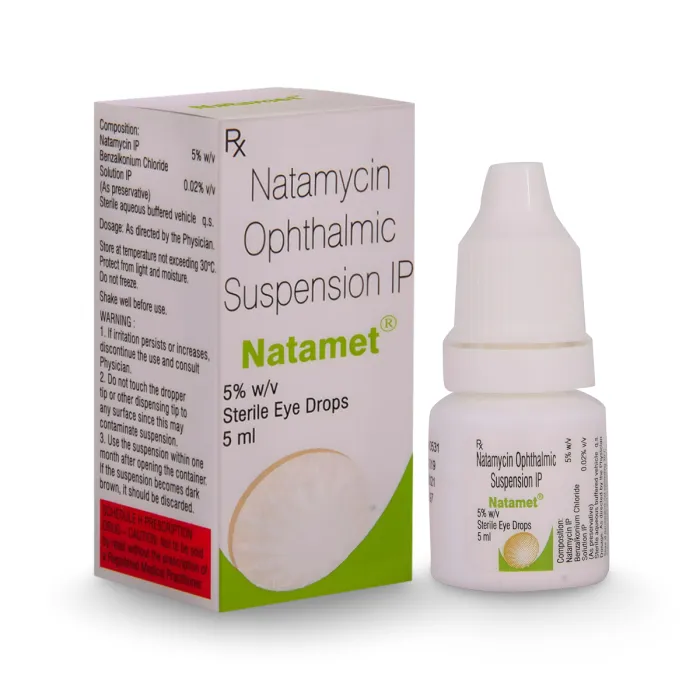
Natamet Eye Drop (Natamycin)
Previous product

Ifin 250mg (Terbinafine)
$35.00 $88.00Price range: $35.00 through $88.00
Next product

Roxid 300mg (Roxithromycin)
$37.00 $91.00Price range: $37.00 through $91.00
$26.25 $86.25Price range: $26.25 through $86.25
In Stock
In Stock
Natamet Eye Drop (Natamycin)
| Pack Size | Price | Quantity | Add To Cart | |
|---|---|---|---|---|
| 3 Eye Drop/s | $26.25 | |||
| 6 Eye Drop/s | $46.25 | |||
| 12 Eye Drop/s | $86.25 | |||
| Want to order in bulk / B2B price? Send Inquiry | ||||
×
Sorry!! Out of Stock
Sorry! Natamet Eye Drop (Natamycin) is out of stock
Please click below to view other similar medications.
View All Natamycin Products
Offer You Can't Resist
Free Shipping
Enjoy Free Shipping on Orders above AUD304 (USD199)
Estimate Shipping :
07 June - 14 June
23
Last Updated on April 30, 2026

Description
Natamet Eye Drop (Natamycin) is a topical antifungal medicine that is prescribed to combat fungal infections in the eyes. It is a mixture of Natamycin as its active ingredient. It can be described as a polyene antifungal that works by breaking down the cell membranes of fungi and eventually leading to their demise. Natamet is frequently used in treatments for fungal Keratitis (a fungal inflammation that affects the cornea) and various eye conditions that are caused by susceptible fungal bacteria.
What is Natamet Eye Drop (Natamycin)?
Natamet Eye Drop is a prescription eye drop product that is formulated with Natamycin, the antifungal ingredient, specially designed to treat eye infections caused by fungi within the eye. It’s typically used to treat minor infections, for example, fungal cornea inflammation as well as conjunctivitis, which are caused by a variety of susceptible organisms. Natamycin is well-known for its efficacy against many bacteria, fungi, and parasites, with a particular focus on yeasts as well as filamentous fungal species that can cause infection to the eyes.
The principal purpose of Natamet Eye Drop is to treat fungal infections in the cornea (the transparent front portion that is visible to the naked eye) as well as the the conjunctiva (the tissues that cover the white portion of the eyeball as well as the outer surface of your eyelids) that can lead to irritation, redness, drainage blurred vision, or even corneal ulcers when left untreated.
How Does Natamet Eye Drop (Natamycin) Work?
Natamycin is a polyene-based antifungal, which means it’s part of a family of antifungal medications targeted at the cell membranes of fungi. Natamycin functions by binding the ergosterol, which is a crucial part of the cells of fungal origin. The binding disrupts the solidity of the membranes that make up fungal cells and leads to a greater permeability, and ultimately the end of the fungal cell.
When it comes to fungal Keratitis or any other fungal eye conditions, Natamycin acts locally to stop the growth of the fungus and its spread, thereby providing a reliable treatment for these conditions. In addition, it is beneficial in fighting filamentous fungi (e.g., Aspergillus and Fusarium) as well as yeast-like fungal species (e.g., Candida) and yeast-like fungi, the most frequent causes of eye inflammations.
Indications for Natamet Eye Drop
Natamet Eye Drop is primarily utilized to treat fungal eye inflammations, for example:
- Fungal Keratitis: A fungal infection that affects the cornea, which is caused by a variety of types of fungi such as Fusarium, Aspergillus, and Candida. It can cause eye pain, redness, blurred vision, discharge, and corneal ulcers if not immediately treated.
- Fungal Conjunctivitis: A conjunctival infection (the thin layer of tissue that covers the white area of the eye as well as the lids’ insides) resulted from bacteria and fungi. It can lead to signs like eye redness, pain, and even discharge.
- Other Fungal Eye Infections: Natamet can also be utilized to treat other fungal eye infections in accordance with the advice of a medical professional.
It’s not for the treatment of infections caused by bacteria and viral eye conditions, since it was specifically developed to fight fungal pathogens.
Dosage and Administration
The dosage for Natamet Eye Drops is determined by the degree of infection, as well as prescriptions given by the physician who prescribes it. In general:
- For Fungal Keratitis or Conjunctivitis: The most common dosage is 1 or 2 drops within the affected eye(s), typically four to six times daily, depending on the recommendation by your doctor.
- For severe infections: In certain instances, it is possible to have the dose incremented to once every 1-2 hours, especially when the infection is severe or chronic.
The medicine should be injected directly into the eye(s), making sure that the dropper is not allowed to get into any surfaces, not even the eyelids or the cornea, in order to prevent the risk of contamination.
How to Use Natamet Eye Drops Correctly
- Make sure you wash your hands well prior to using eye drops.
- Turn your head to the side and draw down the lower part of your eyelid, creating an eyelid pocket.
- Keep the dropper in your eye and squeeze the required quantity of drops into the eye.
- Keep your eye closed and place your eye close to the nostril (the nasolacrimal duct) for at least a minute, in order to prevent the tear drops from being drained out by tears duct.
- Rinse your hands in order to eliminate any remaining medications.
Do not touch the tip of your dropper on any other surface, not just your eye, to prevent cross-contamination.
Side Effects of Natamet Eye Drop
Just like all drugs, Natamet Eye Drop could cause unwanted side effects. However, not everyone is likely to experience them. Common side effects are:
- Eye irritation or stinging: The slight stinging or burning sensation when you inhale is typical and is usually only temporary.
- Redness or swelling: The eyes can turn redder or a little irritated after applying drops.
- Eye discomfort: A few users may feel the sensation of something moving within the eye or feel a little discomfort.
- Watery eyes or blurred vision: The latter are rarer; however, they can occur for some individuals following the use of eye drops.
If any of these severe negative side consequences are observed, discontinue using eye drops immediately and call your doctor immediately:
- Severe eye pain or irritation
- Changes in vision (blurred vision that does not improve)
- Swelling or redness that worsens
- Allergic reaction: Itching and rashes, as well as swelling of the face, eyes, or lips.
Precautions and Warnings
Before using Natamet Eye Drops, inform your doctor if you:
- Have any allergies: In particular, to natamycin, polyene antifungals, and other ingredients of eye drops.
- Wear contact lenses: It is recommended to remove your contact lenses before applying the drops to treat your eyes. Wait for a minimum of 15 minutes prior to returning them. Preservatives contained in eye drops could cause harm to soft contact lenses.
- Have pre-existing eye conditions: If you’ve got a previous history of eye issues, including corneal ulcers, or have undergone eye surgery, speak with your eye physician prior to taking the medicine.
- Pregnancy and Breastfeeding: The data is not extensive about the usage of natamycin in pregnancy. This drug is only used when it is clearly required and recommended by a medical professional. Natamycin is not likely to be taken in large quantities. Therefore, it’s thought to be safe for women who breastfeed; however, you should consult with your physician before taking it.
Drug Interactions
Because Natamet Eye Drop is applied directly to the eye, it’s unlikely to cause significant interactions with oral medication. Yet, it’s important to notify your doctor about any other medications for your eyes you’re taking, because the combination of different eye drops could require special prescriptions for administration.
Storage and Handling
- Store Natamet Eye Drops at room temperatures (between 15°C and 25°C or 59°F to 77°F) and away from moisture, heat, as well as direct sunlight.
- Make sure the bottle is tightly shut during times when it is not being used.
- Use caution with the drops if they’ve changed hue or in the event that the bottle is damaged.
- Do not dispose of the bottle following the treatment period prescribed or in the period suggested by your physician or pharmacist.
Conclusion
Natamet Eye Drop (Natamycin) is an effective treatment for fungal infections in the eye, like conjunctivitis or fungal keratitis. Indirectly attacking the cellular membranes that fungi produce It helps control the condition and stop the spread of it.
Similar to all medication It is crucial that you follow the dose and guidelines for administration in order to get the greatest result. Though side effects tend to be minor, any extreme discomfort, changes in the appearance or indications of an allergy must be immediately reported to your physician.
Related products



Recently Viewed





Reviews
There are no reviews yet.