
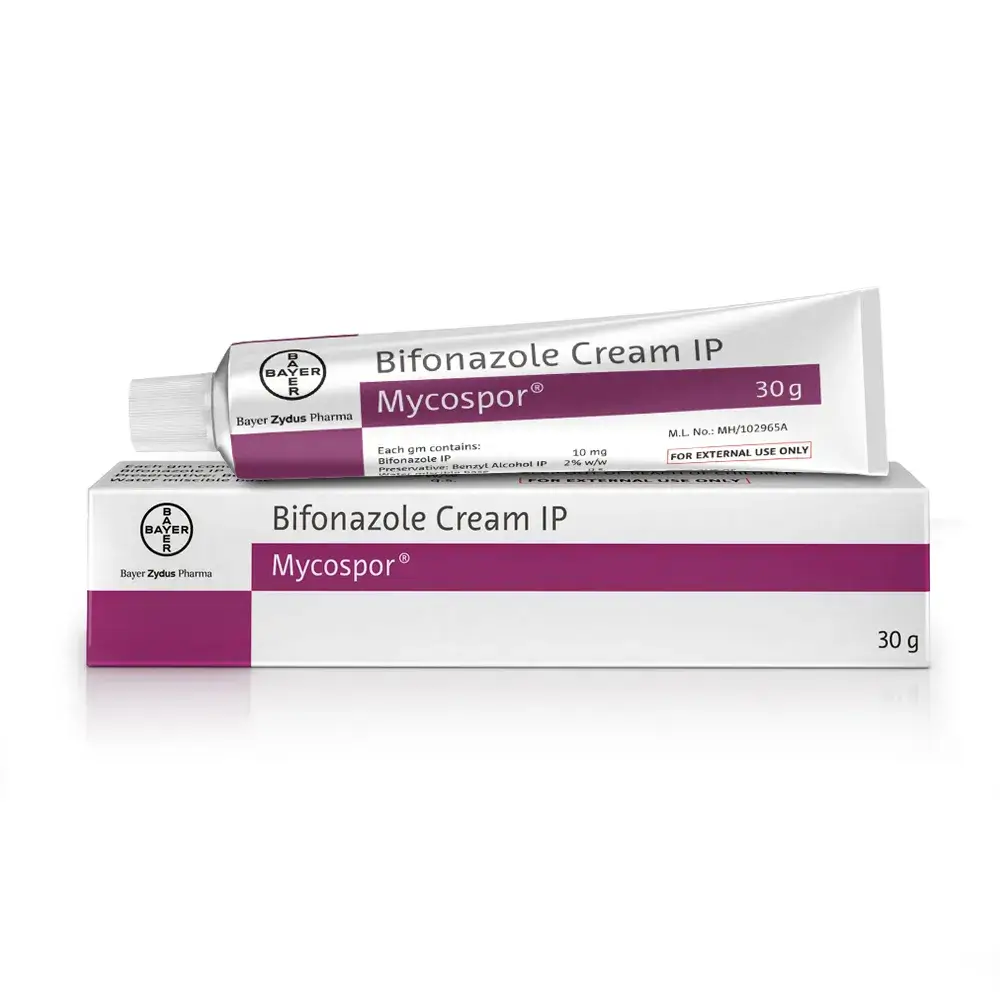
Mycospor Cream (Bifonazole)
Previous product

Mucopain Gel (Benzocaine)
A$5.62 A$26.67Price range: A$5.62 through A$26.67
Next product
Nadibact Cream (Nadifloxacin)
A$5.62 A$28.08Price range: A$5.62 through A$28.08
A$21.06 A$43.52Price range: A$21.06 through A$43.52
In Stock
In Stock
Mycospor Cream (Bifonazole)
| Pack Size | Price | Quantity | Add To Cart | |
|---|---|---|---|---|
| 3 Tube/s | A$21.06 | |||
| 6 Tube/s | A$33.69 | |||
| 9 Tube/s | A$43.52 | |||
| Want to order in bulk / B2B price? Send Inquiry | ||||
×
Sorry!! Out of Stock
Sorry! Mycospor Cream (Bifonazole) is out of stock
Please click below to view other similar medications.
View All Bifonazole Products

Offer You Can't Resist
Free Shipping
Enjoy Free Shipping on Orders above AUD304 (USD199)
Estimate Delivery :
22 October - 29 October
30
Last Updated on April 28, 2026

Description
Introduction
Bifonazole-based Mycospor Cream is a widely used topical antifungal medication designed to treat a variety of skin fungal infections. Fungal infections of the skin are extremely common and can affect individuals of all ages, often thriving in warm, moist environments. These infections may lead to discomfort, itching, redness, and irritation if left untreated.
Mycospor Cream is specially formulated to combat fungal organisms at their source, helping to eliminate infection while promoting skin healing. Thanks to its broad-spectrum antifungal activity and ease of application, it has become a trusted treatment option for conditions like athlete’s foot, ringworm, and jock itch.
This comprehensive guide explores how Mycospor Cream works, its uses, benefits, side effects, and key precautions for safe and effective use.
What is Mycospor Cream (Bifonazole)?
Mycospor Cream is a topical antifungal medication that contains Bifonazole as its active ingredient. Bifonazole belongs to the azole class of antifungal drugs, which are known for their effectiveness against a wide range of fungal pathogens.
Fungi rely on a substance called ergosterol to maintain the integrity of their cell membranes. Bifonazole disrupts the production of ergosterol, weakening the fungal cell structure and ultimately leading to the death of the organism.
Unlike some antifungal treatments that target only specific fungi, Bifonazole has a broad spectrum of action, making it effective against:
- Dermatophytes (fungi that affect skin, hair, and nails)
- Yeasts such as Candida species
- Certain molds
Because of this versatility, Mycospor Cream is commonly used for multiple types of superficial fungal infections.
How Does Mycospor Cream Work?
The mechanism of action of Bifonazole focuses on disrupting fungal cell membranes.
Key Actions:
- Inhibits ergosterol synthesis
- Weakens fungal cell membrane structure
- Causes leakage of cellular contents
- Leads to fungal cell death
Additionally, Bifonazole penetrates effectively into the skin layers, allowing it to reach the site of infection more efficiently than many other topical antifungals. This deep penetration ensures that even persistent infections are treated at their root.
Common Uses of Mycospor Cream
Mycospor Cream is prescribed for several fungal skin conditions, including:
1. Athlete’s Foot (Tinea Pedis)
A common infection affecting the feet, especially between the toes. Symptoms include itching, burning, cracking, and peeling skin. Mycospor Cream helps eliminate the fungus and provides relief from discomfort.
2. Ringworm (Tinea Corporis)
Despite its name, ringworm is not caused by worms but by fungi. It appears as circular, red, itchy patches on the skin. Mycospor Cream effectively treats the infection and prevents its spread.
3. Jock Itch (Tinea Cruris)
This fungal infection affects the groin, inner thighs, and buttocks. It is more common in individuals who sweat excessively or wear tight clothing. The cream helps reduce itching, redness, and irritation.
4. Cutaneous Candidiasis
Caused by yeast infections (Candida), this condition affects moist areas such as under the breasts, armpits, or skin folds. Mycospor Cream helps control fungal growth and soothes the skin.
5. Fungal Nail Infections (Onychomycosis)
Although primarily a skin treatment, Mycospor Cream may be used in early or mild nail infections under medical supervision. Severe cases usually require oral medication.
6. Scalp Fungal Infections (Tinea Capitis)
In some cases, it may be used alongside oral treatments to manage scalp infections, though topical therapy alone is usually insufficient for severe cases.
Benefits of Mycospor Cream
1. Broad-Spectrum Antifungal Action
Effective against multiple types of fungi, making it a versatile treatment.
2. Rapid Symptom Relief
Reduces itching, redness, and inflammation within a few days of use.
3. Deep Skin Penetration
Reaches deeper layers of the skin for effective treatment.
4. Minimal Systemic Absorption
Since it is applied topically, it has a low risk of systemic side effects.
5. Easy Application
Cream formulation spreads easily and absorbs quickly without leaving a greasy residue.
6. Suitable for Long-Term Use (Under Guidance)
Can be safely used for extended periods when prescribed by a doctor.
How to Use Mycospor Cream
Application Guidelines:
- Clean and dry the affected area before application
- Apply a thin layer of cream once or twice daily (as prescribed)
- Gently rub into the skin until absorbed
- Wash hands after applying (unless treating hands)
Duration of Treatment:
- Continue use for the full prescribed duration
- Even if symptoms improve early, complete the course to prevent recurrence
Side Effects of Mycospor Cream
Mycospor Cream is generally well tolerated, but some users may experience mild side effects.
Common Side Effects:
- Mild burning or stinging
- Skin irritation
- Redness at the application site
Less Common Effects:
- Dryness or peeling
- Itching
Rare but Serious Reactions:
- Severe allergic reactions
- Swelling or blistering
If severe symptoms occur, discontinue use and seek medical advice immediately.
Precautions and Safety Considerations
1. Avoid Contact with Eyes and Mouth
The cream is for external use only.
2. Do Not Apply on Open Wounds
Unless directed by a healthcare provider.
3. Pregnancy and Breastfeeding
Consult a doctor before use. Topical antifungals are generally safe, but medical advice is recommended.
4. Maintain Hygiene
Keep the affected area clean and dry to enhance treatment effectiveness.
5. Avoid Sharing Personal Items
Prevent spreading the infection by not sharing towels, clothing, or footwear.
6. Complete Full Treatment Course
Stopping early may lead to recurrence or resistance.
Drug Interactions
Topical Bifonazole has minimal systemic absorption, so drug interactions are rare. However, always inform your doctor if you are using:
- Other topical medications
- Steroid creams
- Antifungal treatments
Lifestyle Tips for Faster Recovery
- Keep skin dry, especially in folds and between toes
- Wear loose, breathable clothing
- Change socks and underwear daily
- Avoid tight footwear
- Use antifungal powders if needed
These habits can significantly reduce the risk of reinfection.
Conclusion
Mycospor Cream (Bifonazole) is a highly effective and reliable topical antifungal treatment for a wide range of skin infections. Its ability to target fungal growth at the cellular level, combined with deep skin penetration and minimal side effects, makes it a preferred choice for both patients and healthcare providers.
Whether dealing with athlete’s foot, ringworm, jock itch, or yeast infections, Mycospor Cream offers fast relief and promotes healthy skin recovery. However, proper usage, adherence to treatment duration, and maintaining hygiene are essential for achieving the best results.
For persistent or severe infections, consulting a healthcare professional is crucial to ensure appropriate treatment and avoid complications.
Additional Information
| Manufacturer | Bayer Pharmaceuticals Pvt Ltd |
|---|---|
| Pharmaceutical | Cream |
| Strength | 1% |
| Pack Size | 3 Tube/s, 6 Tube/s, 9 Tube/s |
Related products
Recently Viewed




Reviews
There are no reviews yet.