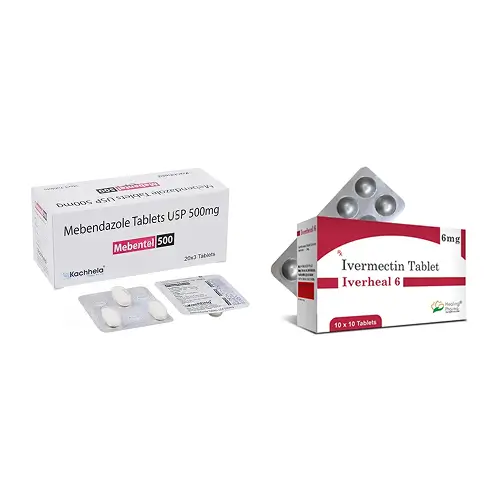
Mebendazole 500+Ivermectin 6
Previous product
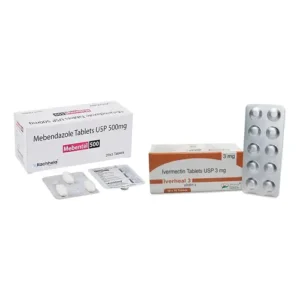
Mebendazole 500+Ivermectin 3
A$134.40 A$389.20Price range: A$134.40 through A$389.20
Next product
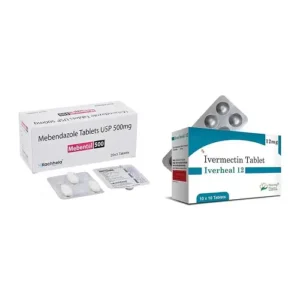
Mebendazole 500+Ivermectin 12
A$159.60 A$464.80Price range: A$159.60 through A$464.80
A$142.80 A$414.40Price range: A$142.80 through A$414.40
In Stock
In Stock
Mebendazole 500+Ivermectin 6
| Pack Size | Price | Quantity | Add To Cart | |
|---|---|---|---|---|
| 1 Pack | A$142.80 | |||
| 2 Pack/s | A$277.20 | |||
| 3 Pack/s | A$414.40 | |||
| Want to order in bulk / B2B price? Send Inquiry | ||||
Offer You Can't Resist
Free Shipping
Enjoy Free Shipping on Orders above AUD304 (USD199)
Estimate Shipping :
08 June - 15 June
32
Last Updated on April 20, 2026

Description
Mebendazole 500mg + Ivermectin 6mg: A Powerful Duo Against Parasitic Infections
Infections caused by parasites remain a serious health problem throughout the world, and particularly in subtropical and tropical regions. Intestinal worms, as well as other parasites, may cause a range of health issues, ranging from minor discomfort to serious problems, particularly in the immunocompromised and children.
To fight these diseases effectively, doctors often prescribe an array of antiparasitic medications. The two most frequently prescribed drugs are Mebendazole 500mg and Ivermectin 6mg. This blog focuses on the use mechanisms, advantages of each, dose, warnings, and adverse effects of both drugs when they are used in combination.
What Are Mebendazole and Ivermectin?
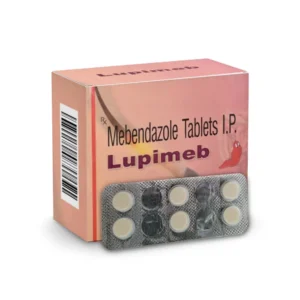
Mebendazole 500mg
Mebendazole is an antihelmintic medicine used to fight intestinal worms. This includes:
- Roundworms (Ascaris lumbricoides)
- Pinworms (Enterobius vermicularis)
- Hookworms (Ancylostoma duodenale and Necator americanus)
- Whipworms (Trichuris trichiura)
It does this through blocking the worms’ capacity to take in glucose in a way that causes starvation and the worms to lose their food.
Ivermectin 6mg
Ivermectin is an antiparasitic with a broad spectrum medication used for treating:
- Strongyloidiasis (intestinal threadworm)
- Onchocerciasis (river blindness)
- Scabies and lice infestations
- Various other parasitic infections
Ivermectin is a drug that works through stopping parasites by binding them to parasites’ muscles and nerve cells. This results in their destruction and removal from the body.
Why Use Mebendazole and Ivermectin Together?
In certain situations, specifically in areas with a high parasite presence or mixed infections, mixing Ivermectin and Mebendazole can prove beneficial due to:
- They are able to target various forms of parasites.
- This combination offers the opportunity for a greater range of activities.
- Utilizing both medications can decrease the risk of sustaining illness or the possibility of reinfection.
- It is helpful when it comes to massive deworming campaigns to prevent public health problems.
How Do These Drugs Work?
- Mebendazole is a selective binder to the tubulin in the parasite’s body by disrupting the formation of microtubules, which are essential to nutrient absorption and cell functions within the parasite.
- Ivermectin connects with the glutamate-gated chloride channel in the muscle and nerve cells. This causes increased permeability to chloride ions that can cause paralysis or even the death of parasites.
Together, they fight parasites in different ways and increase treatment efficiency.
Indications for Mebendazole + Ivermectin
The combination prescribed is to:
- Diverse intestinal worm infections.
- Strongyloidiasis and other nematode diseases.
- Scabies that is accompanied by intestinal helminth infection.
- Mass treatment programs are offered in zones of endemicity to lower parasite burden.
Dosage and Administration
Typical dosages:
- Mebendazole: 500 mg orally, as an individual dose, or up to 3 days, based on the type of infection.
- Ivermectin: 6 mg taken orally in a single dose. Sometimes, it is repeated every 1-2 weeks to treat certain illnesses.
Important Points:
- Be sure to follow the dose regimen that is prescribed by your physician.
- Eat either with or without food.
- Don’t self-medicate. Incorrect doses can cause complications or failure of treatment.
- In some instances, the need for a repeat dosage may be required.
Benefits of the Combination Therapy
- Wider antiparasitic coverage, which results in higher treatment rates.
- It is a convenient way to do so using typically short classes.
- Effective against internal and external parasites.
- Could reduce transmission to the community within endemic areas.
Side Effects
The two drugs are typically accepted, but they can cause:
Common side effects:
- Abdominal pain or discomfort
- Diarrhea
- Nausea or vomiting
- Dizziness or headache
- Fatigue
Rare but serious side effects:
- Allergic reactions (rash, itching, swelling)
- Neurological symptoms (seizures, confusion)
- Vision changes (rare with ivermectin)
If you are experiencing severe symptoms, you should consult a doctor immediately.
Precautions and Contraindications
- Contact your doctor if you suffer from kidney or liver disease.
- Women who are pregnant or nursing should take these medicines only if they are advised by a health specialist.
- Use caution with children of the age of a specific weight who weigh according to medical recommendations.
- Take care if you are suffering from neurologic disorders.
- Tell your physician about any other medications you’re taking to ensure that there are no interactions.
Drug Interactions
- Ivermectin can interfere with other medicines that affect the central nervous system.
- The metabolism of Mebendazole is affected by drugs that affect liver enzymes.
- Be sure to disclose your entire medication list to your physician.
Tips for Effective Treatment
- Take the entire course, regardless of whether symptoms improve in the early stages.
- Keep a clean and healthy environment to avoid reinfection.
- Check in with your health care physician to ensure that the patient is clear of infection.
- Instruct family members to get examined and treated for any ailment that may arise.
Conclusion
A combination of Mebendazole 500mg and Ivermectin 6mg is a highly efficient solution for various parasite diseases that affect millions of people around the world. Through targeting various parasites and utilizing different methods, this treatment improves the effectiveness of treatments and aids in limiting the spread of parasites.
If you suspect that you have a parasitic illness or are in an endemic area, seek out a doctor to determine if this combo will be beneficial for you.
Disclaimer:
This blog is intended for informational purposes only. It does not substitute for medical advice from a professional. Always consult with your doctor before beginning or altering any medications.
Additional Information
| Manufacturer | Healing Pharma, India, Kachhela Medex Pvt.Ltd |
|---|---|
| Pharmaceutical | Tablet/s |
| Tablet/s | Mebentel 500mg (Mebendazole) = 60 Pills, Iverheal 6mg (ivermectin) = 60 Pills |
Related products