
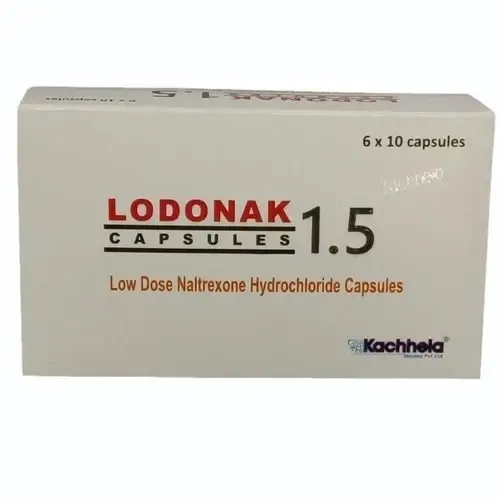
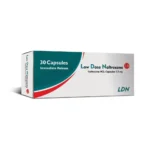
Lodonak 1.5mg (Naltrexone)
Previous product
Apresign 30mg (Apremilast)
$50.00 $88.00Price range: $50.00 through $88.00
Next product
Vitamin C 100mg 5ml (Vitamin C/Ascorbic Acid)
$15.00 $49.00Price range: $15.00 through $49.00
$33.00 $105.00Price range: $33.00 through $105.00
In Stock
In Stock
Lodonak 1.5mg (Naltrexone)
| Pack Size | Price | Quantity | Add To Cart | |
|---|---|---|---|---|
| 60 Capsule/s | $33.00 | |||
| 120 Capsule/s | $58.00 | |||
| 240 Capsule/s | $105.00 | |||
| Want to order in bulk / B2B price? Send Inquiry | ||||
×
Sorry!! Out of Stock
Sorry! Lodonak 1.5mg (Naltrexone) is out of stock
Please click below to view other similar medications.
View All Naltrexone Products
Offer You Can't Resist
Free Shipping
Enjoy Free Shipping on Orders above AUD304 (USD199)
Estimate Shipping :
07 June - 14 June
50
Last Updated on April 19, 2026

Description
Lodonak 1.5mg (Naltrexone): A Deep Dive into Low-Dose Naltrexone Therapy
Within the realm of medical science, the most significant breakthroughs come not solely from the creation of new medicines and treatments, but also from the reconsideration of the old ones. A prime example could be the Low Dose Naltrexone (LDN)–a repurposing of the drug initially created to treat addictions like opioids and alcohol dependency. Lodonak 1.5mg is a low-dose formula made of Naltrexone that is now growing in popularity as a treatment for various conditions, from autoimmune disorders to depression and chronic pain.
In this post, we’ll discuss the basics of what Lodonak is and how it functions, as well as what it’s useful for and the things patients need to learn prior to beginning treatment.
What is Lodonak 1.5mg?
Lodonak 1.5mg contains Naltrexone, the opioid antagonist. In higher doses (typically 50mg), Naltrexone may be utilized to treat alcohol and opioid dependence. When used in lower doses (which is usually 1.5mg to 4.5mg every day), it is different and can provide a variety of benefits.
This method is referred to as low-dose Naltrexone (LDN) treatment.
How Does Low-Dose Naltrexone Work?
When taken in low dosages, Naltrexone blocks the opioid receptors within the body. The short-term blockade of opioid receptors is thought to cause a rebound result which increases the body’s ability to produce:
- Endorphins (natural painkillers and mood stimulants)
- Enkephalins (The peptides reduce inflammation and pain)
This rise in the endogenous opioids could be the potential for having an impact on the immune system, which makes LDN a potential treatment option for:
- Autoimmune diseases (e.g., multiple sclerosis, rheumatoid arthritis)
- Chronic pain syndromes (e.g., fibromyalgia)
- Inflammatory conditions (e.g., Crohn’s disease)
- Mental health disorders (e.g., depression, PTSD)
The entire mechanism that causes LDN is currently under examination; however, the evidence from clinical studies and personal experience continues to expand.
Common Conditions Treated with Lodonak 1.5mg
Autoimmune Diseases
LDN is believed to decrease the immune system’s overactive response, but without blocking immunity completely. The conditions where it has demonstrated potential are:
- Multiple sclerosis (MS)
- Hashimoto’s thyroiditis
- Rheumatoid arthritis
- Lupus
- Psoriasis
Chronic Pain Disorders
The conditions that are characterized by a wide range of inflammation and pain could benefit from LDN, for example:
- Fibromyalgia
- Chronic fatigue syndrome (CFS)
- Migraines
Inflammatory Bowel Disease (IBD)
A few small studies have indicated that LDN may help to decrease inflammation and signs of:
- Crohn’s disease
- Ulcerative colitis
Mental Health Conditions
LDN can indirectly enhance cognition and mood by increasing endorphins. The idea is being studied as a possible treatment option for:
- Depression
- Anxiety
- Post-traumatic stress disorder (PTSD)
Cancer Support
Anecdotal and early studies suggest LDN could help boost the immune system of cancer patients. However, it is not the primary method of treatment, and more studies are required.
Why the 1.5mg Dose?
It is believed that the 1.5mg dosage from Lodonak is often included in the regimen of titration. Patients typically start with 1.5mg and then gradually build up to the desired dosage, generally about 4.5mg every day. Start with low dosages to help:
- Minimize side effects (especially sleep-related)
- Monitor response
- Adjust the dose based on individual tolerance and condition
Certain patients might find that 1.5mg is the ideal dosage.
Benefits of LDN Therapy
- Non-sedating
- Non-addictive
- Low cost
- Minimal side effects
- Can be used alongside many other treatments
Potential Side Effects of Lodonak 1.5mg
It is usually well-tolerated. However, some side effects could happen, especially in the first few days of treatment. The most common ones are:
- Vivid dreams or sleep disturbances
- Headache
- Digestive upset
- Mood changes (rare)
The effects of these side effects usually fade over time as the body adjusts to taking the medication. Beginning with a small dose of 1.5mg can reduce the risk of experiencing these side effects.
Who Should Avoid LDN?
LDN might not be appropriate for every person. The use of LDN is to be done cautiously or avoided when:
- Users who currently use the opioid painkiller (LDN could hinder their effects and trigger withdrawal)
- people with liver diseases (as Naltrexone metabolism occurs in the liver)
- Women who are pregnant or nursing (insufficient study)
- Anyone who is who are allergic to Naltrexone, or any of the inactive ingredients found in Lodonak
Always seek advice from a medical professional prior to beginning LDN.
How to Take Lodonak 1.5mg
- You should take Lodonak every day at the same time every day, generally at night (though there are some who prefer to take it in the morning to help prevent insomnia).
- Don’t mix it with opioid drugs.
- Keep at room temperature and free of heat and moisture.
LDN vs Traditional Treatments
Although LDN cannot be a substitute for conventional treatments for numerous diseases, it could provide a potent treatment option. As an example:
- When it comes to MS, it can reduce spasticity as well as fatigue.
- When you suffer from the case of fibromyalgia, the treatment can alleviate pain and help with sleeping.
- When it comes to the case of Crohn’s disease it can help in reducing inflammation and flare-ups.
It’s crucial to know that LDN is regarded as off-label for the vast majority of applications, which means it’s not recognized as a legitimate drug by regulatory bodies such as the FDA or EMA. FDA or EMA for these types of conditions. Yet, many doctors use it in light of emerging research and reports from patients.
Real-World Evidence
The amount of interest in LDN is driven primarily by the advocacy of grassroots groups and medical observations. Large-scale, randomized trials for LDN are scarce; numerous smaller studies, as well as patient reviews, have been reported:
- Decreased pain and fatigue
- Improved mood
- Better quality of life
- Reduction in autoimmune flares
The ongoing research continues to explore its possibilities across a vast spectrum of conditions.
Frequently Asked Questions
Is LDN addictive?
No. In reality, Naltrexone is used to treat addiction and does not trigger it. When doses are low, there isn’t any effect of euphoria.
How long does it take to see results?
Many people notice benefits within several weeks or days, whereas other people may need up to two to three months. The key is patience in LDN treatment.
Can I take it with other medications?
The majority of times, however, it is not the case of opioids. Always talk to your doctor or pharmacist to determine if there are interactions.
Conclusion
Lodonak 1.5mg (Low-Dose Naltrexone) represents a promising alternative to the treatment of many autoimmune and chronic conditions. Though more research is needed in order to better understand its mechanism as well as long-term consequences, present research and clinical experiences indicate that LDN is effective, safe, and cost-effective, and can be life-altering when people respond to the drug.
Always consult your doctor who is knowledgeable about LDN before starting treatment. It is particularly important in the case of more than one medical condition or when suffering from multiple conditions.
Related products




Recently Viewed
Reviews
There are no reviews yet.