
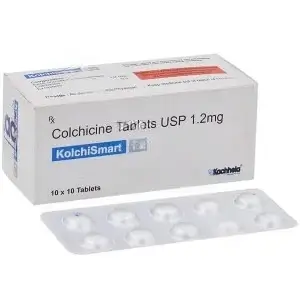
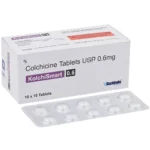
KolchiSmart 1.2mg (Colchicine)
Previous product
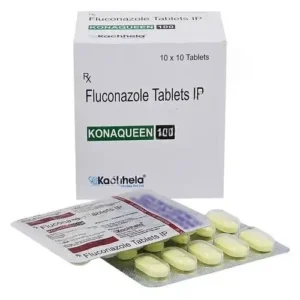
Konaqueen 100mg (Fluconazole)
$45.00 $309.82Price range: $45.00 through $309.82
Next product
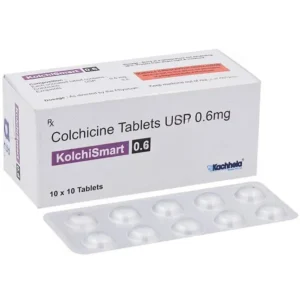
KolchiSmart 0.6mg (Colchicine)
$28.00 $70.00Price range: $28.00 through $70.00
$41.00 $105.00Price range: $41.00 through $105.00
In Stock
In Stock
KolchiSmart 1.2mg (Colchicine)
| Pack Size | Price | Quantity | Add To Cart | |
|---|---|---|---|---|
| 100 Tablet/s | $41.00 | |||
| 200 Tablet/s | $75.00 | |||
| 300 Tablet/s | $105.00 | |||
| Want to order in bulk / B2B price? Send Inquiry | ||||
×
Sorry!! Out of Stock
Sorry! KolchiSmart 1.2mg (Colchicine) is out of stock
Please click below to view other similar medications.
View All Colchicine Products
Offer You Can't Resist
Free Shipping
Enjoy Free Shipping on Orders above AUD304 (USD199)
Estimate Shipping :
06 June - 13 June
23
Last Updated on April 18, 2026

Description
Introduction
KolchiSmart 1.2 mg is a source of Colchicine is a drug that is mainly employed to treat and prevent sudden attacks caused by Gout and other inflammatory disorders, including the Familial Mediterranean Fever (FMF). Colchicine originates from the crocus of autumn (Colchicum autumnale) and has been in use since the beginning of time because of its anti-inflammatory qualities.
In contrast to typical anti-inflammatory medications, the colchicine drug works by disrupting the cellular processes that cause inflammation. It provides relief for flares of gout as well as other inflammation-related disorders triggered by neutrophils.
Composition
- Active Ingredient: Colchicine 1.2 mg (per tablet)
- Inactive Ingredients: May include lactose, cellulose, magnesium stearate, and other standard excipients.
Pharmacological Class
- Anti-inflammatory agent
- Antigout agent
- Microtubule inhibitor
Mechanism of Action
Colchicine has an effect by connecting to tubulin, which is a structural protein found in cells, and preventing its polymerization into microtubules. The disruption in tubulin affects a variety of cell functions, particularly for neutrophils, which are white blood cells most responsible for inflammation that occurs in gout as well as FMF.
Specifically, colchicine:
- Blocks the chemotaxis of neutrophils and also the adhesion of inflamed tissue.
- It reduces the release of mediators of inflammation like prostaglandins and cytokines.
- Stops the activation and degranulation of neutrophils.
- Interrupts the inflammasome complex by reducing the activation of interleukin-1β, one of the most important cytokines that is involved in inflammation caused by gout.
The effects of these together decrease swelling, inflammation, and pain that are associated with gout attacks and similar inflammatory diseases.
Indications
KolchiSmart 1.2 mg is used to treat:
- Acute gout attacks: Reduce inflammation and pain when flare-ups occur.
- Prophylaxis of gout: To prevent flare-ups of gout in the future for patients who have a history of recurring gout.
- Familial Mediterranean Fever (FMF): To avoid the onset of fever and inflammation in FMF sufferers.
- Other off-label uses: A few times, it is used for pericarditis, Behcet’s disease, and various autoinflammatory diseases under supervision by a doctor.
Dosage and Administration
For Acute Gout Attack:
- Initial dose: 1.2 mg (one tablet) at the first signs of the flare-up.
- Then follow with 0.6 mg (half tablet) 1 hour after should if required, and in no more than 1.8 mg within one hour.
- In the meantime, maintain the dose at 0.6 mg, once or every two days until symptoms improve or as directed by a physician.
- Take care not to overdose on 3 mg per day.
For Gout Prophylaxis:
- Most commonly, 0.6 mg once or twice a day is prescribed for an extended period of time to prevent flares from gout.
- Dose could be adjusted depending on the response of patients and tolerance.
For Familial Mediterranean Fever (FMF):
- Dosing can vary based on weight and age. The adult dose is typically 1.2 or 2.4 mg/day, divided into three or more dosages.
- A regular, consistent use of the product is suggested to avoid attacks.
Administration:
- Use tablets either with or without food. Consuming them with food can help lessen stomach upset.
- Take plenty of fluids and drink lots of water to prevent dehydration.
Contraindications
- Hypersensitivity to colchicine and any other formulation ingredient.
- A severe impairment of the liver or kidneys (unless strictly under the supervision of a medical professional).
- The blood dyscrasias are characterized by bone Marrow suppression.
- Nursing and pregnancy are not recommended unless required and monitored by an experienced physician.
Precautions
- Renal and hepatic impairment: Adjusting doses is essential to reduce the risk of toxicity. elevated.
- Drug interactions: Colchicine is processed by CYP3A4 and excreted via P-glycoprotein. Use in conjunction with inhibitors (e.g., clarithromycin, ketoconazole) raises the risk of toxicity.
- Gastrointestinal issues: Vomiting, nausea, and diarrhoea are all common and often a result of the dose. Extreme GI symptoms may require the discontinuation of.
- Blood disorders: Be aware of indications of bone marrow loss (anemia or leukopenia).
- Use in elderly: Begin with lower dosages to reduce the risk of adverse reactions.
- Avoid grapefruit juice: The colchicine level can be increased.
Side Effects
Common side effects:
- Diarrhea
- Nausea and vomiting
- Abdominal pain or cramping
- Flatulence
Serious side effects (rare):
- Bone marrow suppression (leading to anemia, leukopenia, thrombocytopenia)
- Muscle pain or weakness (myopathy)
- Neuropathy
- Severe allergic reactions
- In the case of overdose, multi-organ toxicities (renal failure or liver malfunction)
Drug Interactions
- CYP3A4 inhibitors (e.g., clarithromycin, ketoconazole, ritonavir): The risk of toxicity from colchicine increases.
- P-glycoprotein inhibitors (e.g., verapamil, cyclosporine): Higher blood levels of colchicine.
- Statins and fibrates: Increased risk of muscle toxicity (myopathy).
- Other bone marrow suppressants: Risk of increased hematologic toxicity.
- Drugs causing diarrhea: The effects of this medication can be exacerbated by gastrointestinal issues.
Overdose
A sign of an overdose in colchicine is extreme gastrointestinal discomfort (nausea, vomiting, diarrhea) as well as dehydration, suppressing bone marrow function, muscle weakness, and multiple organ failure.
An overdose can be an emergency medical situation that requires urgent hospitalization. Treatment is primarily supportive. There is no cure. The early support care, which includes replacing fluids as well as monitoring for organ damage, is crucial.
Storage
- Store at room temperature (20-25°C or 68-77°F).
- Be sure to shield yourself from light and moisture.
- Make sure that the area is safe for youngsters.
Patient Counseling
- As directed, take the medication as per instructions; do not exceed the dose recommended.
- Tell your physician about any other supplements and medications.
- Inform the doctor of any extreme muscular pain, diarrhea, weakness, or numbness right away.
- Keep hydrated when taking colchicine.
- Beware of grapefruit juice as well as other CYP3A4 inhibitors, unless they have been recommended by your physician.
- Contact your physician when you’re pregnant or considering pregnancy, or planning to breastfeed.
Summary
KolchiSmart 1.2 mg (Colchicine) is an anti-inflammatory drug that is used principally to treat and prevent Gout flares as well as Familial Mediterranean Fever. It acts by preventing the growth of microtubules within neutrophils and thus reducing inflammation.
Although it is effective, it requires carefully controlled dosages and monitoring because of the potential for gastrointestinal, neuromuscular, and hematologic side effects. It can interact with a variety of drugs, requiring careful medical monitoring.
If used correctly, KolchiSmart offers significant relief from painful gout attacks. It also enhances the quality of life for those suffering from chronic inflammation.
Additional Information
| Active Ingredient: | Colchicine |
|---|---|
| Indication: | Gout |
| Manufacturer: | Kachhela Medex Pvt. Ltd. |
| Strength: | 1.2mg |
| Packaging: | 10 Tablets in 1 Strip |
| Delivery Time: | 7 To 15 days |
Related products


Reviews
There are no reviews yet.