
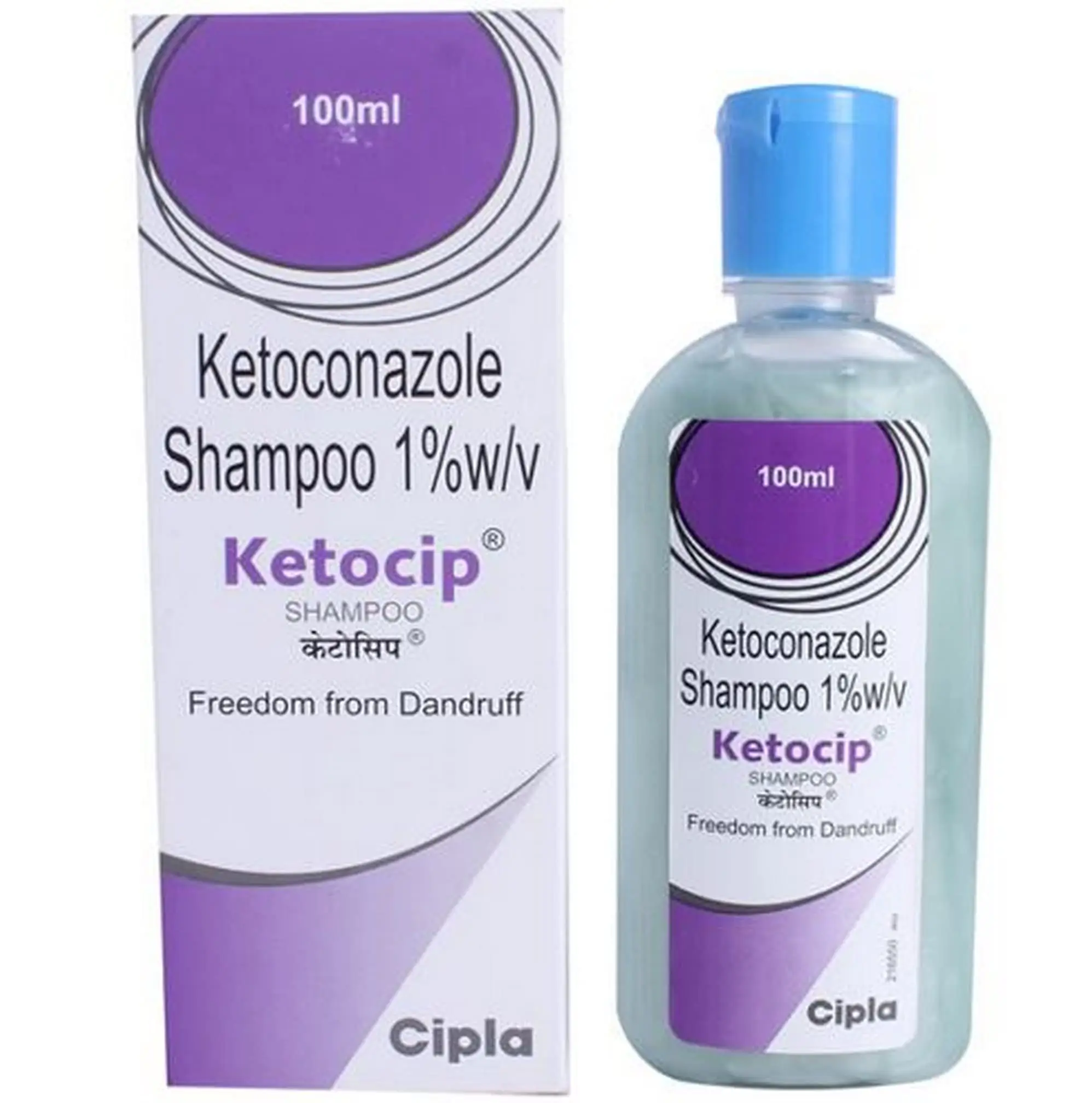
Ketocip Shampoo (Ketoconazole)
Previous product
Silditop Soft (Sildenafil Citrate)
$83.00 $211.00Price range: $83.00 through $211.00
Next product

Super Force Oral Jelly (Sildenafil/Dapoxetine)
$29.00 $69.00Price range: $29.00 through $69.00
$6.00 $33.00Price range: $6.00 through $33.00
In Stock
In Stock
Ketocip Shampoo (Ketoconazole)
| Pack Size | Price | Quantity | Add To Cart | |
|---|---|---|---|---|
| 1 Bottle | $6.00 | |||
| 3 Bottle/s | $17.00 | |||
| 6 Bottle/s | $33.00 | |||
| Want to order in bulk / B2B price? Send Inquiry | ||||
×
Sorry!! Out of Stock
Sorry! Ketocip Shampoo (Ketoconazole) is out of stock
Please click below to view other similar medications.
View All Ketoconazole Products


Offer You Can't Resist
Free Shipping
Enjoy Free Shipping on Orders above AUD304 (USD199)
Estimate Shipping :
08 June - 15 June
21
Fast dispatch
I have ordered multiple times and always receive excellent service. Fast dispatch, reliable tracking, and great support.
 Australia
May 21, 2026
Last Updated on April 18, 2026

Description
Introduction
Ketocip Shampoo. It is a topically applied antifungal shampoo made using Ketoconazole 1 % which is an active ingredient employed to treat different fungal infections that affect the skin and scalp. Ketoconazole is a derivative of imidazole that has potent antifungal and anti-inflammatory qualities. Ketocip Shampoo is typically prescribed for treating scalp problems like seborrhea and dandruff. skin alopecia, both of which are brought on or aggravated due to fungal organisms. Specifically, those belonging to Malassezia.
Composition
- Active Ingredient: Ketoconazole 1% w/v
- Inactive Ingredients:
- Purified water
- Surfactants (such as sodium lauryl sulfate)
- Conditioning agents (cocamidopropyl betaine)
- Preservatives (e.g., disodium EDTA)
- Fragrance agents
The combination of these two ingredients ensures not only an antifungal effect, but effective foaming, cleaning, as well as a relaxing experience throughout usage.
Mechanism of Action
Ketoconazole is a drug that blocks the production of ergosterol, which is a crucial element of sterol in the fungal cell membranes. Without ergosterol, the fungal cell membrane is damaged and permeable. This causes the leakage of cell contents and disruption to the enzyme system, and finally leads to the death or inhibition of fungal cells.
It is effective against an array of fungi. It is particularly effective against Malassezia species, which are a type of yeast that is lipophilic and implicated in seborrheic dermatitis and dandruff. In reducing the colonization of fungal spores, ketoconazole can help reduce swelling, inflammation, itching, and other symptoms that are associated with these ailments.
Indications
Ketocip Shampoo is indicated for:
- Dandruff (Pityriasis capitis): The condition is characterized by scalp flaking and itching; dandruff can be connected to the growth of fungal colonies through Malassezia. Ketoconazole shampoo is effective in reducing inflammation caused by fungal growth.
- Seborrheic Dermatitis: Chronic inflammatory skin disease that affects sebaceous gland-rich skin places like the face, scalp, and chest. It is characterized by redness, swelling, and itching. Excessive fungal growth is playing a major role.
- Pityriasis Versicolor: An infection of the skin that is caused by Malassezia furfur, which can lead to hypo- or hyperpigmented patches of skin, mostly around the chest and upper arms.
- Adjunct in Tinea Capitis: The oral treatment of antifungal is the most effective; Ketocip can reduce fungal shedding and transmission.
Dosage and Administration
Instructions for Use:
- Make sure to wash your scalp and hair thoroughly.
- Make sure you apply a generous quantity of Ketocip Shampoo to completely cover the area affected.
- Apply gentle pressure for a couple of minutes in order to allow the active ingredient to get into the scalp.
- Let the shampoo sit for between 3 and 5 minutes prior to thoroughly rinsing using water.
- Make use of it at least twice a week for 2 to four weeks for seborrheic as well as dandruff acne.
- In the case of the treatment of pityriasis vericolor, apply the cream to the affected skin every day for 5 days. Leave it on for five minutes before washing.
Maintenance Use:
If symptoms get better, you can use shampoo at least once per 1 to 2 weeks in order to avoid repeat episodes, or when directed by a medical professional.
Efficacy
Studies conducted in clinical trials have proven that ketoconazole shampoo efficiently reduces the amount of scalp fungal burden and greatly improves symptoms like itching, scaling, and itchy erythema. The majority of patients notice improvements within two to four weeks of continuous application. Maintenance therapy is helpful to prevent the possibility of relapse.
Side Effects
Ketocip Shampoo is generally accepted by most people. But, some may have:
- Mild scalp irritation or burning sensation
- Dryness or oiliness of scalp
- Itching
- Hair texture changes
- Hair discoloration (especially in chemically treated or light-colored hair)
- Allergic contact dermatitis (rare)
If allergic or irritation symptoms like rash, swelling, or trouble breathing develop, immediately stop the use of the medication and consult a physician.
Precautions
- Beware of contact with your eyelids. If shampoo accidentally gets into the eyes, wash immediately using plenty of water.
- Do not take if you are allergic to ketoconazole or other ingredients in the shampoo.
- Pregnancy and breastfeeding: While absorption in the system is not excessive, you should consult with your doctor before use if you are pregnant or breastfeeding.
- It is not recommended for babies younger than 1 year old without medical supervision.
- Beware of concurrent use in conjunction with other medicated shampoos and harmful products for hair unless recommended by your doctor. It could irritate.
- If your symptoms do not improve or become worse after 4 weeks of usage, consult a healthcare expert to rule out possible scalp issues.
Drug Interactions
Since Ketocip is applied to the skin with only a small amount of absorption in the system, any interactions with drugs are likely. The use of various topical scalp treatment options simultaneously can increase the likelihood of irritation to the local area.
Storage
- Store Ketocip Shampoo at room temperature, ideal between 15°C and 25°C (59°F to 77°F).
- Be sure to shield yourself from direct sunlight and water.
- Make sure the bottle is tightly shut during times when it is not being used.
- Make sure that the area is safe for young children.
Additional Tips for Effective Use
- If you want to get the most results, try not to make use of other hair products (such as sprays, gels, or any other shampoos) during treatment times except as directed.
- Consistent and regular use of the medication according to the schedule prescribed is crucial to reach and sustain symptom management.
- Mixing shampoo therapy with other therapies (e.g., topically steroid creams for severe seborrheic dermatitis) is best done under the supervision of a physician.
- Do not wash too often to avoid dryness of the scalp.
Comparisons and Alternatives
Ketocip Shampoo (ketoconazole 1%) is similar to other ketoconazole-based shampoos, such as Nizoral one percent, which is frequently considered to be the best antifungal shampoo across the globe. Some antifungal shampoos might include ingredients such as selenium sulfide, zinc pyrithione, or ciclopirox. However, ketoconazole has been recognized as having a strong antifungal effect as well as its anti-inflammatory properties.
If you have more severe or resistant fungal diseases, ketoconazole 2% shampoo formulas can be prescribed under the direction of a physician.
Frequently Asked Questions (FAQs)
Q1: How soon will I see results with Ketocip Shampoo?
A1: Many users experience improvement in about 2 to 4 weeks after continuous application.
Q2: Can Ketocip Shampoo be used daily?
A2: The usual recommendation is twice twice-weekly usage can be sufficient. The use of daily doses is not recommended unless it is specifically recommended.
Q3: Can I use Ketocip Shampoo on colored or chemically treated hair?
A3: Yes, However, there’s an opportunity for hair coloration or texture changes, in particular with repeated usage.
Q4: Is Ketocip Shampoo safe for children?
A4: It’s generally recommended for children older than 1 year of age; however, seek the advice of a pediatrician before use.
Q5: Can I use Ketocip Shampoo on my body for fungal infections?
A5: Ketocip is a treatment to treat fungal skin conditions such as the body-wide pityriasis; however, avoid any mucosal or facial areas unless prescribed by a physician.
Summary
Ketocip Shampoo (Ketoconazole 1%) is an efficient topically applied antifungal that was developed to manage and treat the symptoms of fungal scalp infections like seborrheic and dandruff. It does this by preventing the fungal cell membrane’s synthesis, which causes the death of fungal cells and relief from symptoms. The regular use of the shampoo results in less the appearance of itching and scaling as well as inflammation. It is a well-tolerated shampoo and has minimal adverse side effects, which makes it appropriate for long-term use as a maintenance treatment to stop repeat incidences. Be sure to follow the suggested use guidelines and seek advice from an expert in the field if you notice symptoms persist.
Related products
Reviews
There are no reviews yet.