
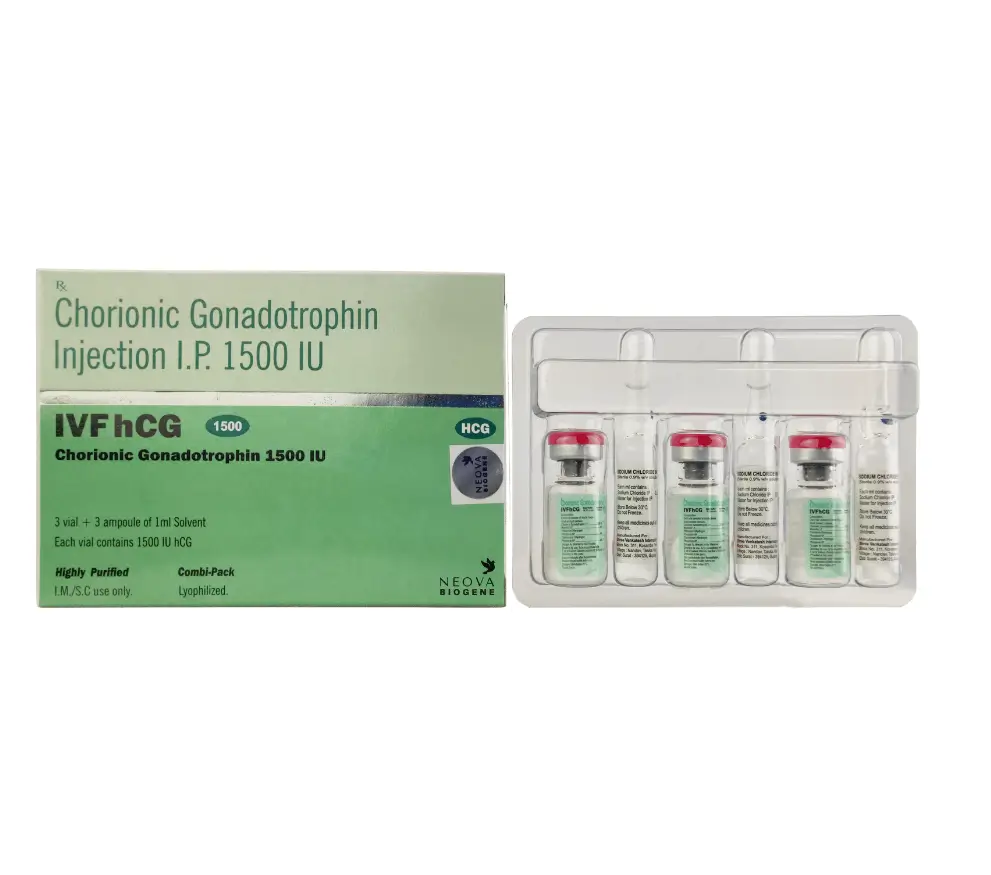
IVFhCG 1500iu (HCG (Human Chorionic Gonadotropin))
Previous product

hertraz 440mg (Trastuzumab)
A$892.00 A$4,575.00Price range: A$892.00 through A$4,575.00
Next product

Piclib 125mg (Palbociclib)
A$125.00 A$335.00Price range: A$125.00 through A$335.00
A$60.00 A$210.00Price range: A$60.00 through A$210.00
In Stock
In Stock
IVFhCG 1500iu (HCG (Human Chorionic Gonadotropin))
| Pack Size | Price | Quantity | Add To Cart | |
|---|---|---|---|---|
| 3 Vial/s | A$60.00 | |||
| 6 Vial/s | A$118.00 | |||
| 9 Vial/s | A$165.00 | |||
| 12 Vial/s | A$210.00 | |||
| Want to order in bulk / B2B price? Send Inquiry | ||||
×
Sorry!! Out of Stock
Sorry! IVFhCG 1500iu (HCG (Human Chorionic Gonadotropin)) is out of stock
Please click below to view other similar medications.
View All HCG Products

Offer You Can't Resist
Free Shipping
Enjoy Free Shipping on Orders above AUD304 (USD199)
Estimate Delivery :
12 October - 19 October
35
Excellent service overall
Smooth checkout, quick dispatch, and secure delivery. Excellent service overall
 Australia
October 1, 2026
Last Updated on April 13, 2026

Description
IVFhCG 1500 IU (HCG): A Vital Hormone in Fertility Treatments
The issue of infertility impacts millions around the globe, with the help of advances in the field of reproductive medicine, a lot of couples are hopeful through assisted reproductive technology, including In Vitro Fertilization (IVF). The key ingredient for the effectiveness of IVF and various fertility therapies includes Human Chorionic Gonadotropin (HCG), available in formulas like IVFhCG 1500IU.
In this blog article in this blog post, we’ll look at the IVFhCG 1500IU and how it functions and its function in fertility treatment, tips for administration, as well as side effects and safety precautions.
What is IVFhCG 1500 IU?
IVFhCG 1500IU is a drug that has Human Chorionic Gonadotropin (HCG), a hormone created naturally when pregnant. The purified or synthetic form of HCG can be used to increase ovulation, aid in the luteal phase, and aid fertility procedures.
“1500 IU” refers to the International unit of hormone present in the dosage, which indicates its strength.
What is HCG and How Does it Work?
HCG is a hormone made up of glycoproteins that is produced by the placenta after fertilization. Its main purpose is to protect the corpus luteum. It creates progesterone, which is essential to maintain the early stages of pregnancy.
The medical perspective is that HCG is akin to your human body’s Luteinizing Hormone (LH) rise that triggers ovulation, the release of mature eggs out of the ovarian duct.
When it comes to fertility treatments, such as IVF using HCG aids:
- Trigger final oocyte (egg) maturation before egg retrieval.
- Aid in the development of the stage of luteal development by stimulating the progesterone release.
- Aid in stimulating an increase in spermatogenesis for males suffering from particular infertility problems.
Uses of IVFhCG 1500 IU
Ovulation Induction in Women
In controlled ovarian stimulation protocols, IVFhCG 1500 IU is given to trigger the final maturation of eggs before egg retrieval or timed intercourse/intrauterine insemination (IUI).
Support in IVF and ICSI Cycles
In IVF (also known as Intracytoplasmic Sperm Injection (ICSI) IVFhCG is utilized to make sure that eggs are mature and that ovulation occurs at a precise time so that fertilization is maximized.
Male Infertility Treatment
HCG activates the Leydig cells of the testes that make testosterone and aid in the production of sperm in males suffering from the condition of hypogonadism, or any other form of infertility.
How is IVFhCG 1500 IU Administered?
Dosage and Timing
- The dosage and time of administration differ in accordance with the fertility plan; however, they are typically given in the form of is an only injection intramuscular (IM) as well as subcutaneous (SC) injection.
- Most often, IVF is given within 36 hours of the retrieval of eggs during IVF cycles.
- Dosage ranges from 1500 IU up to larger dosages (5000-10,000 IU), dependent on the patient’s needs and doctor’s discretion.
Injection Technique
- The injection must be given by a health professional under the guidance of a medical professional.
- Patients can be taught to inject themselves if needed.
- The injection site usually is the upper arm, the thigh, or the buttock.
Benefits of IVFhCG 1500 IU
- Precise Ovulation Trigger: Imitates mimics the nature LH surge efficiently.
- Improved Egg Maturation: Improves the quality of eggs for fertilization.
- Supports Pregnancy: Aids in maintaining progesterone levels post-ovulation.
- Versatile Use: It is used in female as well as menstrual fertility treatments.
Side Effects and Risks
The majority of patients can tolerate HCG injections with ease; however, some experience:
- Injection site reactions: pain, swelling, or redness
- Ovarian hyperstimulation syndrome (OHSS) is an uncommon but severe condition that is that is characterized by painful, swollen Ovaries and retention of fluid
- Headache, fatigue, mood swings
- Abdominal pain or bloating
- Allergic reactions (rare)
Precautions and Contraindications
- Tell your physician if you suffer from an allergy to HCG or other hormones.
- Cancer patients who are sensitive to hormones must be wary of HCG.
- Be cautious in patients suffering from the presence of ovarian cysts or with a background of OHS.
- Unsuitable for pregnant women (except with the guidance of a physician in a fertile context).
- Monitoring regularly by a fertility expert is vital throughout the treatment.
Tips for Patients Using IVFhCG 1500 IU
- Be sure to follow the precise dosage and timetable as directed by your fertility expert.
- Participate in all scheduled monitoring appointments (ultrasound or test for blood).
- Inform the doctor of any pain or swelling, or other symptoms immediately.
- Keep a healthy and balanced lifestyle in order to help support fertility.
- Refrigerate the medicine if necessary, and be sure to verify the expiration dates.
Frequently Asked Questions (FAQs)
Q: Can I self-administer IVFhCG injections?
If you are properly trained by your health care provider, a lot of people can administer injections themselves in the comfort of their homes.
Q: How soon after IVFhCG injection will ovulation occur?
Ovulation is usually seen around 36 hours following the injection.
Q: Can IVFhCG cause pregnancy?
HCG by itself doesn’t cause birth; however, it does trigger ovulation, making it more likely for fertilisation.
Q: What should I do if I miss a dose?
Get in touch with your fertility expert promptly. It is vital to be punctual when it comes to fertility treatments.
Conclusion
IVFhCG 1500 IU (Human Chorionic Gonadotropin) has a vital role in the modern treatment of fertility that aids women in getting the ovulation stage and assisting with the early stages of pregnancy, while aiding men suffering from some cases of infertility. If used properly under the supervision of a medical professional, IVFhCG can increase the chances of a positive conception as well as a healthy pregnancy.
If you’re in the process of having fertility treatment, knowing the reason behind and the proper application of IVFhCG will empower you and assist you in navigating the procedure more successfully.
Disclaimer: This blog is intended for informative purposes only. It does not constitute the advice of a medical professional. Follow your doctor’s guidelines and ask them for any queries or issues.
Related products




Reviews
There are no reviews yet.