
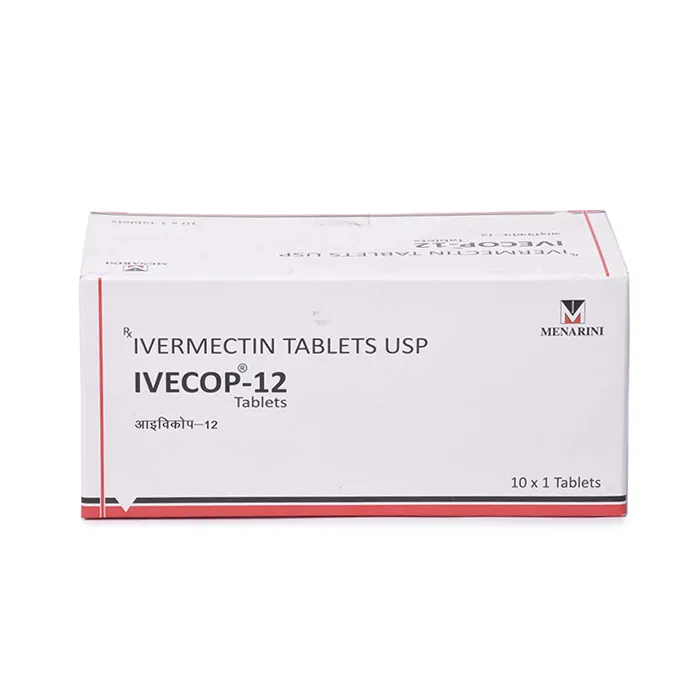
Ivecop 12mg (Ivermectin)
Previous product

Fildena xxx 100mg (Sildenafil Citrate)
A$102.20 A$168.00Price range: A$102.20 through A$168.00
Next product
Aurogra 100mg (Sildenafil Citrate)
A$91.00 A$231.00Price range: A$91.00 through A$231.00
A$106.40 A$151.20Price range: A$106.40 through A$151.20
In Stock
In Stock
Ivecop 12mg (Ivermectin)
| Pack Size | Price | Quantity | Add To Cart | |
|---|---|---|---|---|
| 80 Tablet/s | A$106.40 | |||
| 120 Tablet/s | A$151.20 | |||
| Want to order in bulk / B2B price? Send Inquiry | ||||
×
Sorry!! Out of Stock
Sorry! Ivecop 12mg (Ivermectin) is out of stock
Please click below to view other similar medications.
View All Ivermectin Products
Offer You Can't Resist
Free Shipping
Enjoy Free Shipping on Orders above AUD304 (USD199)
Estimate Shipping :
07 June - 14 June
28
Good Packagingg
Professional packaging and timely delivery. Highly recommend this medicines website
 Australia
May 20, 2026
Last Updated on April 13, 2026

Description
Introduction
Ivecop 12mg is a supplement to Ivermectin, an antiparasitic medicine that is widely used to treat diseases caused by parasites in humans. Ivermectin is a vital medication in the fight against parasites across the globe and has been included on the WHO’s list of essential medications.
What is Ivermectin?
Ivermectin is an antiparasitic with a broad spectrum medication that works against all kinds of parasites. This includes:
- Nematodes (roundworms)
- Ectoparasites such as lice and scabies mites
It’s derived from the avermectin group of compounds that were first taken from the bacteria Streptomyces Avermitilis.
Mechanism of Action
Ivermectin functions by attaching to glutamate-gated chloride channels inside the muscle and nerve cells of parasites. It causes an influx of chloride ions. This leads to an increase in the polarity of cell membranes and paralysis, and even death of the parasite.
In addition, they are present only in vertebrates, which is why ivermectin attacks parasites but does not affect human beings in a significant way.
Indications
Ivecop 12mg (Ivermectin) can be employed for treating:
- Onchocerciasis (river blindness)
- Strongyloidiasis (threadworm infection)
- Scabies (caused by Sarcoptes scabiei)
- Lice infestations
- Other parasitic infections, including ascariasis, filariasis, and trichuriasis, in specific cases
- Use of prescription drugs for certain viral diseases has been investigated, but it’s not the norm.
Dosage and Administration
Typical Adult Dose:
- For the majority of parasitic diseases, it is recommended to take a simple oral dose of between 150 – 200 mcg/kg body weights.
- As an example, a 70kg adult could get around 12 mg at a time.
Scabies Treatment:
- Most commonly, 200 mcg/kg is one dose. It can be repeated within a couple of weeks if required.
Important Notes:
- Ivermectin is best taken on an empty stomach and accompanied by water.
- Duration and frequency of treatment depend on the kind.
- Dosing for children is based on weight and needs to be carefully calculated.
Pharmacokinetics
- Absorption: The oral fluid is well absorbed; the peak plasma levels occur in less than four hours.
- Distribution: In tissues, it is widely distributed.
- Metabolism: The liver is metabolized by CYP3A4 enzymes.
- Elimination: The primary method of elimination is through feces. The time of elimination is around 18 hours.
Side Effects
Common Side Effects:
- Dizziness
- Nausea
- Diarrhea
- Mild skin rash or itching
- Fatigue
Serious Side Effects (Rare):
- Severe allergic reactions (anaphylaxis)
- Brain-related effects like seizures, confusion (very rare)
- Mazzotti response (in Onchocerciasis Treatment) -itching, fever, swelling of lymph nodes, and joint discomfort owing to rapid extinction of the parasite
The patient should seek medical advice for serious side effects.
Contraindications
- Ivermectin is a known hypersensitivity ingredient, as are any of the formulation ingredients
- Be cautious in patients suffering from Meningitis or any other disorders of the CNS due to the possibility of crossing the blood-brain barrier
- It is not recommended for children weighing less than 15kg or less than 5 years of age, without medical supervision
- Take care when you are lactating or pregnant. Typically, avoid unless the benefits far exceed the risks
Precautions
- Examine the patient for LOA infection in areas that are endemic prior to treatment, due to the possibility of serious encephalopathy.
- Be aware of allergies, particularly in cases of heavy parasite burdens.
- Provide healthcare professionals with information about any medication you take to ensure there are no interactions.
- Patients are advised not to drive or operate equipment if dizziness or drowsiness is present.
Drug Interactions
- Ivermectin is converted into metabolites through CYP3A4. The inhibitors (e.g., ketoconazole) or inducers (e.g. the rifampin) can alter the levels of Ivermectin.
- Caution when using other CNS depressants because of the additional effects of sedation.
- Not many interactions are significant with popular medications. But always be sure to inform your physician.
Use in Pregnancy and Lactation
- It is classified as Category C (risk can’t be eliminated). Only use when necessary.
- The safety data is limited for nursing; talk to a health professional.
Storage
- Place in a storage container at room temperature (15–30°C / 59–86°F).
- Avoid contact with moisture as well as direct sunlight.
- Make sure that the area is safe for young children.
Summary
Ivecop 12mg (Ivermectin) is an effective antiparasitic medication that is commonly used to treat parasitic diseases like onchocerciasis, scabies, and strongyloidiasis. It acts in a way that kills parasites and paralyzes them and has a high safety rating when utilized properly.
Patients must follow the dosing guidelines with care, take note of any possible adverse reactions, and talk to their doctor before using, especially when breastfeeding, pregnant, or suffering from pre-existing health ailments.
Additional Information
| Manufacturer | Menarini India Pvt Ltd |
|---|---|
| Pharmaceutical | Tablet/s |
| Strength | 12 mg |
| Pack Size | 120 Tablet/s, 40 Tablet/s, 80 Tablet/s |
Related products




Recently Viewed


Reviews
There are no reviews yet.