
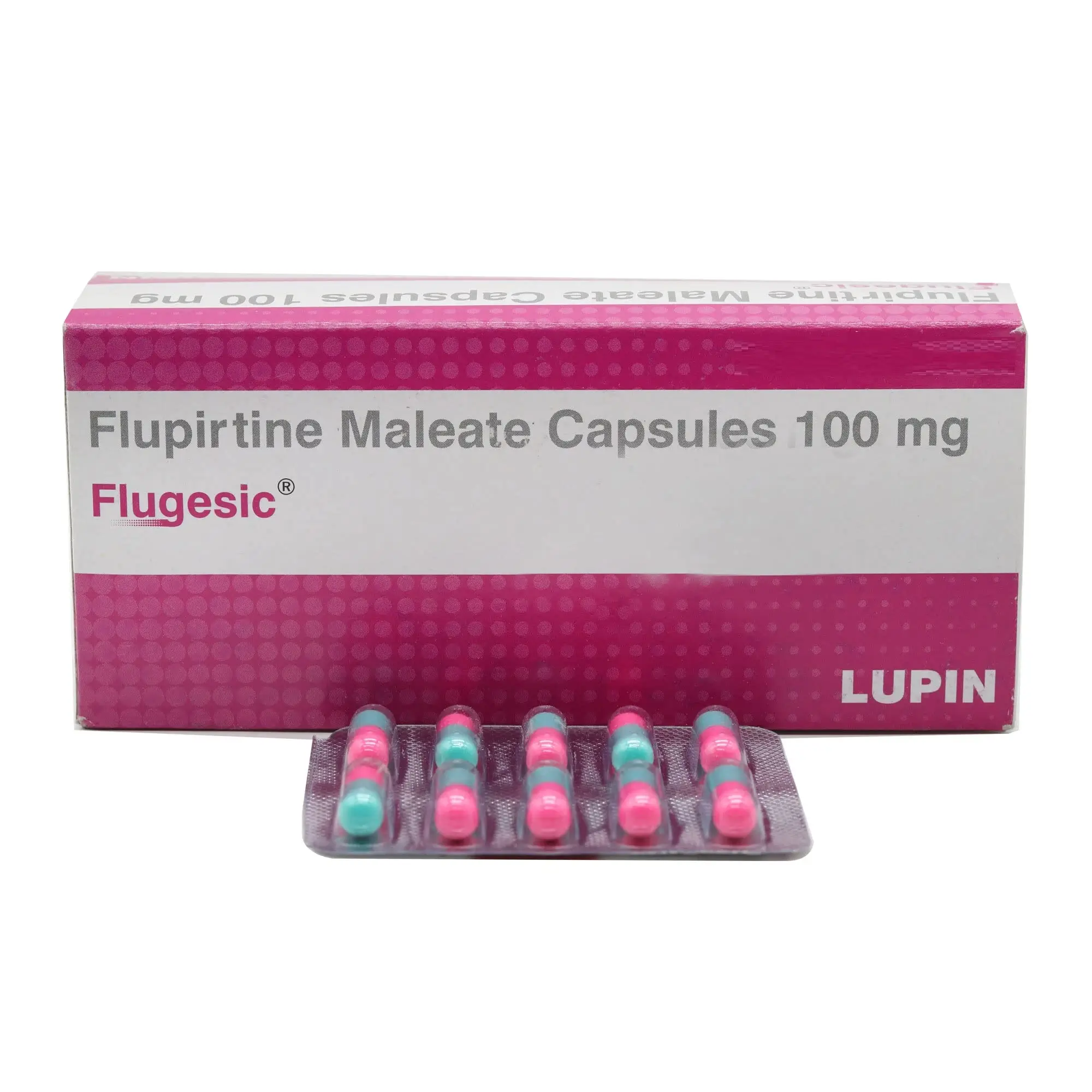
Flugesic 100mg (Flupirtine)
Previous product

Ketoforce Cream 15gm (Ketoconazole)
A$15.00 A$50.00Price range: A$15.00 through A$50.00
Next product

Onabet 2% Cream (Sertaconazole)
A$18.00 A$83.00Price range: A$18.00 through A$83.00
A$42.00 A$115.00Price range: A$42.00 through A$115.00
In Stock
In Stock
Flugesic 100mg (Flupirtine)
| Pack Size | Price | Quantity | Add To Cart | |
|---|---|---|---|---|
| 180 Capsule/s | A$42.00 | |||
| 270 Capsule/s | A$78.00 | |||
| 90 Capsule/s | A$115.00 | |||
| Want to order in bulk / B2B price? Send Inquiry | ||||
×
Sorry!! Out of Stock
Sorry! Flugesic 100mg (Flupirtine) is out of stock
Please click below to view other similar medications.
View All Flupirtine Products


Offer You Can't Resist
Free Shipping
Enjoy Free Shipping on Orders above AUD304 (USD199)
Estimate Delivery :
25 September - 02 October
25
Highly Professional
Very professional company with a smooth ordering process. The staff were courteous and helpful, and the shipment was handled efficiently. I had a good overall experience.
 Australia
August 17, 2026
Last Updated on March 23, 2026

Description
Pain management is an essential aspect of healthcare that affects millions of people worldwide. If the pain is acute, the result of surgery or injury, or chronic, as in arthritis, prompt and effective relief is vital to maintain the quality of daily life. Among the numerous alternatives for relieving pain, Flugesic 100mg, containing the active ingredient flupirtine, is a distinct analgesic with characteristics that distinguish it from other painkillers. This article provides an in-depth overview of the characteristics of Flugesic 100 mg, including its definition, mechanism of action, advantages, indications for use, and safety considerations.
What is Flugesic 100mg?
Flugesic 100mg is a trademark designation for a medicine that contains flupirtine as its active ingredient. Flupirtine is a non-opioid analgesic that is used to treat moderate to intense discomfort. It is part of a class of centrally acting analgesics; that is, it acts on the nervous system’s central nervous system to alleviate pain.
In contrast to traditional painkillers, such as non-steroidal anti-inflammatory medicines (NSAIDs) as well as opioids, flupirtine functions through an exclusive mechanism. It alters neuronal potassium channels and, in turn, increases the inhibitory neurotransmitter gamma-aminobutyric acid (GABA), which mediates muscle relaxation and pain relief, without the common adverse effects associated with opioids and NSAIDs.
How Does Flupirtine Work?
The action of flupirtine as an analgesic is attributable to its ability to widen the neuronal potassium channels and lead to stability of nerve cell membranes. This reduces the nerve’s excitability and blocks the transmission of pain-related signals. Furthermore, flupirtine increases the activity of GABA_A receptors that inhibit neurotransmission. This results in muscle relaxation and a decrease in the perception of pain.
As a result of this dual mechanism, Flupirtine is particularly beneficial in treating pain that’s due to muscle spasms or specific neurological disorders. Flupirtine does not possess the potential to be addictive like opioids and does not have the risk of gastric irritation that is common to NSAIDs. This makes flupirtine a desirable alternative for certain patients.
Indications and Uses of Flugesic 100mg
Flugesic 100mg is used to treat:
- Acute musculoskeletal pain: Back muscle strains, back pain, and sprains are often helped by flupirtine’s properties as a muscle relaxant and analgesic.
- Postoperative pain: After surgery, Flupirtine is used to relieve moderate pain, facilitating easier recovery.
- Neuropathic pain: Certain types of nerve pain, such as that experienced by people suffering from diseases such as diabetic neuropathy and shingles, can be treated with flupirtine.
- Headaches and migraines: Its muscle-relaxant effect may alleviate migraines and tension headaches caused by muscle spasms.
- Other pain-related conditions: Certain neurologic disorders associated with spasm or muscle stiffness can be treated with flupirtine under medical supervision.
Dosage and Administration
Flugesic 100mg is generally taken orally as a tablet. The severity of pain determines the dose, the patient’s age, weight, and medical conditions. You must follow the instructions of your physician who prescribes medication.
In general, the recommended dose is 100mg twice daily or 3 times daily. However, it shouldn’t be used for an extended period without a physician’s advice. The duration of treatment is usually limited to prevent potential adverse effects, particularly on liver function.
Benefits of Flugesic 100mg
- Effective pain relief: Its distinctive mechanism permits it to offer relief from a variety of pains. These include the neuropathic and muscle-related pain.
- Muscle relaxation: It helps reduce muscle spasms, which are a common cause of discomfort and pain.
- Non-opioid: It provides analgesia, but without the threat of dependence on opioids or addiction.
- Better gastrointestinal safety: Compared with NSAIDs, flupirtine is not as likely to trigger ulcers and stomach irritation.
- Good for patients who cannot tolerate NSAIDs or opioids: It is an option for patients who suffer negative effects due to these commonly used medications for pain.
Precautions and Contraindications
Although Flugesic 100mg is highly efficacious, it must be taken with care. It is important to consider:
- Liver toxicity risk: Flupirtine is associated with hepatotoxicity (liver destruction), particularly when it is used for long periods of time or at very high dosages. Continuous monitoring of liver function tests is vital when taking treatment.
- Not recommended for long-term use: The duration of treatment should not be more than two weeks, unless a doctor closely observes it.
- Contraindications: Individuals with liver disease or severe kidney impairment, or those allergic to flupirtine, should not take this medication.
- Pregnancy and breastfeeding: The efficacy of flupirtine for lactating or pregnant women is not confirmed; therefore, the drug is usually avoided by the above populations unless a physician specifically recommends it.
- Interaction with other drugs: Flupirtine can be a co-inhibitor with other central nervous system depressants, as well as medications that are metabolized in the liver. Tell your doctor about all medicines and supplements that you’re taking.
Side Effects of Flugesic 100mg
Like all medicines, flupirtine may cause negative side effects. However, every person experiences them. The most common side effects are:
- Dizziness
- Fatigue or drowsiness
- Nausea or gastrointestinal discomfort
- Headache
- Dry mouth
The most serious but not as common consequences can result from liver damage that can manifest in the form of jaundice (yellowing of the skin or eyes) or dark urine. It can also cause chronic nausea or abdominal discomfort. Medical attention should be sought immediately when these signs appear.
Monitoring and Follow-up
To avoid liver damage, people who are prescribed Flugesic 100 mg are typically subject to regular tests of their liver functions during treatment. If there are any signs of liver disease, the medication should be discontinued. Patients should also be aware of any unusual symptoms, such as persistent fatigue, weight loss, or abdominal discomfort.
Alternatives to Flugesic 100mg
The type and intensity of the pain options could consist of:
- NSAIDs (like naproxen or ibuprofen) for pain relief from inflammation
- Paracetamol (acetaminophen) for moderate to light pain
- Opioids are prescribed for acute and severe pain, under strict medical surveillance
- The relaxants for the muscles, including baclofen or tizanidine, are great for spasticity
- Antidepressants or anticonvulsants for neuropathic pain
Medication selection must be based on the individual’s health, medical history, and medication tolerance.
Conclusion
Flugesic 100mg (flupirtine) is a distinct alternative in the field of medications for pain. Its centrally-acting, non-opioid analgesic properties and its muscle relaxation capabilities are effective in treating many pain disorders, particularly those that cause muscle spasms or neuropathy components.
Due to its risk of causing liver damage, its use with medical supervision is essential. The medication should be prescribed in conjunction with a regimen appropriate for dosage and treatment duration limitations, and with regular monitoring of liver function. When used appropriately, Flugesic 100mg can provide substantial relief and improve the health of individuals with severe to moderate discomfort.
Additional Information
| Manufacturer | Lupin Limited |
|---|---|
| Pharmaceutical | Capsule/s |
| Strength | 100mg |
| Pack Size | 90 Capsule/s, 180 Capsule/s, 270 Capsule/s |
Related products












Reviews
There are no reviews yet.