
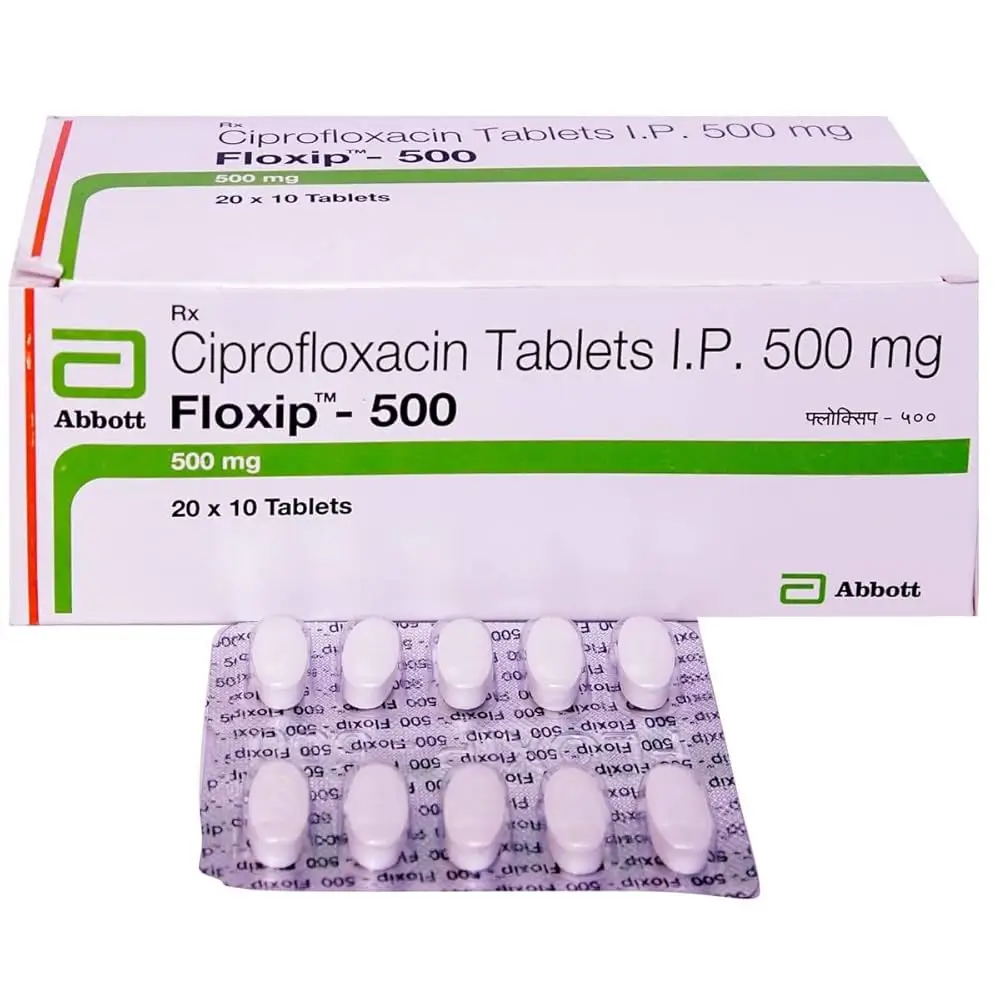
Floxip 500mg (Ciprofloxacin)
Previous product

Floxip 250 (Ciprofloxacin)
$22.50 $37.50Price range: $22.50 through $37.50
Next product

Allergan Botox 100iu (OnabotulinumtoxinA)
$260.00 $1,020.00Price range: $260.00 through $1,020.00
$22.50 $48.75Price range: $22.50 through $48.75
In Stock
In Stock
Floxip 500mg (Ciprofloxacin)
| Pack Size | Price | Quantity | Add To Cart | |
|---|---|---|---|---|
| 30 Tablet/s | $22.50 | |||
| 60 Tablet/s | $35.00 | |||
| 90 Tablet/s | $48.75 | |||
| Want to order in bulk / B2B price? Send Inquiry | ||||
×
Sorry!! Out of Stock
Sorry! Floxip 500mg (Ciprofloxacin) is out of stock
Please click below to view other similar medications.
View All Ciprofloxacin Products


Offer You Can't Resist
Free Shipping
Enjoy Free Shipping on Orders above AUD304 (USD199)
Estimate Shipping :
07 June - 14 June
29
Last Updated on March 23, 2026

Description
Introduction
Floxip 500mg is a trademarked formula made from Ciprofloxacin, which is an antibiotic with a broad spectrum that belongs to the fluoroquinolone category. It’s widely used to treat infections caused by susceptible bacteria. In the form of a fluoroquinolone, Ciprofloxacin can be highly effective against all kinds of Gram-positive and Gram-negative bacteria.
Ciprofloxacin is thought to be a second-generation fluoroquinolone. The reason it is prescribed for this type of drug is because of its high bioavailability and permeation of tissues, as well as its large antibacterial spectrum. Floxip 500 mg is usually sold in tablets and has 500mg of Ciprofloxacin hydrochloride, which is the active pharmaceutical ingredient.
Mechanism of Action
Ciprofloxacin is a drug that inhibits two key bacterial enzymes: DNA Gyrase (topoisomerase II) and topoisomerase IV. These enzymes are essential for the reproduction of DNA as well as transcription, repair, and Recombination. Through blocking these enzymes, Ciprofloxacin interferes with the DNA processing of bacterial cells and causes the death of cells.
Its bacteria-killing mechanism is what makes Ciprofloxacin especially effective for treating diseases that other antibiotics are not able to treat as effectively.
Indications (Uses)
Floxip 500mg can be prescribed to treat various infections caused by bacteria. The indications for it are:
- Urinary Tract Infections (UTIs) – Both complex and simple
- Respiratory Tract Infections – such as pneumonia, bronchitis
- Gastrointestinal Infections – which includes infectious diarrhea triggered by E. coli, Shigella, Salmonella
- Skin and Soft Tissue Infections
- Bone and Joint Infections
- Prostatitis (bacterial)
- Anthrax exposure – post-exposure prophylaxis
- Typhoid fever
- Sexually transmitted infections – such as gonorrhea (in certain cases)
- Ophthalmic and otic infections – Different forms (not in oral form)
The use of Floxip is usually reserved for treating infections that are intolerant to other antibiotics or when other alternatives do not work.
Dosage and Administration
Floxip 500mg is generally consumed orally, whether or not food is consumed. The dosage is determined by the nature and severity of the disease, in addition to the kidney function of the patient, the age of the patient, as well as overall well-being.
Typical Dosage Guidelines:
- Uncomplicated UTI: 250-500 mg every 12 hours for 3–7 days
- Complicated UTI or Pyelonephritis: 500 mg every 12 hours for 7–14 days
- Respiratory infections: 500–750 mg every 12 hours for 7–14 days
- Gastrointestinal infections: 500 mg every 12 hours for 5–7 days
- Typhoid fever: 500–750 mg every 12 hours for 7–14 days
Follow a physician’s prescriptions regarding the duration of treatment and dose. All of the course should be followed even if the symptoms are improving earlier in order to prevent resistance.
Pharmacokinetics
- Absorption: Well absorbed orally; bioavailability ~70%
- Distribution: The drug is extensively distributed in tissues and in fluids
- Metabolism: Partially metabolized within the liver
- Elimination: Primarily via renal excretion (urine) and some through Feces
- Half-life: In healthy adults, 4-5 hours is the norm.
Foods may delay absorption, but they don’t significantly impact the rate of absorption. But dairy products and drinks with calcium can hinder absorption.
Side Effects
Like other medications that are prescribed, Floxip can trigger negative side effects. Although many individuals take it without issue, others might experience:
Common Side Effects:
- Nausea
- Diarrhea
- Dizziness
- Headache
- Abdominal discomfort
- Rash or skin sensitivity (photosensitivity)
Less Common but Serious Side Effects:
- Tendonitis and tendon rupture (especially in elderly or those on corticosteroids)
- Peripheral neuropathy
- CNS effects: seizures, tremors, confusion, hallucinations
- QT interval prolongation: risk of arrhythmias
- Hepatotoxicity
- Allergic reactions: including anaphylaxis in rare cases
If serious negative side effects develop, it is recommended that the medicine be stopped, and medical assistance should be sought out immediately.
Precautions and Warnings
- Tendon Rupture Risk:
- The fluoroquinolones are accompanied by a warning box because of the possibility of tendon rupture. Tendons of the Achilles are the most often affected.
- Take caution with patients over 60 years of age or who are taking corticosteroids.
- Central Nervous System Effects:
- It can cause seizures, as well as other neuropsychiatric signs, especially those with a previous history of seizures or CNS conditions.
- QT Prolongation:
- Beware of patients who have congenital conditions or are using other QT-prolonging medications.
- Myasthenia Gravis:
- Ciprofloxacin could cause weakness of muscles; it is contraindicated for patients suffering from myasthenia graveis.
- Photosensitivity:
- Sensitivity to sunlight increases. Patients should stay away from direct sun exposure and apply sunblock.
- Renal Impairment:
- Adjusting doses may be required when there is a problem with the kidneys.
Contraindications
- Hypersensitivity to Ciprofloxacin or any other fluoroquinolone
- Tendon disorders that have been caused by quinolone usage
- Use in conjunction with tizanidine (can create dangerous hypotension as well as the onset of sedation)
Drug Interactions
Floxip 500mg can interfere with a variety of medications:
- Antacids (containing magnesium or aluminum), iron supplements, and calcium: decrease the absorption of Ciprofloxacin. Give it a minimum of 2-4 hours prior to or following Ciprofloxacin.
- Warfarin: The effect of anticoagulants increases, which leads to an increased risk of bleeding.
- Theophylline: Ciprofloxacin may increase levels of theophylline. This can cause toxicity.
- NSAIDs: Risk of CNS stimulation as well as seizures.
- Antidiabetic agents: Risk of dysglycemia (hypoglycemia or hyperglycemia).
Make sure you inform your physician about all medications you take, even OTC supplements and other products.
Use in Specific Populations
- Pregnancy: Categorization C. Only use if the potential advantages outweigh the risk.
- Lactation: Excretase is found in breast milk. Stop breastfeeding or avoid it altogether.
- Pediatrics: Not recommended for most people because of the risk of cartilage damage, unless in more serious or difficult inflammations.
- Elderly: Greater risk of ruptures of the tendon as well as CNS impacts.
Resistance and Stewardship
Fluoroquinolones that are misused and overused have led to an increase in resistance of bacterial strains, with a particular focus on E. coli, Pseudomonas aeruginosa, as well as Neisseria gonorrhoeae. Ciprofloxacin is to be utilized only in cases of clear indication, as susceptibility testing must determine the best treatment option whenever.
Stewardship for antibiotics emphasizes the need to avoid unnecessary medication to ensure the effectiveness of Ciprofloxacin.
Storage and Handling
- Maintain in at room temperatures (15–30°C or 59–86°F)
- Avoid direct sunlight, extreme heat, and moisture
- Be sure to keep it out of the reach of young children.
Conclusion
Floxip 500mg (Ciprofloxacin) is a powerful and versatile antibiotic that has proven effectiveness against a diverse variety of illnesses. However, the use of this antibiotic must be considered with care due to possible adverse reactions such as drug interactions, the possibility of developing resistance.
Related products











Recently Viewed


Reviews
There are no reviews yet.