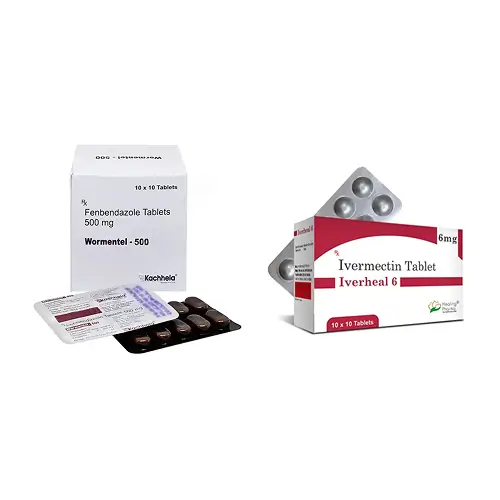
Fenbendazole 500+Ivermectin 6
Previous product
Fenbendazole 500+Ivermectin 3
A$125.63 A$362.44Price range: A$125.63 through A$362.44
Next product
Fenbendazole 500+Ivermectin 12
A$151.62 A$440.42Price range: A$151.62 through A$440.42
A$134.29 A$388.44Price range: A$134.29 through A$388.44
In Stock
In Stock
Fenbendazole 500+Ivermectin 6
| Pack Size | Price | Quantity | Add To Cart | |
|---|---|---|---|---|
| 1 Pack | A$134.29 | |||
| 2 Pack/s | A$259.92 | |||
| 3 Pack/s | A$388.44 | |||
| Want to order in bulk / B2B price? Send Inquiry | ||||
Offer You Can't Resist
Free Shipping
Enjoy Free Shipping on Orders above AUD304 (USD199)
Estimate Delivery :
16 September - 23 September
24
Such a helpful company
Such a fantastic, professional site…I get exactly what I need in perfect timing..at great prices!!
 Australia
February 8, 2025
Response from Modalertaustralia
Thank you so much for your kind words! We’re delighted to hear you’re happy with our service, timely delivery, and pricing. Providing a smooth and professional experience is always our goal. We truly appreciate your support!
Last Updated on March 07, 2026

Description
Introduction
Anti-parasitic drugs have long become a major component of the treatment of diseases caused by parasites all over the world. Two medications that are receiving a lot of recognition as they are used in medical practices for humans and animals include Fenbendazole and Ivermectin. Recently, several studies and discussions have used Fenbendazole 500 mg and Ivermectin 6 mg–whether to treat broad-spectrum parasites or for off-label use like viral or cancer.
What exactly do these substances mean? What are their effects? Are they safe to combine and efficient? This article focuses on these issues as well as others.
What is Fenbendazole?
Fenbendazole is an antihelmintic (anti-worm) medication, which is primarily utilized in the field of vet medicine. It is part of the class known as benzimidazole. It causes microtubules to break down within parasites. The resulting damage to the parasite’s capacity to take in nutrients and reproduce. This can lead to their death.
Typical Uses:
- Treatment of intestinal parasites in livestock and animals, which includes whipworms, roundworms, hookworms, as well as some varieties of tapeworms.
- Interest off-label in the human market for parasite infections as well as experimental cancer treatments (though there is no FDA-approved use for humans).
Dosage:
The dose of Fenbendazole is different for each species of animal and type of infection; however, human doses have been reported to range from 222 mg to 500 mg per day in cycles.
What is Ivermectin?
Ivermectin is an antiparasitic with a broad spectrum medication that is widely utilized by both animals and humans. It acts by binding chloride channels within the parasite’s muscles and nerve cells. This causes paralysis and death.
Typical Uses:
- Human parasitic diseases: strongyloidiasis, onchocerciasis (river blindness), scabies, head lice.
- The veterinary uses are similar to parasite treatments for animals.
Dosage:
For humans, Ivermectin is generally dosed at around 150 to 200 mcg/kg, which is usually equivalent to an average dose of 6 mg based on body weight. The dose is given in a single dose or repeated if needed.
How Do Fenbendazole and Ivermectin Work Together?
Fenbendazole and Ivermectin both target different parasites:
- Fenbendazole hinders the ability of parasites to maintain their vital cell structure.
- Ivermectin can cause paralysis through its effects on the nervous system of parasites.
Their combination can theoretically result in an even greater range and effectiveness in the elimination of parasites. In particular, parasites less susceptible to one drug could be more sensitive to another.
Potential Uses of the Combination
-
Parasitic Infections
The combination of Fenbendazole 500 mg along with Ivermectin 6 mg may provide a greater range of parasites, particularly in the case of persistent or mixed infection.
-
Off-Label / Experimental Uses
There’s a growing interest from anecdotal sources regarding Fenbendazole’s potential anti-cancer properties because of its interaction with microtubules in the cell. Ivermectin is being investigated to determine its antiviral potential and anti-inflammatory properties.
- Certain patients mix these medications hoping to get synergistic or additive results.
- But solid clinical trials that support these use cases are not available.
Safety Considerations
-
Drug Interactions
- Both medications are metabolized by the liver. So, it is recommended to exercise caution when combining them.
- Ivermectin is a drug that can penetrate the blood-brain barrier at high levels and cause neurological problems.
- The human safety record of Fenbendazole is not well-established, but benzimidazole medications like Mebendazole are safe to use for humans.
-
Side Effects
- The most frequent side effects associated with Fenbendazole (based on research conducted in animals as well as limited human data) could include mild stomach discomfort.
- The side effects of Ivermectin can be nausea, dizziness, skin rash, and occasionally neurological signs.
-
Lack of Approved Combination
- The FDA or other regulators have given their approval to the use of Fenbendazole, Ivermectin, and Fenbendazole for human use.
- The use of veterinary formulas is hazardous due to variations in excipients’ purity, purity, and dosage.
Dosage and Administration
| Drug | Typical Human Dose (Experimental) | Frequency | Notes |
| Fenbendazole | 500 mg/day (oral) | Usually 3-5 days cycles | Off-label; veterinary form |
| Ivermectin | 6 mg (weight-dependent) | Single dose or repeated | Weight-based dosing advised |
Important: Do avoid take medication by yourself. Always seek advice from a medical professional before beginning any new prescription, including combinations of this.
What Does the Research Say?
Fenbendazole
- Studies on animals suggest that anti-cancer effects can be obtained due to the destruction of microtubules found in the tumor cells.
- Some case studies provide some advantages; however, none of the clinical trials are large-scale.
Ivermectin
- It has been proven to be effective in treating various parasitic diseases.
- Researched to determine whether anti-viral activities are present specifically in the context of COVID-19; however, the results are not always clear and frequently debated.
Combined Use
- The results of no official study have not been confirmed. Fenbendazole and Ivermectin on humans.
- Combining them may theoretically enhance the effectiveness of antiparasitic drugs, but it could also make it more likely for side effects to occur.
Frequently Asked Questions (FAQ)
Q1: Is it safe to take Fenbendazole 500 mg with Ivermectin 6 mg?
A: Human safety isn’t known for this particular combination, particularly when using Fenbendazole for veterinary use. Always speak with a doctor before use.
Q2: Can this combo treat parasitic infections better than single drugs?
A: They indeed function through various mechanisms. However, evidence from clinical studies for their safety and efficacy is sporadic.
Q3: Can Fenbendazole and Ivermectin cure cancer?
A: No cure has been proven. Anecdotes and early research exist, but they aren’t approved for treatment. Contact an oncologist.
Q4: Are there risks with self-medicating using veterinary Fenbendazole?
A: Yes. The formulations for animals may have inactive components that can be harmful to humans. Additionally, they may vary in dosage formats.
Q5: What are common side effects to watch for?
A: Dizziness, nausea, diarrhea, as well as rash or neurological signs. Get medical attention immediately when severe symptoms are observed.
Q6: How long is a typical treatment course?
A: The type of infection is a factor. Treatments for parasites typically last only a couple of days. However, the timing of dosing can vary.
Final Thoughts
Fenbendazole 500 mg paired with Ivermectin 6 mg provides an antiparasitic combination that could be extremely effective; however, it is primarily based on research in veterinary practice and reports from anecdotal sources in human beings. Although their distinct mechanisms provide benefits in theory, clinical evidence supporting the safety and effectiveness of these two drugs is not substantial.
Additional Information
| Manufacturer | Healing Pharma, India, Kachhela Medex Pvt.Ltd |
|---|---|
| Pharmaceutical | Tablet/s |
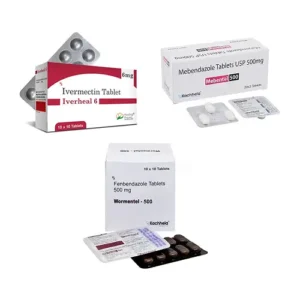
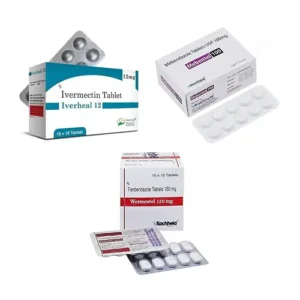
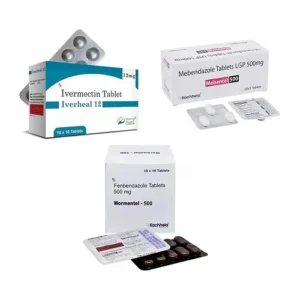
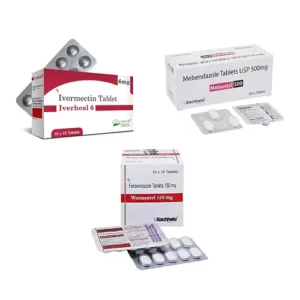
| Tablet/s | Wormentel 500mg (Fenbendazole) = 60 Pills, Iverheal 6mg (ivermectin) = 60 Pills |
Related products


Recently Viewed