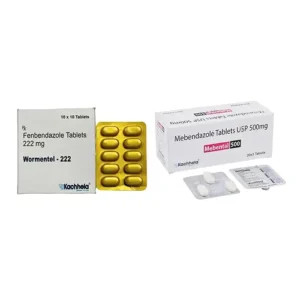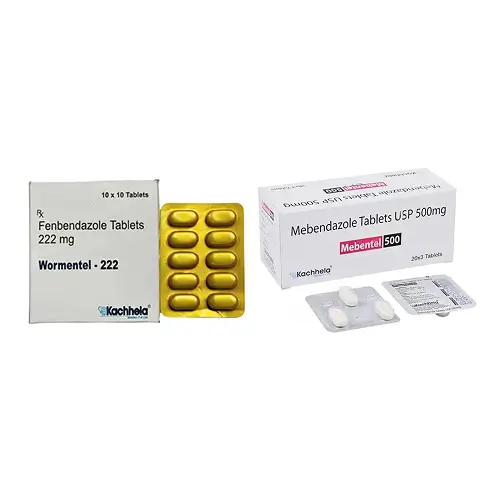
Fenbendazole 222+Mebendazole 500
Previous product

Fenbendazole 444+Ivermectin 12
A$141.40 A$410.20Price range: A$141.40 through A$410.20
Next product
Fenbendazole 222+Ivermectin 3
A$112.00 A$322.00Price range: A$112.00 through A$322.00
A$78.40 A$221.20Price range: A$78.40 through A$221.20
In Stock
In Stock
Fenbendazole 222+Mebendazole 500
| Pack Size | Price | Quantity | Add To Cart | |
|---|---|---|---|---|
| 1 Pack | A$78.40 | |||
| 2 Pack/s | A$148.40 | |||
| 3 Pack/s | A$221.20 | |||
| Want to order in bulk / B2B price? Send Inquiry | ||||
Offer You Can't Resist
Free Shipping
Enjoy Free Shipping on Orders above AUD304 (USD199)
Estimate Shipping :
08 June - 15 June
36
Last Updated on March 07, 2026

Description
Recent years have seen the antiparasitic use of medications, including Fenbendazole and Mebendazole, gaining attention over and above their veterinary or human-specific deworming uses. In the wake of increased interest from the public, in particular among those looking for alternatives or alternative treatments to treat cancer as well as other ailments and other diseases, it is essential to understand the nature of these drugs and how they function, and the ramifications–both positive and challenging–of their use off-label.
What are Fenbendazole and Mebendazole?
Fenbendazole (222 mg)
Fenbendazole is a wide-spectrum benzimidazole antihelmintic that is used mainly in veterinary medicine for treating animal parasites, including cats, dogs, cattle, and horses. It’s effective against several parasites, such as whipworms, roundworms, and specific tapeworms.
Mebendazole (500 mg)
Mebendazole on its own is an FDA-approved antihelmintic medicine and is within the benzimidazole class. It’s commonly used for intestinal worms such as whipworm, pinworm, roundworm, and hookworm. It works by reducing the ability of parasites to absorb sugar. This is essential for the survival of the parasite and ultimately kills the parasite.
Why are People Combining Fenbendazole and Mebendazole?
The mixture of Fenbendazole 222 mg and Mebendazole in 500 milligrams has attracted the attention of certain circles of alternative medicine, especially due to reports from anecdotal sources and preliminary scientific research suggesting the possibility of anti-cancer effects.
The Cancer Connection
The increase in attention is rooted in anecdotal evidence, particularly the story of Joe Tippens, an American person who was publicly attributing his cure from cancer due to a treatment regimen that contained Fenbendazole. He began this therapy after having read studies that proved benzimidazole-based compounds affect cancer cell microtubules and lead to disrupted cell division as well as the death of cells.
Although Mebendazole has demonstrated the most clinically promising results for cancer research, especially for colon cancer and glioblastoma in laboratory models, Fenbendazole has not been extensively researched for humans yet shares the same chemical structure and mechanisms.
A few experts think that the combination of the two could boost their cancer-fighting properties, but there is no scientific evidence at present to justify the combination treatment for cancer.
Mechanism of Action
Both drugs attack tubulin, the protein needed to regulate cell division. In parasites, this alters the capacity of these proteins to preserve the structure of their cells and to absorb nutrients and causing the dying. For cancerous cells, this similar mechanism can stop an abnormality in cell replication.
Here’s how this mechanism is played out:
- Fenbendazole: Binds to β-tubulin. It also inhibits microtubule growth, which can disrupt glucose transport in parasitic cells.
- Mebendazole: It has a greater affinity to human β-tubulin. It can hinder tumor growth by breaking the process of mitosis (cell division).
Safety Profile and Side Effects
While generally well-tolerated medicines can produce negative effects, particularly when they are taken at higher or longer dosages that are not suitable for use in accordance with their approval.
Fenbendazole (222 mg)
- It is usually safe for dogs, but little is known about the effects on humans.
- Common (animal use): Vomiting, diarrhea, loss of appetite.
- Reports of human use that are not on the label contain mildly elevated levels of liver enzymes or stomach discomfort.
Mebendazole (500 mg)
- Short-term use is permitted by human beings.
- Side effects: Abdominal pain, diarrhea, flatulence, rash.
- Rare but serious: Liver inflammation, allergic reactions.
Important note: The combination of these two drugs without medical supervision can increase the chance of toxicity and liver strain. Always consult with a physician prior to contemplating any regimen that is not on the label.
Current Research and Evidence
Fenbendazole:
- Research on mice has shown that anti-tumor properties exist in mice, as well as the cell culture.
- The FDA has not approved any studies to prove its effectiveness against human cancers.
- A study from 2002 showed that Fenbendazole reduced the growth of cancer cells in vitro. However, further study is not available.
Mebendazole:
- Human studies continue to be conducted.
- Clinical trials are investigating the impact of it on glioblastoma, colon cancer, as well as Melanoma.
- A study from 2018 found that mebendazole inhibited the growth of tumors on the lung in mice and improved life expectancy when it was combined with chemotherapy.
Although the research is convincing, neither drug is an alternative to standard treatments for cancer such as chemotherapy, immunotherapy, and radiation.
Legal and Regulatory Status
- Mebendazole has FDA approval for the treatment of specific parasitic infections in humans.
- Fenbendazole has not been approved by the U.S. for use on humans. Only veterinary uses are listed.
- Depending on the laws in your country, it may be illegal to import or use Fenbendazole as a human food.
Dosing and Administration
Standard Approved Doses:
- Mebendazole (500 mg): For worms, it is often taken in a single dosage or as part of a three-day course.
- Fenbendazole (222 mg): In the veterinary field, it is usually prescribed for dogs to take 3 days of this drug, followed by 4 rest days. This is what the “Joe Tippens Protocol” recommends, but it is not recommended by doctors.
Fenbendazole should not be used off-label without the approval of a clinical expert. This is especially true when considering that there are no standards in place for human dosage.
Final Thoughts
Fenbendazole 222 mg and Mebendazole 500 mg are two antiparasitic medications that have a reputation far beyond their original purpose. Real-world data on human patients is lacking. Any person considering using these drugs in non-approved ways should consult a medical professional and proceed with caution.
Remember: Evidence is not based on anecdotes. These drugs are experimental until rigorous human tests confirm their safety and efficacy.
Frequently Asked Questions (FAQ)
Q1: Can I take Fenbendazole and Mebendazole together?
Combining them is not clinically recommended and may lead to liver toxicity. Before combining them, consult a physician.
Q2: Is it safe to use Fenbendazole in humans?
Fenbendazole has not been approved for use in humans. Although some users have reported tolerability in the short-term, long-term, and high-dose use of Fenbendazole by humans, formal safety studies are not available.
Q3: Can these drugs cure cancer?
No. Despite some laboratory studies and testimonials suggesting potential anti-cancer benefits, they are not recognized by any medical authority as cures. These are not a substitute for cancer treatment.
Q4: What is the “Joe Tippens protocol”?
Self-designed regimen consisting of daily Fenbendazole plus vitamins and other supplements. This is based solely on anecdotal evidence and has not been scientifically verified.
Q5: Are there clinical trials for Mebendazole in cancer?
Yes, there are several ongoing studies. Mebendazole has been studied in the treatment of brain tumours, colon tumors, and other cancers. However, it remains experimental.
Q6: What are the risks of long-term use?
Off-label use can have serious side effects, including liver damage, digestive problems, and long-term health consequences that are not known.
Q7: Where can I buy these medications?
Mebendazole can only be obtained on prescription. Fenbendazole can be purchased over the counter in pet shops, but it is not intended for human consumption. It is illegal to use it on yourself.
Additional Information
| Manufacturer | Healing Pharma, India, Kachhela Medex Pvt.Ltd |
|---|---|
| Pharmaceutical | Tablet/s |
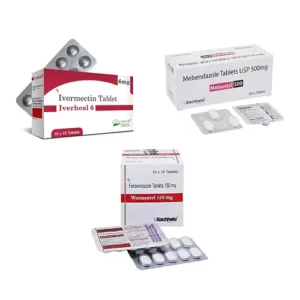
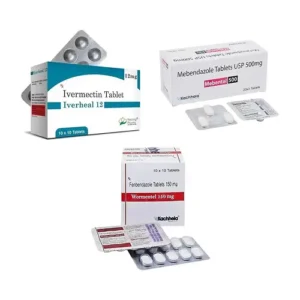
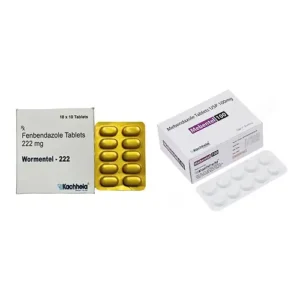
| Tablet/s | Wormentel 222mg (Fenbendazole) = 60 Pills, Mebentel 500mg (Mebendazole) = 60 Pills |
Related products


Recently Viewed