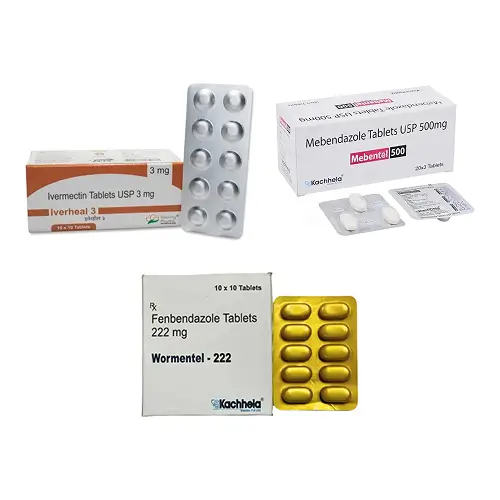
Fenbendazole 222+Mebendazole 500+Ivermectin 3
Previous product
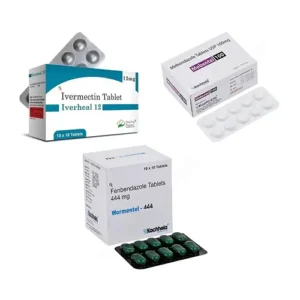
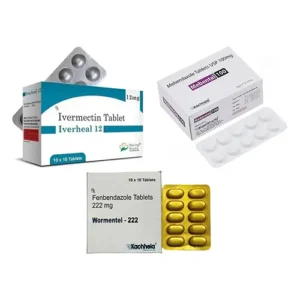
Fenbendazole 444+Mebendazole 100+Ivermectin 12
A$174.72 A$509.73Price range: A$174.72 through A$509.73
Next product
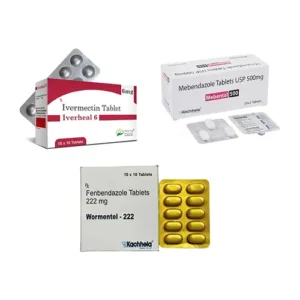
Fenbendazole 222+Mebendazole 500+Ivermectin 6
A$176.17 A$514.06Price range: A$176.17 through A$514.06
A$167.50 A$488.07Price range: A$167.50 through A$488.07
In Stock
In Stock
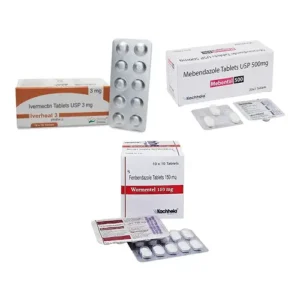
Fenbendazole 222+Mebendazole 500+Ivermectin 3
| Pack Size | Price | Quantity | Add To Cart | |
|---|---|---|---|---|
| 1 Pack | A$167.50 | |||
| 2 Pack/s | A$326.34 | |||
| 3 Pack/s | A$488.07 | |||
| Want to order in bulk / B2B price? Send Inquiry | ||||
Offer You Can't Resist
Free Shipping
Enjoy Free Shipping on Orders above AUD304 (USD199)
Estimate Delivery :
16 September - 23 September
41
Trusted Service
Good experience overall. The team was responsive, the ordering process was simple, and I received clear information about my shipment. Professional service and good customer support.
 Australia
August 16, 2026
Last Updated on March 07, 2026

Description
In the world of antiparasitic medications, three drugs often come up due to their wide-ranging applications and effectiveness: Fenbendazole, Mebendazole, and Ivermectin. They are prescribed for various parasitic diseases, with each having its unique spectrum of action, safety profile, and properties. This article will examine these three medications, including their indications, doses, and other important factors.
What are Fenbendazole, Mebendazole, and Ivermectin?
Fenbendazole
Fenbendazole, a drug used to treat parasites in animals and humans alike, is increasingly being discussed in the alternative medical community. The benzimidazole group of anthelmintics is what it belongs to. It works by interfering with the energy metabolism in parasites and killing them.
- Uses: Fenbendazole mainly treats gastrointestinal parasites like roundworms and hookworms. It is also used for certain tapeworms.
- Formulations: Most commonly, it is available as tablets or granules.
- Note: Some off-label human applications are also being investigated, even though they have been approved for use on animals. You should consult your doctor before using any product.
Mebendazole
Mebendazole, another benzimidazole anthelmintic used by humans, is also widely available. The benzimidazole anthelmintic disrupts the microtubules of parasites and prevents them from absorbing glucose. This leads to death.
- Uses: Effective against roundworms, pinworms, whipworms, and hookworms.
- Formulations: Usually available in the form of tablets, suspensions, or chewable tablets.
- Dosage: The standard doses can vary based on the type of infection, but are usually 100mg twice daily over three days or a 500mg dose.
Ivermectin
Ivermectin, a powerful antiparasitic drug from the class of avermectin, is one such agent. The drug works by combining with chloride channels found in nerve and muscle cell membranes of the parasite, which causes paralysis and eventual death.
- Uses: This medication treats many parasitic diseases, including onchocerciasis or river blindness, scabies, and some types of lice.
- Formulations: Topical treatments are available for those with skin infections.
- Dosage: The dosage varies depending on weight, condition, and parasite types.
Why Are These Drugs Often Combined or Compared?
Combination therapies are sometimes used, particularly in veterinary medicine and in cases of complicated parasitic infections. Combination therapies can be used to target more parasites, or in situations where single-drug treatments fail. As an example:
- Fenbendazole + Mebendazole: They are both in the same group but can be used for different infections or sequentially.
- Ivermectin + Mebendazole: Mebendazole and ivermectin can be used together to combat multiple parasite infections.
Common Indications and Dosages
Fenbendazole 222 mg
- Weight is usually used to determine the dosage (for animals or human experiments).
- For use by veterinarians, it is usually administered once daily over 3-5 days.
- Dosage for humans is not standard; do not self-administer medication without medical supervision.
Mebendazole 500 mg
- It is usually given in a 100mg dose twice daily over three days, depending on parasite type.
- Useful for treating intestinal worms.
- Pinworms are usually treated with a 100mg dose given twice a week.
Ivermectin 3 mg
- The doses are usually calculated based on body weight. For example, 150-200mcg/kg is a typical single dosage.
- For specific ailments, it is commonly used in a weekly or monthly dose.
Side Effects and Precautions
These drugs, though generally safe if used properly, can have side effects.
Fenbendazole
- Side effects are usually mild: nausea, vomiting, diarrhea.
- Many countries do not approve of the use of this product for humans — be cautious.
Mebendazole
- Possible side effects include abdominal pain, diarrhea, headache, dizziness.
- Avoid during pregnancy, unless the benefits are greater than the risks.
Ivermectin
- Side effects may include dizziness, nausea, diarrhea, or rash.
- Neurological effects are rare.
- It is not recommended for pregnant women or children under 15kg unless otherwise advised.
The Emerging Discussions on Off-label and Experimental Uses
Fenbendazole and ivermectin are two antiparasitic drugs that have recently gained popularity outside of their traditional uses:
- Fenbendazole: Several experimental studies, as well as anecdotal evidence, suggest that it may have anti-cancer effects. However, human data are limited.
- Ivermectin: Ivermectin has been studied as an antiviral during the COVID-19 epidemic, although current data does not suggest its use routinely.
FAQs About Fenbendazole, Mebendazole, and Ivermectin
Q1: Can I use fenbendazole for human parasitic infections?
Fenbendazole, which is mostly a veterinary medicine, isn’t approved by many countries for use on humans. Humans should use it only under medical supervision or during clinical trials.
Q2: How do I know which drug to use for my infection?
The drug available and the parasite type, site of infection, condition of the patient, etc., will determine which medication is best. The appropriate drug will be prescribed by a healthcare professional after he or she diagnoses the parasite.
Q3: Are these medications safe during pregnancy?
Mebendazole or ivermectin is not generally recommended for use during pregnancy, unless it’s absolutely needed. Always consult your doctor.
Q4: Can these drugs be combined safely?
You can, but you must consult your doctor first. Combining medications without medical supervision may increase side effects and reduce effectiveness.
Q5: How quickly do these drugs work?
The majority of antiparasitic drugs start to work within hours or days. It may take a few weeks of treatment, or even repeated doses, to eradicate parasites.
Q6: Are there any drug interactions?
Yes. Ivermectin or mebendazole can interact with medications such as blood thinners and anticonvulsants. Tell your doctor about all medications you are taking.
Q7: Can these drugs prevent parasitic infections?
In general, they are used only to treat infection and not to prevent it. Hygiene, the avoidance of contaminated water or food, and good sanitation are all preventive measures.
Conclusion
Fenbendazole, mebendazole, and ivermectin are effective tools for the treatment of parasitic infections. Each drug has a place, depending on parasites and the patient’s condition. Mebendazole, a veterinary drug, is widely used for humans. Consult a healthcare professional for advice on diagnosis and treatment. To ensure the safety of veterinary medications, avoid self-medication.
Additional Information
| Manufacturer | Healing Pharma, India, Kachhela Medex Pvt.Ltd |
|---|---|
| Pharmaceutical | Tablet/s |
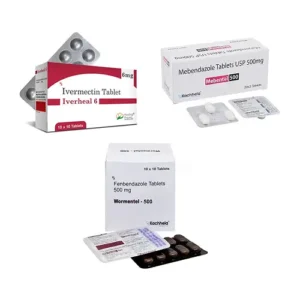
| Tablet/s | Wormentel 222mg (Fenbendazole) = 60 Pills, Mebentel 500mg (Mebendazole) = 60 Pills, Iverheal 3mg (ivermectin) = 60 Pills |
Related products


Recently Viewed